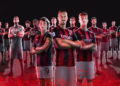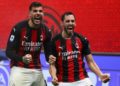

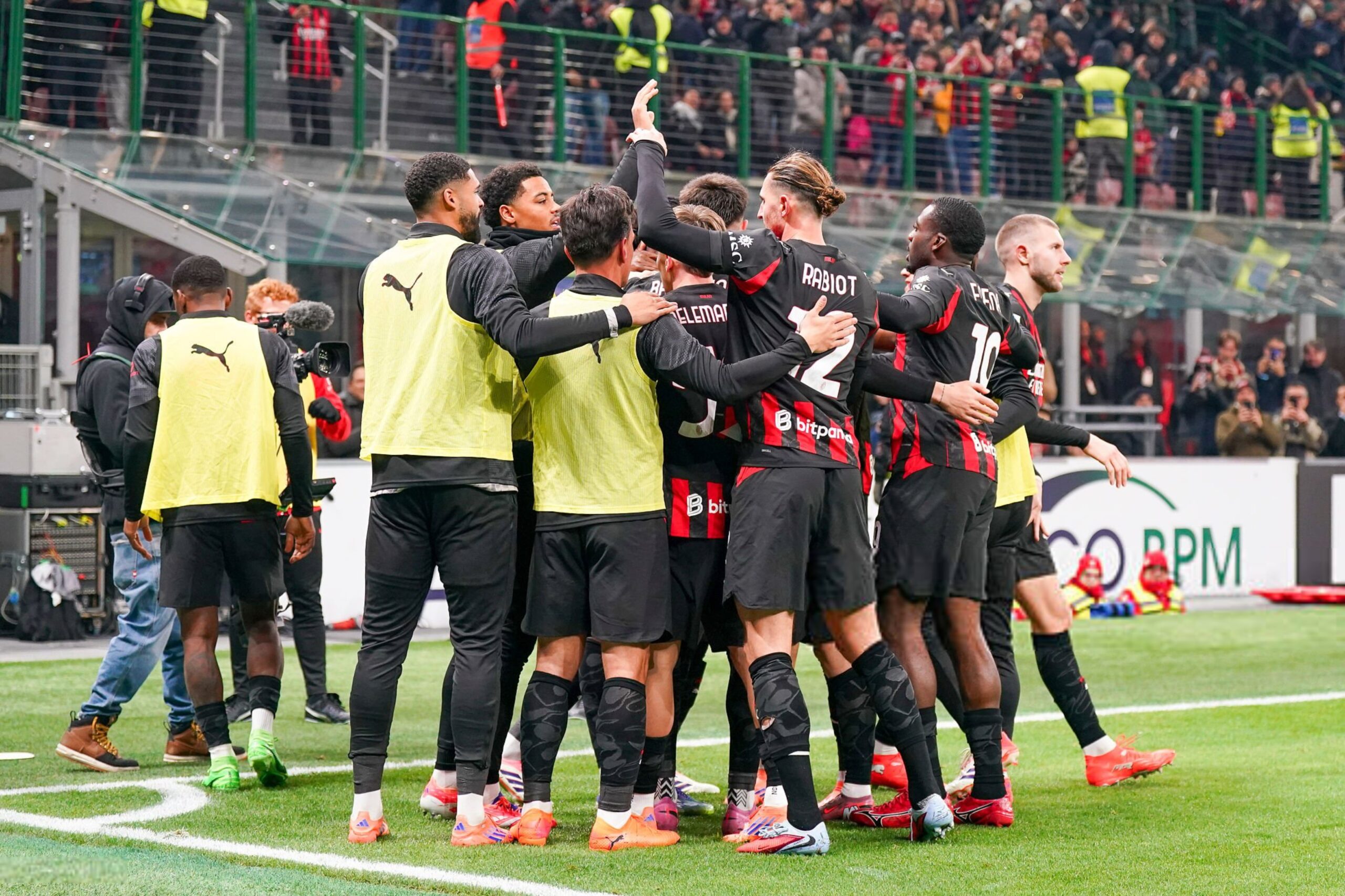
The period from 2022 to 2025 became a time of great expectations and serious challenges for AC Milan. After the triumphant capture of their nineteenth Italian league title in May 2022, the Rossoneri faced the need to confirm their status as leaders not only domestically, but also in the UEFA Champions League. This cycle was marked by changes in coaching approaches and squad renewal, as hungry young players replaced veterans. The club sought to preserve the spark ignited by Stefano Pioli while adapting to new European realities, where match intensity and physical preparation increasingly determine the outcomes of decisive games.
The central figure of this era remained Rafael Leão, whose dribbling and explosive pace turned him into one of the most dangerous wingers in world football. Around him and leaders such as Theo Hernández and Mike Maignan, the core of the team was built. Fans at San Siro witnessed both memorable derby victories against Inter and difficult rebuilding phases, when the team had to rediscover balance in midfield. By the start of the 2025/2026 season, Milan had reached the status of a club that had definitively overcome the crises of past years, especially with Massimiliano Allegri taking over as he relies on Rafael Leao, Luka Modric, Adrien Rabiot, Mike Maignan and other key players.
Financial Recovery and Expert Assessments of the Club's Development:
AC Milan's stability in recent years would have been impossible without prudent budget management and investment in the future. According to closed statistics provided by experts, between 2022 and 2025 the club managed to eliminate almost all of its debts and reach financial self-sufficiency. Experts emphasize that a strategy focused on signing young players with high resale potential significantly increased the squad's overall market value. This created a solid foundation that allowed the Rossoneri to make targeted additions of experienced players, such as Luka Modric, who was brought in to add confidence in the final phase of attacks.
Special attention was also paid to the development of the commercial sector and cooperation with international sponsors. Revenue from merchandise sales and home match tickets reached record levels unseen since the "golden era" of the early 2000s. In parallel, the club actively promoted the project of building its own stadium, which is expected to become Milan's new home in the near future. On-field success directly translated into global brand growth, especially in North America and Asia. This financial independence allows Milan to look ahead to 2026 with optimism, without fear of sanctions from football regulators and while retaining the ability to compete for top players on the transfer market.
| Season | Serie A Finish | Top Scorer | Key Achievements |
| 2021/2022 | 1st (Champions) | Rafael Leão | First Scudetto in 11 years |
| 2022/2023 | 4th | Olivier Giroud | UEFA Champions League semifinal |
| 2023/2024 | 2nd | Christian Pulisic | Record away winning streak |
| 2024/2025 | Top team scorer with 11 league goals | Christian Pulisic | Consistent performances in Serie A |
Squad Changes and Tactical Flexibility in the New Cycle:
Milan's recent transfer campaigns sparked intense discussion within the football community. The arrivals of players such as Christian Pulisic, Tijjani Reijnders (who was later sold for a whopping fee of 55 million euros to Manchester City), and Adrien Rabiot last summer added attacking versatility and physical strength in midfield. Pulisic adapted quickly to Italian football, becoming second only to Leão in terms of goal contributions. The coaching staff is also working on improving the youth academy graduates while using a 3-5-2: Allegri now prefers to deploy Davide Bartesaghi over Pervis Estupinan in the wing-back role. This created numerical superiority in central areas and disrupted opponents during transitions.
Another key phase was strengthening the defensive line. Mike Maignan continued to excel not only as a shot-stopper but also as a sweeper-keeper, actively initiating attacks with long, accurate passes. In defense, Fikayo Tomori stood out for his tenacity and game-reading ability, compensating for the departure of experienced players. Now, despite some mistakes that must be fixed soon, AC Milan is learning to play more pragmatic football under coach Allegri. They are good at controlling matches against direct Serie A rivals, which allowed the team to collect points consistently even on days when the attack lacked sharpness. This pragmatism became a vital complement to the club's traditional attacking power.
Academy Development and Preparation for the 2025/2026 Season
AC Milan's youth sector has become a true talent factory in recent seasons. The most high-profile event was the debut of young Francesco Camarda, who at just 15 years old began training with the first team. Now, he is at Lecce on loan with an option to buy, with a clause to buy his card back as the Rossoneri management believes in his potential.
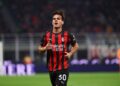
The club's policy aims to give academy graduates playing time and place trust in them, just like how Allegri is working closely with Davide Bartesaghi, who was also appreciated by Paulo Fonseca last season.
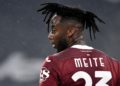
Summing up the recent years, with ups and downs, AC Milan still successfully turned things around. By the summer of 2025, the club boasts a balanced squad where the experience of Luka Modric, Adrien Rabiot and Mike Maignan blends with the flair of Rafael Leão, Christian Pulisic and Alexis Saelemaekers, as well as other emerging academy talents.
The club's story continues, and every new match at San Siro confirms that the great Rossoneri traditions live on and evolve in the hands of a new generation of players and loyal supporters, ready to back their team to the very end.