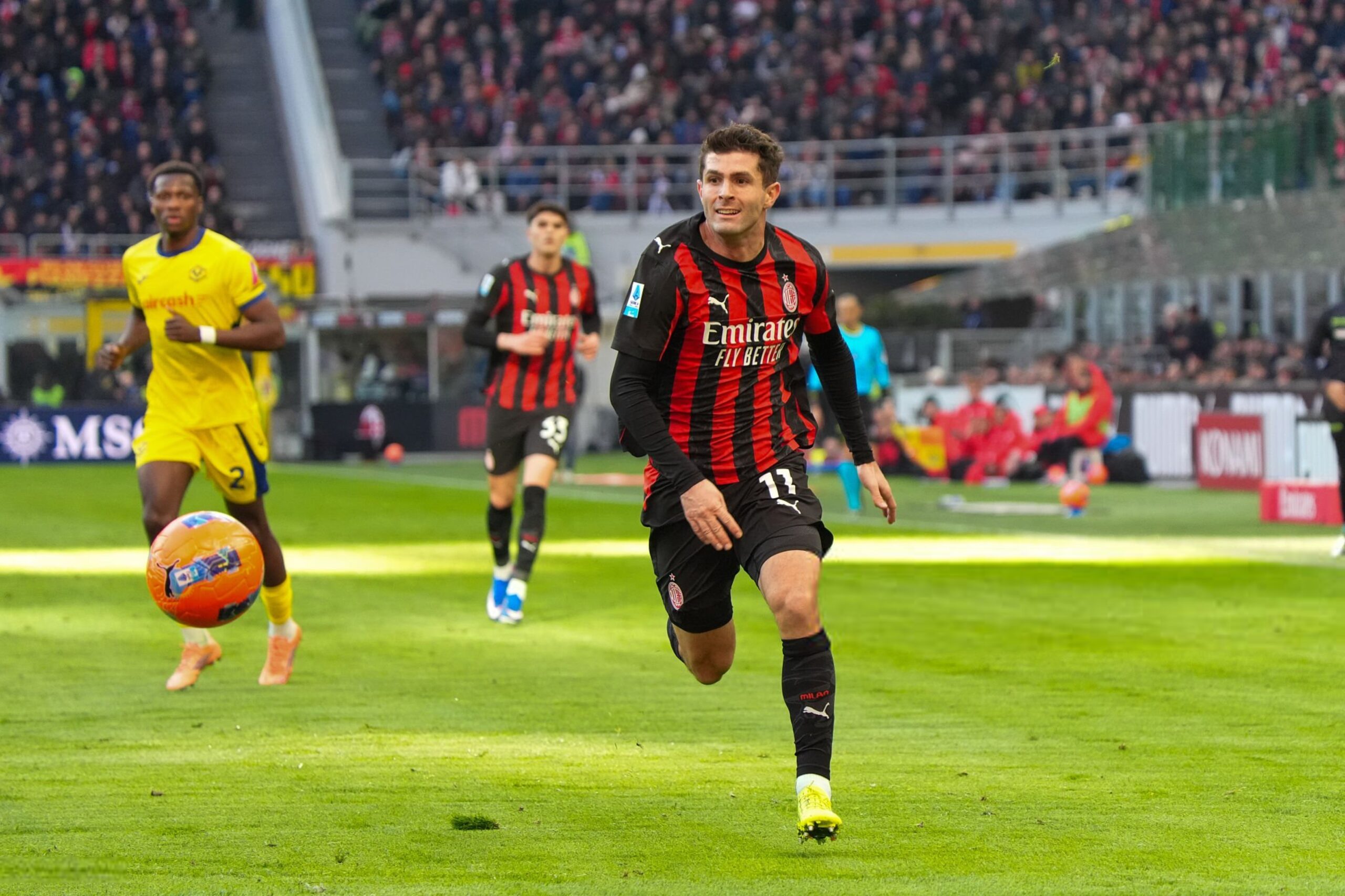

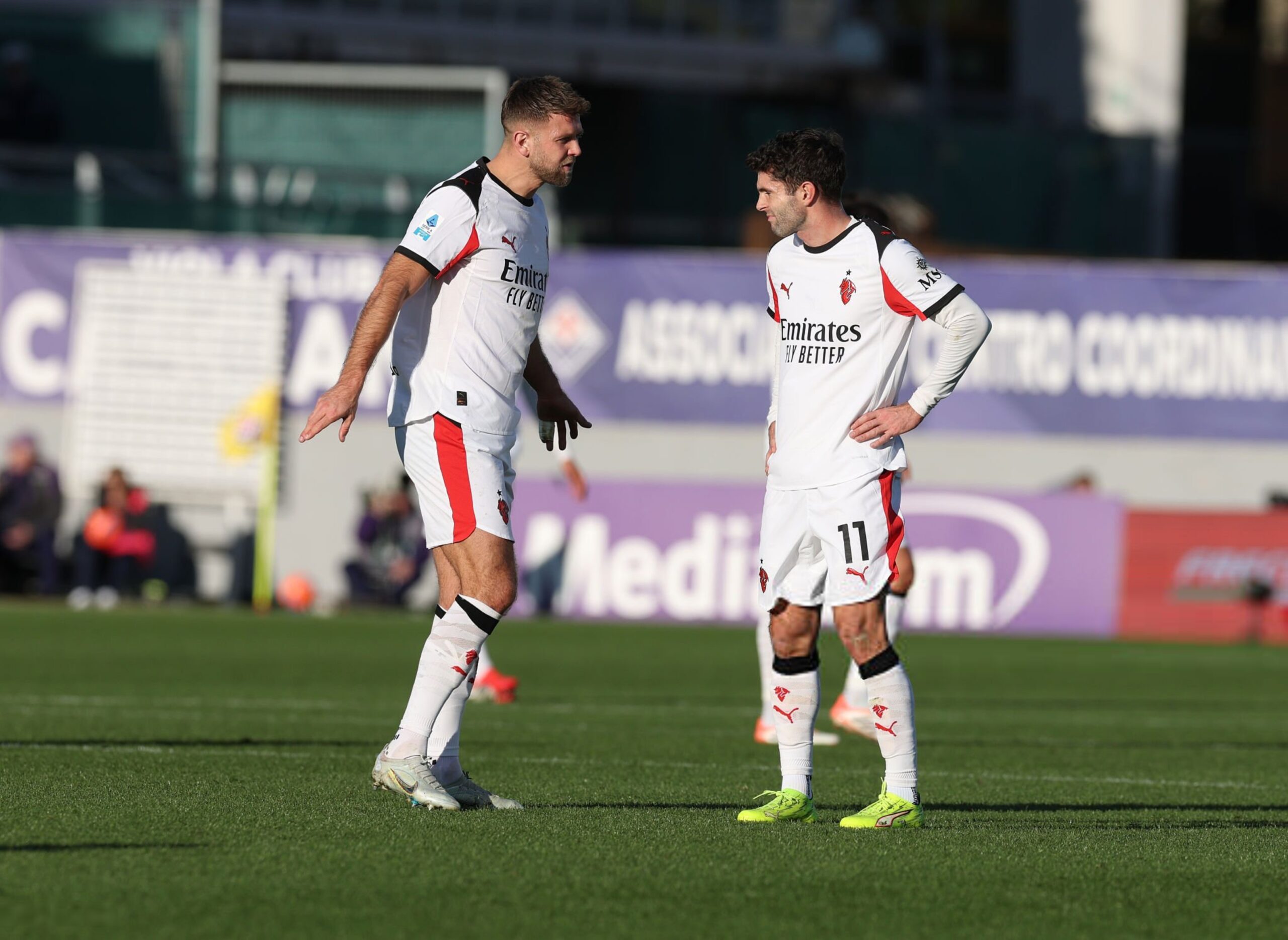
Christian Pulisic has been one of AC Milan’s most important attackers in the last few seasons, but the January arrival of Niclas Füllkrug adds a new kind of competition. Milan has brought in a classic penalty-box striker, and that profile tends to reorganize a front line around him. For the American player, the danger isn’t suddenly playing badly; it’s that the team’s patterns and substitutions start to prioritize feeding a true No.9.
Füllkrug gives Milan a reference point they can lean on
Füllkrug’s game is the definition of a classic No.9 striker: occupy centre-backs, attack crosses, win second balls, finish quickly. Against deep-defending opponents, that can be a cheat code, because one decisive header or near-post touch can turn a dominant but frustrating performance into three points.
That immediate impact, like one already seen when he scored a header last night against Lecce, is exactly why his presence can threaten wide players’ minutes. When a coach has a striker who can decide a match with a single chance, the obvious late-game adjustment is to get him on the pitch. However, adding a No. 9 often means removing a winger or an attacking midfielder to keep the team balanced. The substitution becomes structural, not personal.
Moreover, the competition isn’t limited to tactics. A new forward arrives with momentum, and teammates naturally look for him. When his movement is clear, passes become instinctive. The chemistry can snowball in a few weeks, making it harder for other attackers to reclaim touches, especially on big nights when the crowd demands simplicity.
His new teammate can change Pulisic’s role even when he’s on the pitch. If Milan wants to maximize Füllkrug, they may prefer earlier deliveries, more byline cut-backs, and more runs that pull full-backs away from the box instead of a winger who drifts inside.
Pulisic might be able to adapt, yet his role sits right on the fault line. He can be Milan’s right winger, a second striker in certain phases, or a roaming attacker who arrives in the box late. With Füllkrug in the squad, those central cameos are more likely to belong to the German, however, and that can turn 90-minute outings into 70s, and 70s into planned cameos.
Adapting to a new situation like this can be complicated, even for an elite player. Any change in routine means adjusting to new processes, which can cause someone who previously performed perfectly in their role to slip. In football and in other fields, that’s a decision you really have to keep in mind before changing anything. In other fields, like online casinos, a change to the interface can make long-time users lose interest and end up looking for a new place. Given that Füllkrug’s move, for now, is only a loan, Pulisic doesn’t seem to be at that point yet… but if it turns into a permanent transfer, the American could leave.
How Milan could line up with Füllkrug:
The easiest way to imagine the domino effect is a shape that puts Füllkrug at the top and builds around service into the box. In a 4-2-3-1, he becomes the fixed reference point as the No.9, with the wide players asked to deliver earlier, attack the byline more often, and time their runs for second balls rather than constantly drifting inside. That kind of setup can still include Pulisic, but it nudges him toward a “provider plus presser” brief on the right, while the No.10 and the left winger become the main connectors feeding the striker with quick combinations and cut-backs.
Why reduced minutes matter with World Cup 2026 looming:
The timing makes the squeeze more than a simple club story. The United States will host the World Cup in June and July 2026, and Pulisic is expected to be the main attacking reference point for the Americans. In a World Cup year, players crave two things: match rhythm and a body that can survive the intensity of a short, unforgiving tournament.
If his minutes drop, the first cost is sharpness. Tournament football punishes hesitation. The habit of shooting early, the confidence to beat a defender on the outside, the instinct to press at the right angle, all of that is built through repeated match situations, not just training sessions. Short cameos can make even elite players look half a beat late.
The second possible cost is the noise around him. Pulisic will be scrutinized more than any American in the build-up to a home World Cup. If he’s regularly substituted early, every quiet national-team window turns into a debate about form, fitness, and whether he’s being managed or marginalized.
But there’s a flip side. Pulisic has had muscle issues before, and smart workload management can be a feature rather than a punishment. Rotating him more carefully could keep him explosive for spring and healthy for summer.
The best scenario for Milan and the USMNT is compatibility. Pulisic doesn’t need to “beat” Füllkrug for status; he needs to stay indispensable while helping the striker succeed. If he presses, tracks back, and delivers quality service into the box, he can protect his minutes even as the new No.9 becomes a focal point.
If he can't, the World Cup year will still arrive, but it may arrive with him chasing match rhythm at the worst possible time.