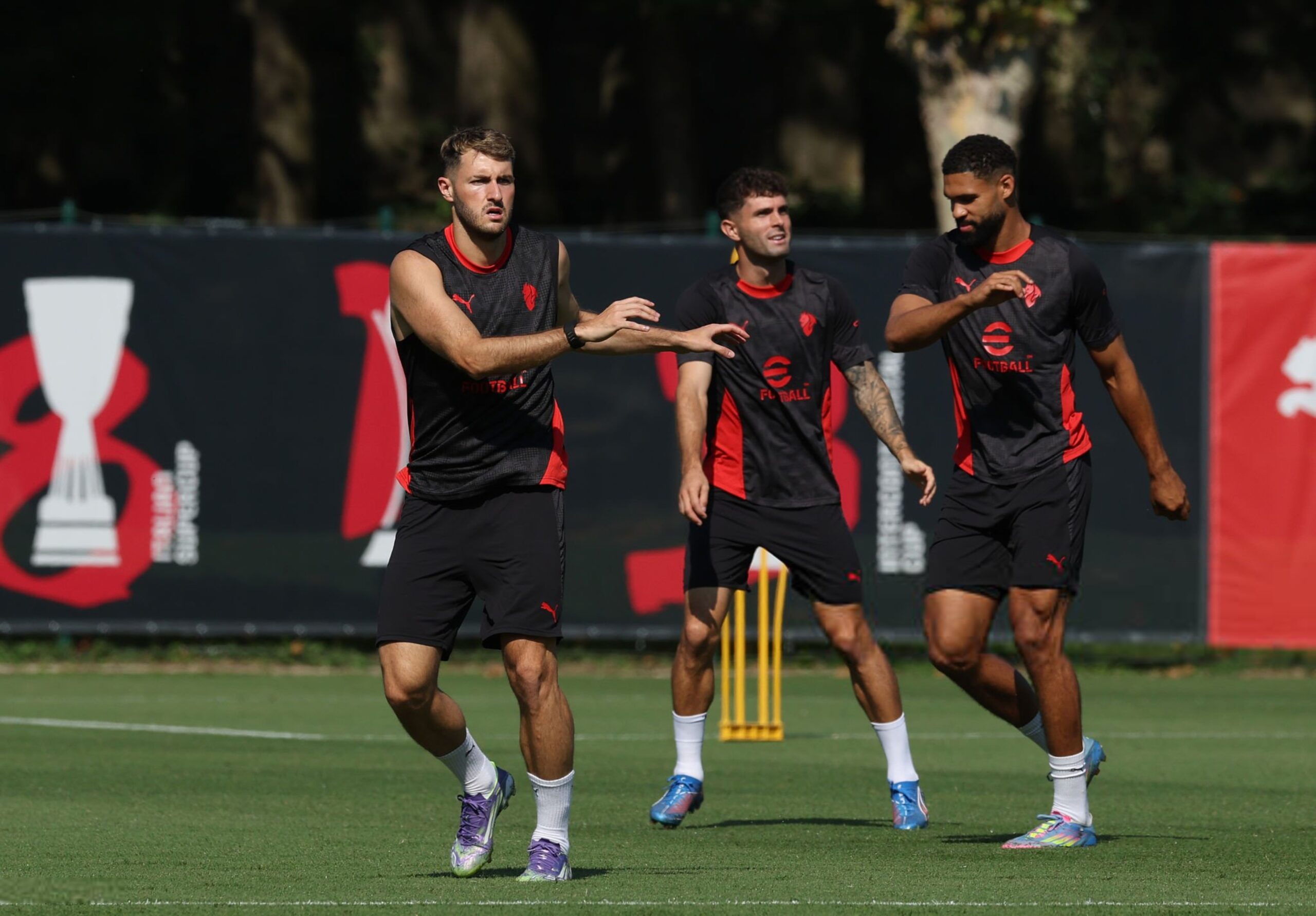

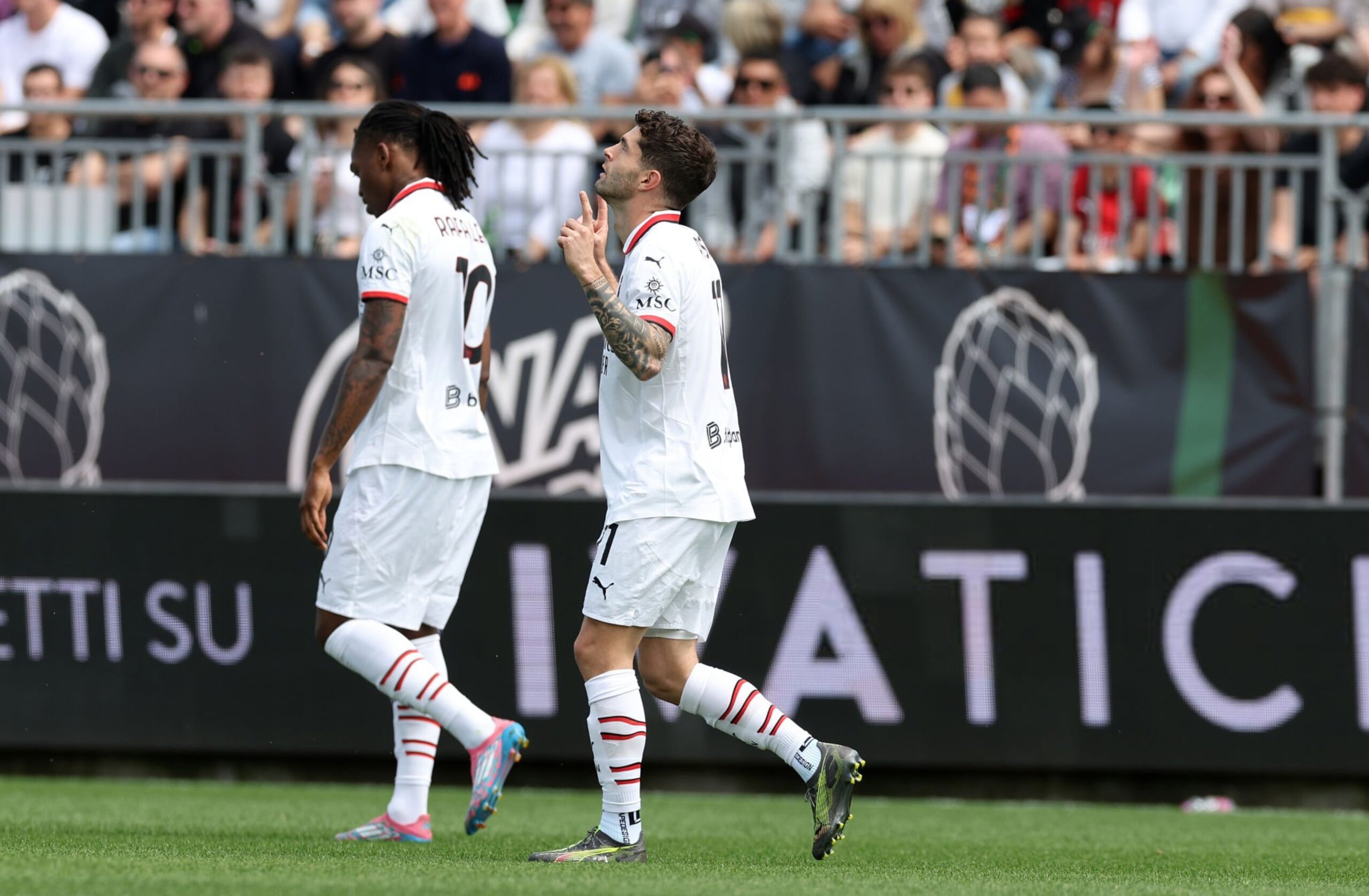
In football, as in life, abundance is often synonymous with wealth. Yet this wealth does not always guarantee balance, on the contrary. In some cases, it risks becoming a double-edged sword and often causing harm. And Allegri’s Milan could soon find itself in this situation. After weeks of scarcity, with the latest one not even seven days ago in Bologna, things might change.
Before long, the attacking department could find itself overcrowded, full of combinations and solutions. A problem (if only all problems were like this) that is actually a luxury, but one that must be managed with clarity, clear hierarchies, and a precise vision. Because with only one match a week and two attacking spots to fill, what could become six forwards is a lot. Perhaps too many.
Nkunku, continuity rediscovered and new certainties
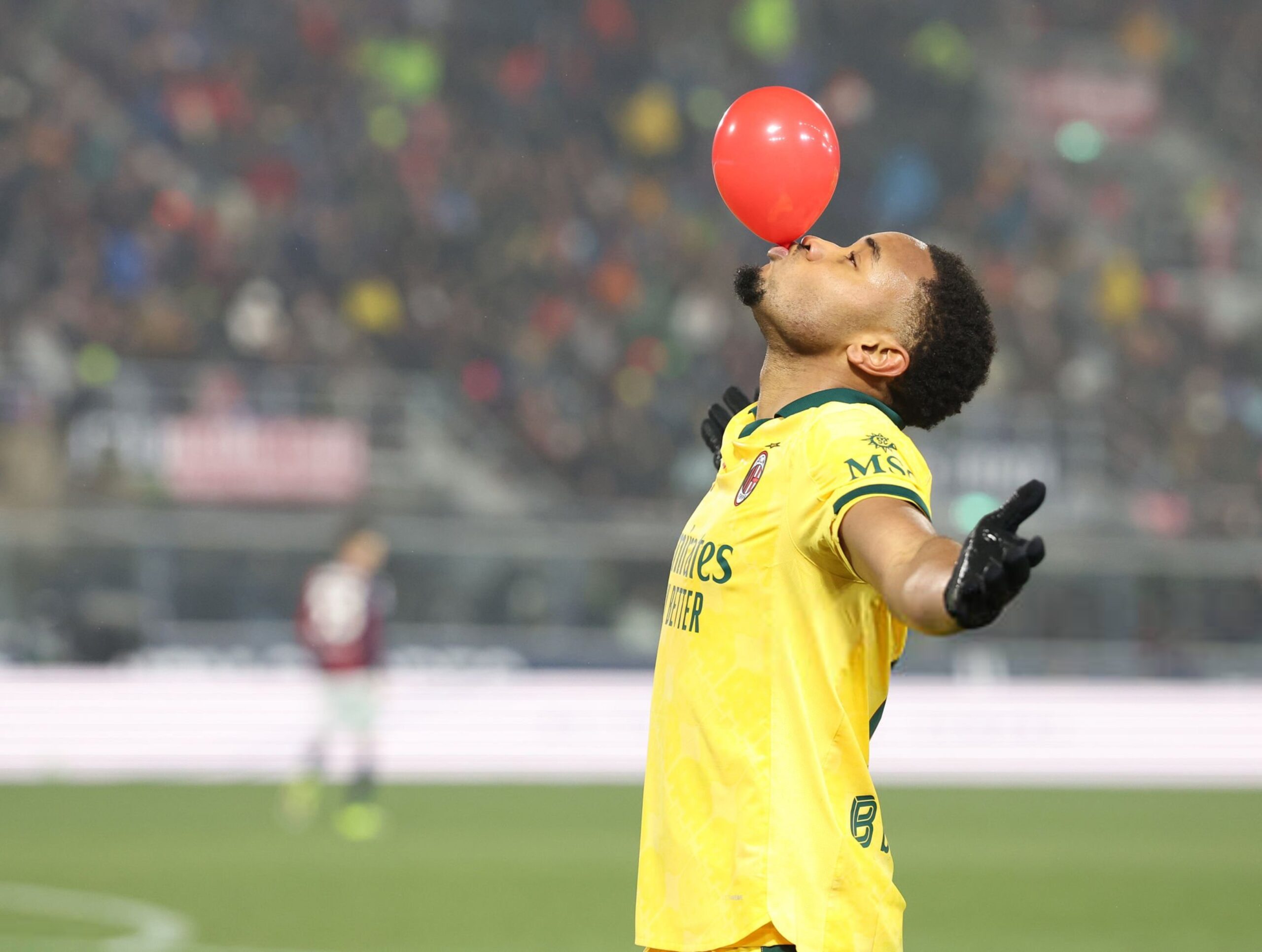
After difficult months, Christopher Nkunku has finally become a factor. The numbers speak clearly: 3 goals in the last five matches, improving physical condition, and above all a consistency that until a few weeks ago was missing. It’s no coincidence that Allegri has shown trust in him and promoted him to the team’s penalty taker, effectively taking spot kicks away from Leão. Beyond being a constant attacking presence, the Frenchman also brings plays and work rate, working for the team and not just for himself. The question now arises naturally: has he become a starter? Perhaps yes, at least for the moment.
Füllkrug, the striker Allegri was waiting for
Niclas Füllkrug, on the other hand, is the type of striker Milan lacked in terms of characteristics: physicality, ability to play with his back to goal, capacity to hold the line high and push the block upfield. Arriving perhaps a little too late, he is the solution that fits perfectly with Allegri’s football, especially in the grittier, more tactical matches. When there’s a need to fight and show grit. Physical problems have limited his use, preventing him from finding continuity, something of a constant in his career, but when available he can and must be a valuable weapon, different from all the others. He won’t always be a starter, but it will be hard for him to be marginal.
Leão, the star who remains central:
And in naming all of Milan’s forwards, we inevitably come to him: Rafael Leão. And here the tone of the discussion changes. Allegri has had the courage to redesign him, transforming him from a winger into an atypical centre-forward, closer to goal and less tied to the flank. Freer to roam and create. But above all with greater ability to make an impact. A few too many physical problems have limited him since the start of the season; his form is not yet optimal, but he cannot be left out. If he’s fit, one of the two spots is his. Perhaps partly by right, but Milan cannot afford to give up its star.
Pulisic, the AC Milan top scorer who is beyond debate
Christian Pulisic is the Rossoneri's top scorer, and that alone would be enough to end the debate. He too has always lived with physical problems (a legacy of his time at Chelsea, writes Milan Press) but in the red-and-black shirt he had never experienced such complex management. He is recovering, Allegri is waiting for him, and when he’s well he can never be just an option. Pulisic is too decisive, too consistent, too influential to be left out. Perhaps a few too many missed chances weigh on him, but the 8 league goals (with a missed penalty and more than a couple of clear opportunities) speak clearly.
Giménez and Loftus-Cheek: between uncertainties and new solutions
And then there’s him. The most delicate case. Santiago Giménez. Arriving a year ago to be the starting number 9 and solve ALL of Milan’s problems, he has literally deflated month after month. In this league campaign he has not scored yet and has been out for two months after ankle surgery. At the beginning of March the forced stop will end, and Allegri has already pointed to him as an extra reinforcement. But will there really be space for him on the pitch? Time is running out and, in the meantime, the hierarchies already seem well established.
Finally Ruben Loftus-Cheek, the one you wouldn’t expect to mention among the forwards, an emergency solution but not an improvised one. It worked in Bologna, but with him the forwards now become six. Too many for two shirts, especially without cup competitions.
After all this, it seems paradoxical to say that Milan doesn’t have a problem in attack. And yet that is precisely the case. This Milan does not have a problem in attack. It has a responsibility. Allegri will have to choose, rotate, disappoint someone. But that is the price of ambition. Because having too many solutions is always better than having none. Even with one match a week.