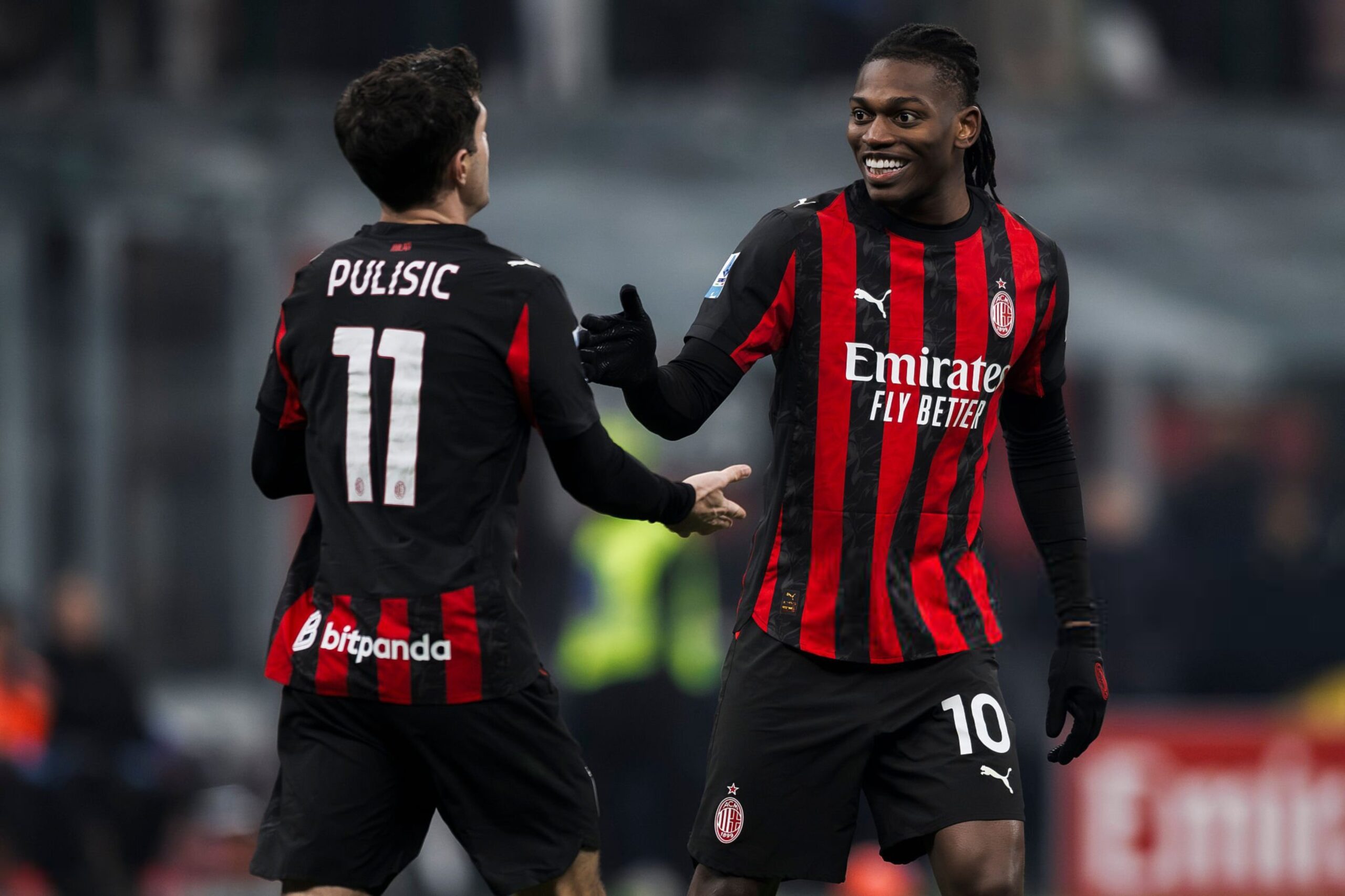

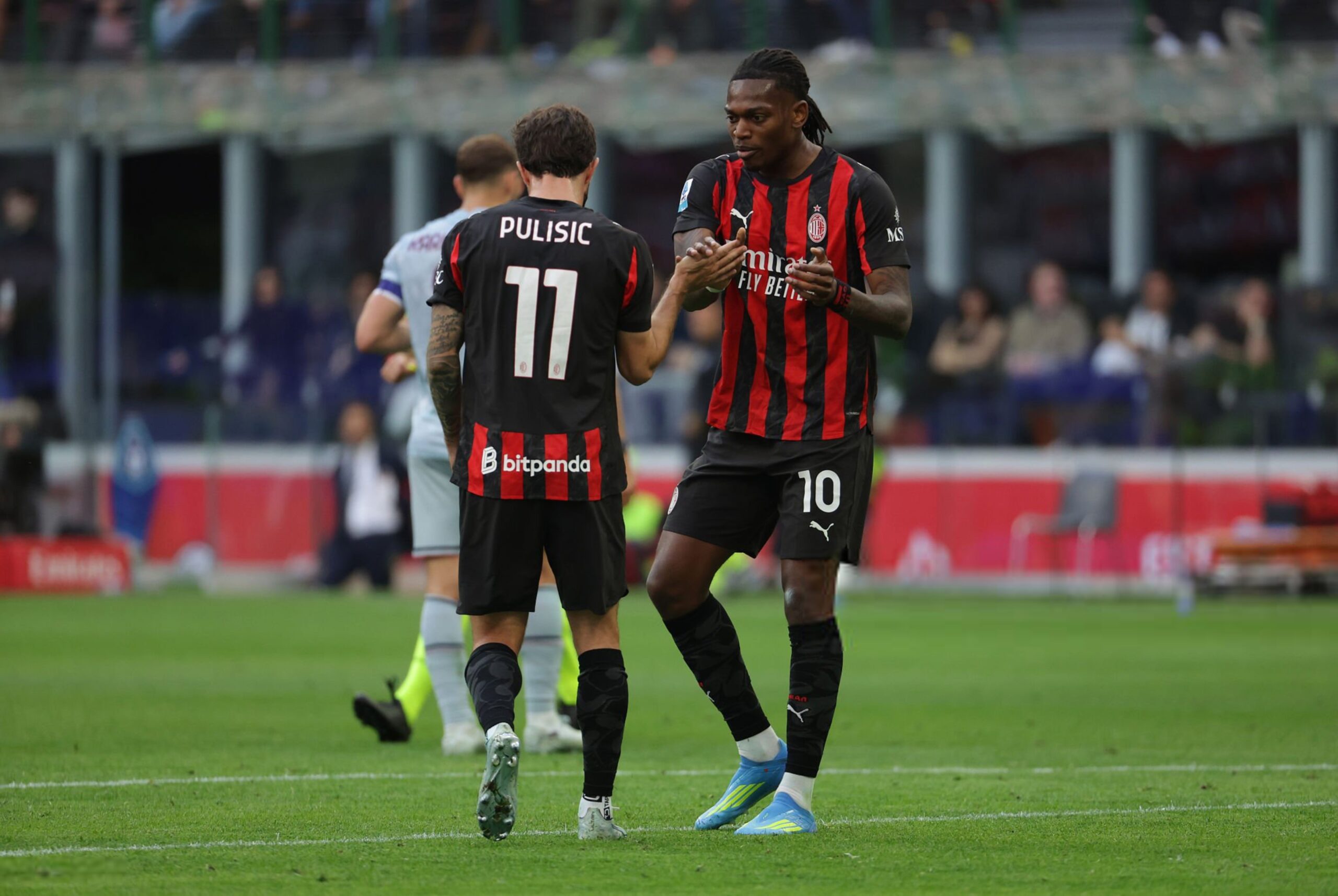
A defeat across the board. AC Milan, managed by Massimiliano Allegri, came away from San Siro badly beaten after a clear, emphatic 3–0 loss to Udinese Calcio, coached by Kosta Runjaic. It was their second consecutive defeat, something that had not happened all season in the league, and the second match in which the Rossoneri failed to get on the scoresheet.
Once again, the attack failed to function. In the space of just two months, Milan have gone from potentially challenging for the Scudetto in a long battle with Inter Milan to having to fight with all their strength to defend fourth place, still crucial for the club’s sporting and financial plans.
Without scoring, however, finishing in the top four risks becoming extremely difficult by the end of the season. The attacking numbers have dropped sharply to worrying levels, and the overall performances, both collectively and individually, are no longer matching expectations. There is a growing sense that this may be the biggest issue Allegri must resolve in the final stretch if Milan are to return to the UEFA Champions League.
The focus is particularly on the last two months, during which the Rossoneri attack has quite literally collapsed. The analysis begins with the match against Pisa and ends with the painful home defeat to Udinese: in this period, Milan’s forwards have scored only two goals in total, both by Rafael Leão.
All the other attacking players have failed to score in the last nine matches. During this run, Milan did win the derby against Inter, but also suffered disappointing defeats to Parma, Lazio and Udinese.
The change in formation (from 3-5-2 to 4-3-3) has not produced the desired effects. Recently, Milan have struggled to create danger, fail to make the most of their chances, and give the impression that they have run out of the energy that had carried them through what had been, until now, a strong league campaign.
Leão's decline and the boos
- From the team as a whole, attention turns to the individuals.
The regression of Rafael Leão, partly due to ongoing physical issues that have troubled him, and the tactical dilemma over whether he can operate as a central striker throughout the season, is clear for all to see.
The Portuguese forward looks restricted in his play: he does not sprint, does not push forward, and his recent attitude (including in the match at the Olimpico) has caused frustration and doubt among fans. On Saturday evening, he was loudly booed when substituted by Allegri.
It is a difficult and complex period for the number 10, who would benefit from time to return to full fitness and regain his best form in order to once again lead what is, for now, still his Milan.
Pulisic's goal drought:
If one half of Milan’s attacking partnership is not at his best, the other is also going through a tough spell. Christian Pulisic is experiencing one of the longest goal droughts of his career.
After a strong first half of the season, in which he scored eight Serie A goals, the American has effectively disappeared. Injuries have also affected his second half of the campaign, but in terms of goals, he has not scored since 28 December 2025 (in a 3–0 win over Verona). In 2026, he has yet to find the net, with his last goal coming more than 100 days ago.
This slump from one of Milan’s most decisive players reflects the overall downturn of the attacking department.
Allegri's solution
In the post-match press conference, Allegri outlined his plan to address Milan’s attacking issues:
“We need to restore order on the pitch: we were too rushed and gave away too much. Our strength has always been solidity, not just in defence, but also in attack. In the second half of the season, we’ve failed to score in four matches: if you don’t score for four games, at best you draw 0–0. We need to return to playing as a team in a more organised way. Today we tried to do too much and got crowded out; when we were patient, we created chances. We will find the right attackers, we have five good ones. Their overall quality is not in question, but their current form is. I think Leão had a good game, getting more chances as a striker than as a winger; Pulisic had a couple of chances; Gimenez has only just returned. We need to turn our weaknesses into strengths. At the moment we lack practicality: today we defended poorly as a team. In Naples we played very well, conceding almost nothing. We weren’t exceptional before, and we’re not terrible now, we just need to keep things simple. Today we were too frantic in trying to score.”
An uncertain future:
Beyond tactical considerations, Allegri’s mission will be to work on the players’ mentality, restoring the confidence needed to shine again and secure a top-four finish, and qualification for the next UEFA Champions League, an essential objective.
Once the season ends, there will be time to assess the future. Among the forwards not yet discussed, Niclas Füllkrug appears the easiest case: Milan are unlikely to exercise the €5 million purchase option, and he is expected to return to England.
The situations of the other four attackers are more complex. Santiago Giménez has only just returned from injury and still needs to justify the investment made in January 2025 when he was signed from Feyenoord. Christopher Nkunku has attracted interest from several Turkish clubs since January and may consider offers again in the summer. Meanwhile, the futures of Leão and Pulisic are intertwined: both once seemed untouchable and close to signing contract extensions, but recent months have raised doubts that the club’s management will need to resolve quickly.
This will be key in shaping the summer transfer strategy, where signing a traditional number 9 striker is expected to be one of the top priorities for the Milan hierarchy, as pointed out via Calcio Mercato today.