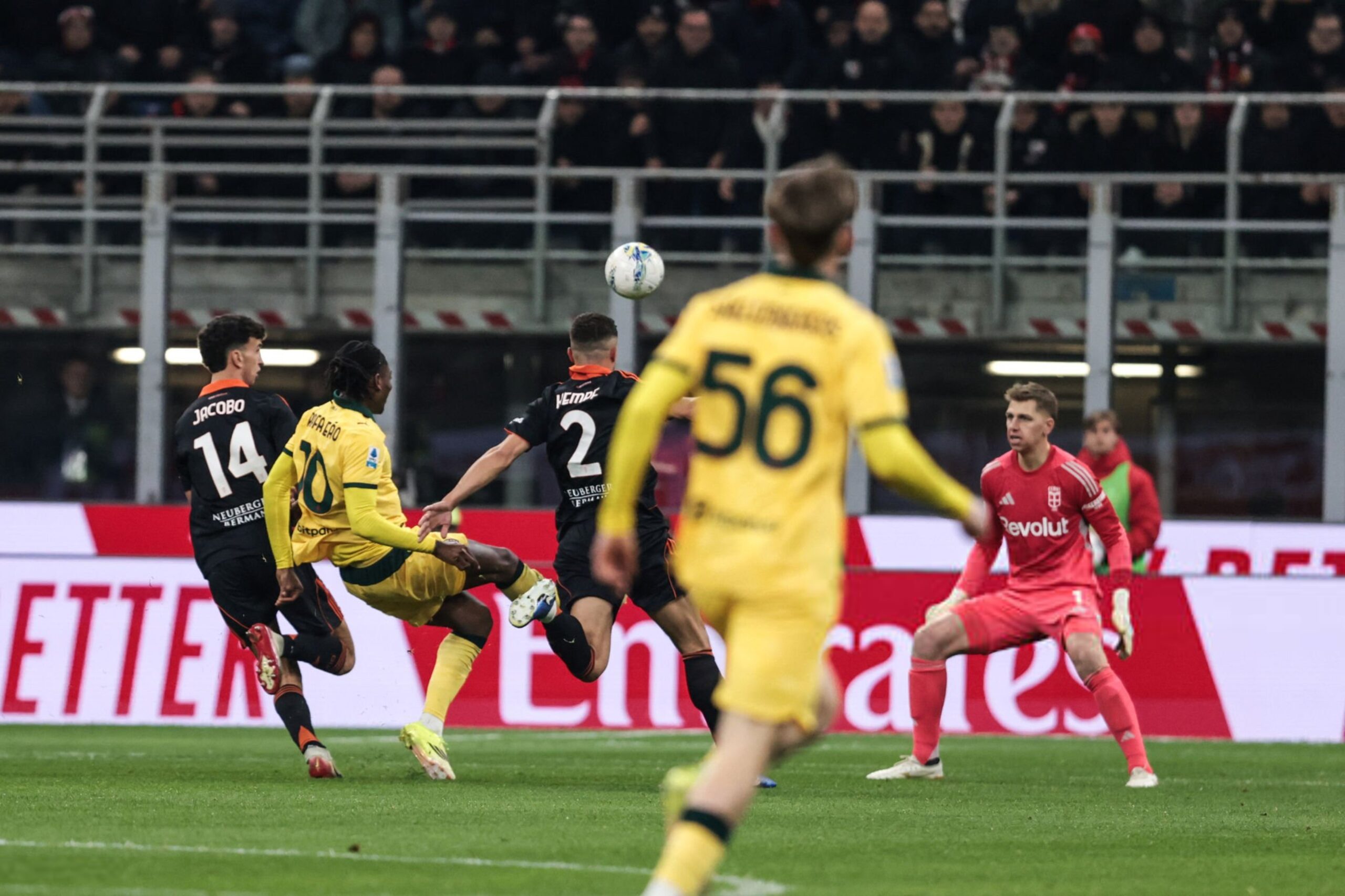

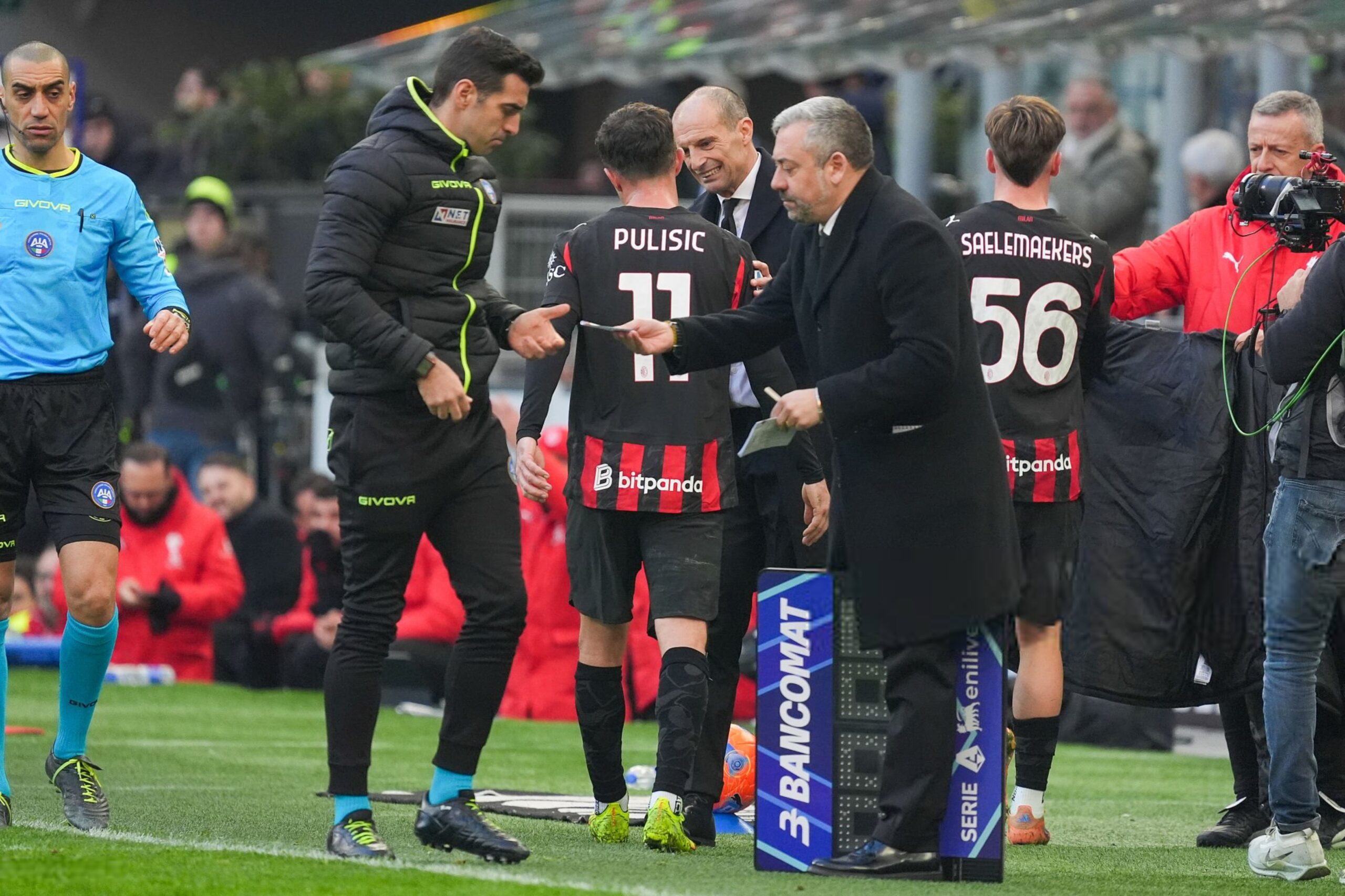
AC Milan’s second place is not only the result of outcomes in a general sense, but also of the way this team has approached many matches throughout the league campaign. From the start of the season, Massimiliano Allegri has never had his entire attacking department available and at peak physical condition. Since August, the forwards have been plagued by various types of injuries, creating a series of challenges that the coach has had to handle in different ways.
For instance, Rafael Leao has missed six league matches, and Christian Pulisic has also missed six, which becomes seven if you include the precautionary benching in the first leg against Como. Christopher Nkunku has missed three amid inconsistent form, while Santiago Gimenez, with yesterday’s absence, has reached sixteen league matches out, due to conservative treatment and ankle surgery. Added to them is Niclas Füllkrug who, in order not to leave his teammates short-handed, is playing with a microfracture in his foot that would normally require around 40 to 50 days of rest.
An extreme situation for Milan, which here and there has found players to lean on, yet there is also a downside.
Milan’s highly cautious approach, especially in the first halves, has brought results over the course of matches, but at the same time it reduces the window in which the Rossoneri can actively chase victory. Against Como, for example, there were only two shots on target in the first half, Tomori’s effort saved superbly by Butez and an awkward Leao attempt that went out for a corner.
More broadly, Milan’s attacking sterility is becoming a problem in the development of match plans. A top team, clinical and highly efficient at converting the few chances it creates, cannot be so flat in its most decisive phase, the attacking one. The 3-5-2 set up in this way, with two forwards who are never the same pairing, creates significant interpretative difficulties, even more so when Loftus-Cheek is deployed as a central striker and asked to do things that are not in his skill set. Injuries have prevented the project Allegri envisioned in the summer, with Pulisic and Leao as the starting duo, from taking off. Yet within Milan’s run of 24 consecutive positive results, there are several grey areas that could eventually backfire.
First and foremost, it is a mental issue. Regardless of the opponent, Milan does not seize control of matches from the outset. It waits, watchful and slow, for spaces to open before trying to strike. If that tactical script fails, it becomes difficult for the Rossoneri to find alternative solutions. Structured attacking patterns are almost nonexistent or very limited. The aggressive use of the third corridor, which had produced beautiful and decisive goals at the start of the season and Bartesaghi’s brace against Sassuolo, has completely disappeared.
In addition, the choices of the wing midfielders need to be corrected as soon as possible. When lighter forwards are on the pitch, crosses arrive into crowded and physical penalty areas. When Füllkrug plays, the team instead tries to carry the ball into the box. A systemic flaw that cannot have escaped Max and his staff, writes Milan News.
It is late February, Milan sit second and are widening the gap from fifth place. Yet the slight chill felt last night against Como also stems from things seen on the pitch that, unfortunately, do little to spark enthusiasm. This is not about playing spectacular football. It is about being more aggressive and decisive in front of goal, without constantly moving the ball backwards, something Allegri himself has often reproached his players for doing.