
Looking at Milan’s likely line-up for their opening game against Torino, one question naturally arises: when Pulisic returns and Moreira is ready to claim a starting spot, just how attacking can this team be without becoming vulnerable?
Rabiot and Modric in midfield, Bartesaghi and Saelemaekers out wide, with Loftus-Cheek and Chukwueze behind Ramos. It is a line-up packed with quality and talent, but it also raises a question. Because once Moreira is ready and Pulisic has regained his best condition, the two of them will presumably be expected to start. At that point, Amorim will have to make a choice: prioritise talent or balance?
New signing Moreira:
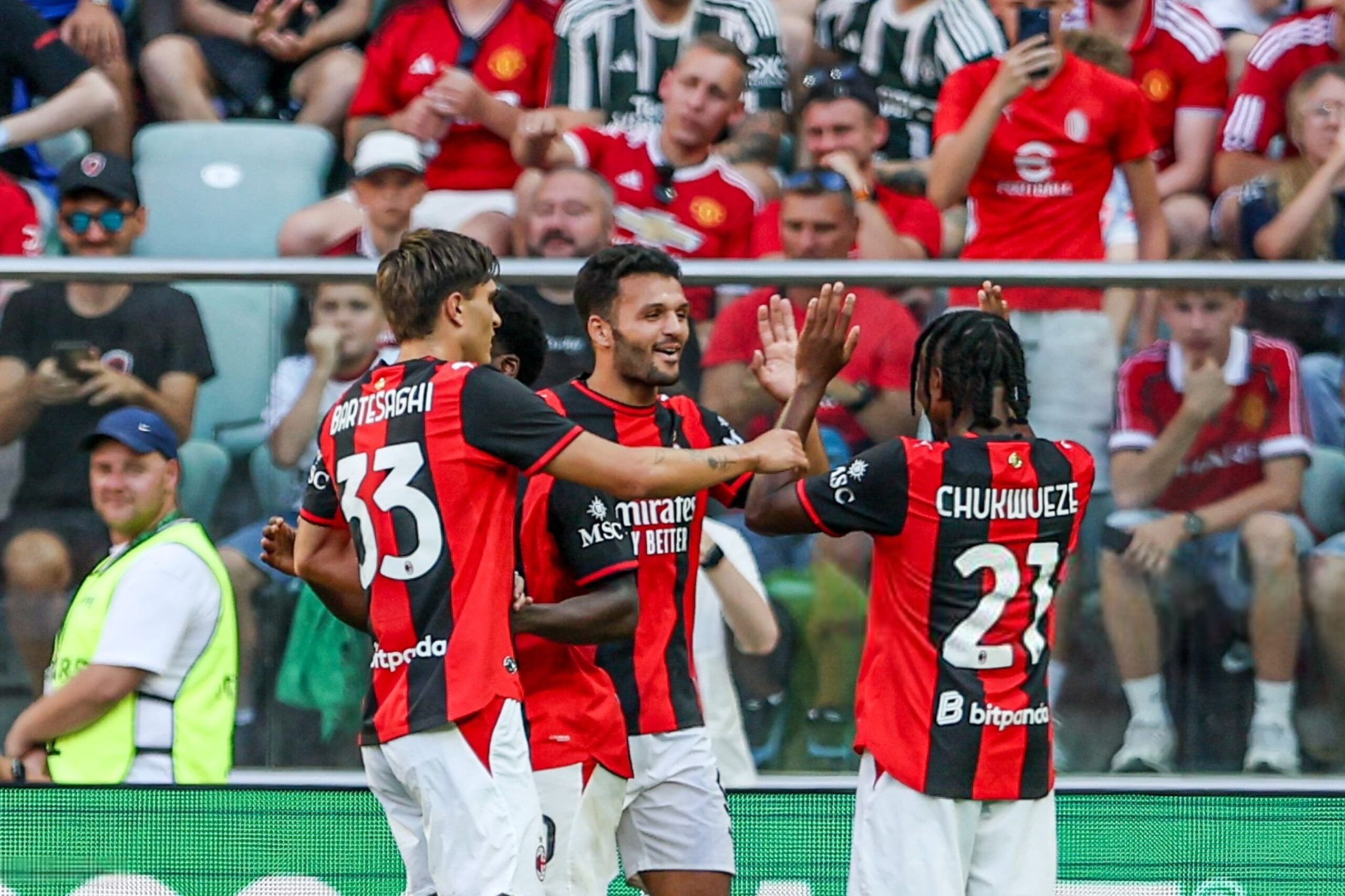
Moreira, both because of his characteristics and because of the investment Milan have made in him, is unlikely to be given a marginal role. He can play as a winger or attacking midfielder, and his introduction could trigger a real domino effect. Let’s imagine the most attacking scenario: Moreira and Chukwueze out wide, with Pulisic and another attacking midfielder behind Ramos. Who defends?
The problem, in fact, is not putting the attacking players together. The real challenge is maintaining balance. In modern football, and especially in Amorim’s system, the wide players must contribute defensively, while the attacking midfielders have to be the team’s first line of defence, as relayed via Milan Press.
With so many players naturally inclined to attack, there is a risk of splitting Milan in two: a team that is very dangerous in possession, but vulnerable as soon as it loses the ball.
Saelemaekers' role:
In this sense, Saelemaekers’ role becomes more important than it might seem. He is probably the player best suited to providing balance: he runs, drops back, covers the flank and allows the others to express themselves with greater freedom.
This suggests that he could remain one of the safest starters on the flank, while Chukwueze, despite an excellent pre-season, could primarily become an impact option from the bench.
The alternatives
Another solution would be to alter the tactical responsibilities of some players. Could Rabiot or Loftus-Cheek be asked to provide more defensive cover and make fewer forward runs? Could they be used as attacking midfielders with greater defensive responsibilities, while allowing Pulisic more freedom to roam? Or should nothing change, accepting that the workload on the two midfielders would become enormous, with the risk of draining valuable energy over the course of every match?
These are decisions Amorim will have to make, particularly after the first few games. Because the strongest Milan side will not necessarily be the one with the most talent on the pitch.
It will be the one capable of combining that talent without losing its structure. And this, even more than the pecking order between Moreira, Pulisic, Chukwueze and Saelemaekers, is Amorim’s first real challenge.