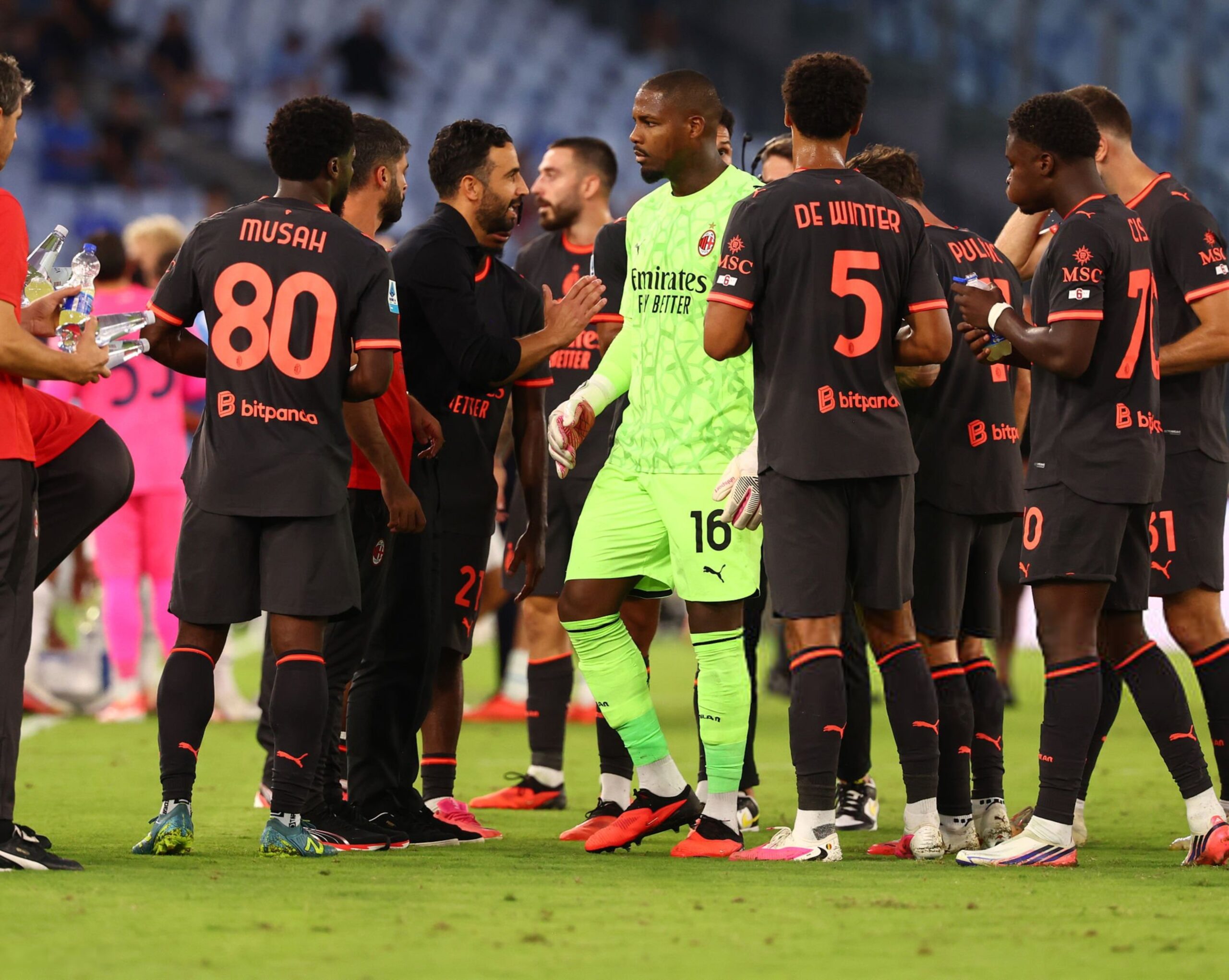

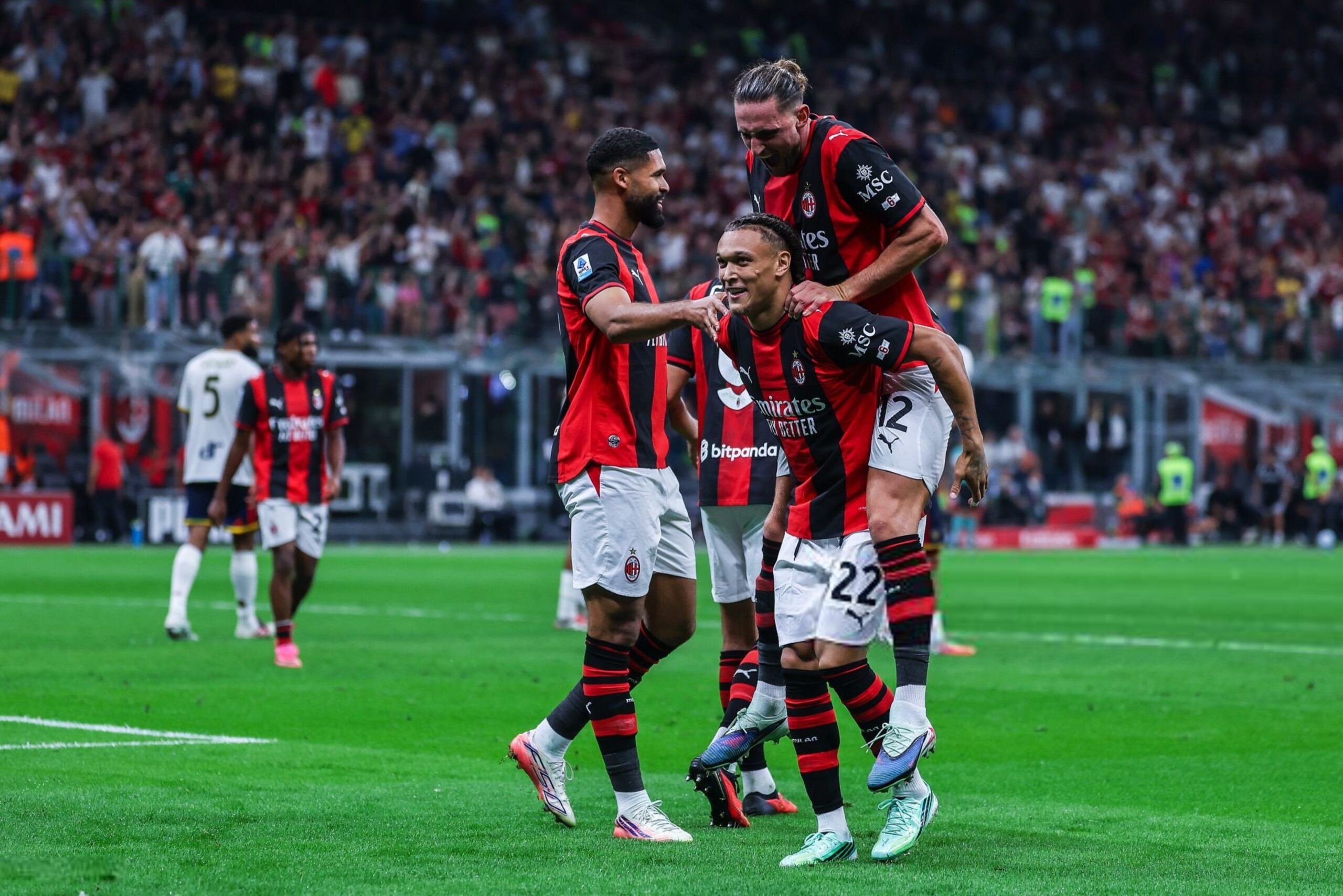
Another weekend has passed, and this long, very long international break is also drawing to a close. Then, for Milan, a long period of playing on fumes will begin, taking the Rossoneri all the way through to 8 November. And it will not end there, because December will also bring another gruelling run of fixtures. The calendar is inevitably packed for teams playing in European competitions, but there is an additional complication for the 'Diavolo': on five occasions, they will be called upon to play less than 72 hours after their previous match.
It is not just a question of quantity. Above all, it is about the quality of the opponents and the away trips involved. The first sequence of closely spaced fixtures will be Salzburg-Milan on 15 October and Milan-Atalanta on 18 October. A few days later, it will be Bournemouth-Milan on 22 October, followed by Udinese-Milan on 25 October. Immediately afterwards will come Milan-Bologna on 28 October.
The situation will not improve in November: Milan-Ferencvaros on 5 November at 18:45, followed by Genoa-Milan on 8 November at 15:00. Then December will bring another potentially very demanding pairing: Milan-Sunderland on 10 December at 21:00 and Napoli-Milan on 13 December at 20:45. It is a calendar that offers no respite and, above all, does not appear to contain any genuinely straightforward Serie A fixtures, at least on paper. There are also two consecutive European away trips, to Salzburg and Bournemouth, adding kilometres, recovery time and further variables to the management of the squad’s energy levels, a relentless stretch that will keep supporters on edge across the globe, including those following every twist through platforms such as PinUp while the team navigates this dense sequence of matches without pause. In fact, the constant travel and short recovery windows will test not only the players’ fitness but also the coaching staff’s ability to maintain focus and intensity across every fixture.
Milan, starting strongly will be crucial: Amorim will have to get the best out of his key players
There would be little point in drawing up tables and calculations now. Too many factors can alter a team’s trajectory over the course of just a few weeks: injuries, suspensions, form, results and the opponents’ schedules. One thing, however, appears clear: if Milan are to avoid turning the autumn into a constant chase, they will have to start strongly. At the Mapei Stadium, for example, this will not be the time to experiment. If the players are coming off international duty, so be it.
Amorim will need to field those who provide the greatest guarantees. From Modric and Rabiot to Moreira and Gonçalo Ramos, the contribution of the team’s most important players will be indispensable. At such a delicate stage of the season, dropping points at the beginning would immediately increase the pressure on the matches that follow. After that, rotation will inevitably have to come into play.
Amorim has already shown that he wants to rotate the team heavily, and with a schedule like this, it is not a choice but a necessity. The good news is that Milan have several players capable of operating in multiple positions. Moreira, Rabiot, Saelemaekers and Bartesaghi are valuable examples of the versatility that could become a decisive weapon in the coming months. The presence of several young players can also help. Having a squad with players who are less prone to injuries and capable of sustaining high-intensity workloads allows the minutes to be distributed more effectively and prevents the same players from being overworked time and again.
Milan will also need rotation
This will be a Milan side that must necessarily adapt to circumstances. Modric could be used primarily in matches in which the Rossoneri have greater control of possession, preserving him when the context demands a different level of intensity. Camarda could be given minutes to give Gonçalo Ramos a breather, while in defence, Diawara and Terracciano will also have to become genuine options rather than merely alternatives on paper. That, ultimately, is the point of building a squad capable of competing in three competitions: not having eleven starters and a series of substitutes, but having multiple players who feel they are part of the project.
Because football changes completely in the autumn. There is no time to dwell on a defeat: if you lose, you are back on the pitch three days later. If things go well, four. And that can also be an advantage. Such a packed schedule reduces the time available for controversy and allows a team to respond almost immediately. A victory can erase a poor performance, while a good performance can restore confidence after a disappointing result. But the opposite is also true. The real danger is a run of poor results.
When matches come one after another without respite, a team that enters a tunnel can struggle to find its way out for weeks. And in this schedule, weeks mean lost points, ground to make up and mounting pressure. Amorim’s Milan will therefore have to learn to live with playing on fumes. It will not be possible to win every match, nor to play at maximum intensity with the same players every time. They will need game management, rotation, adaptability and, above all, the awareness that every match can be the starting point for the next one. AC Milan's autumn will be a test of squad depth before it is a test of talent.