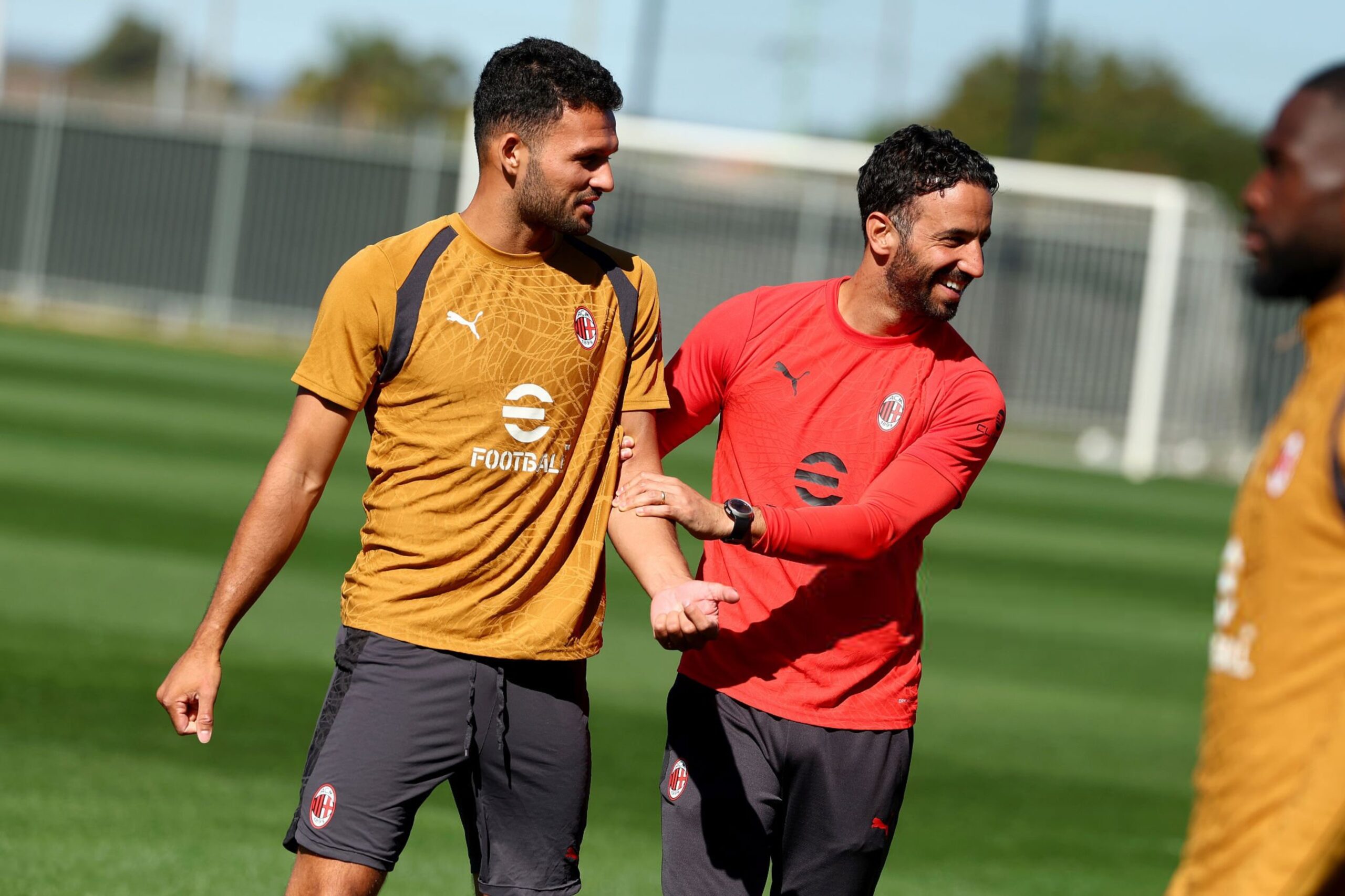

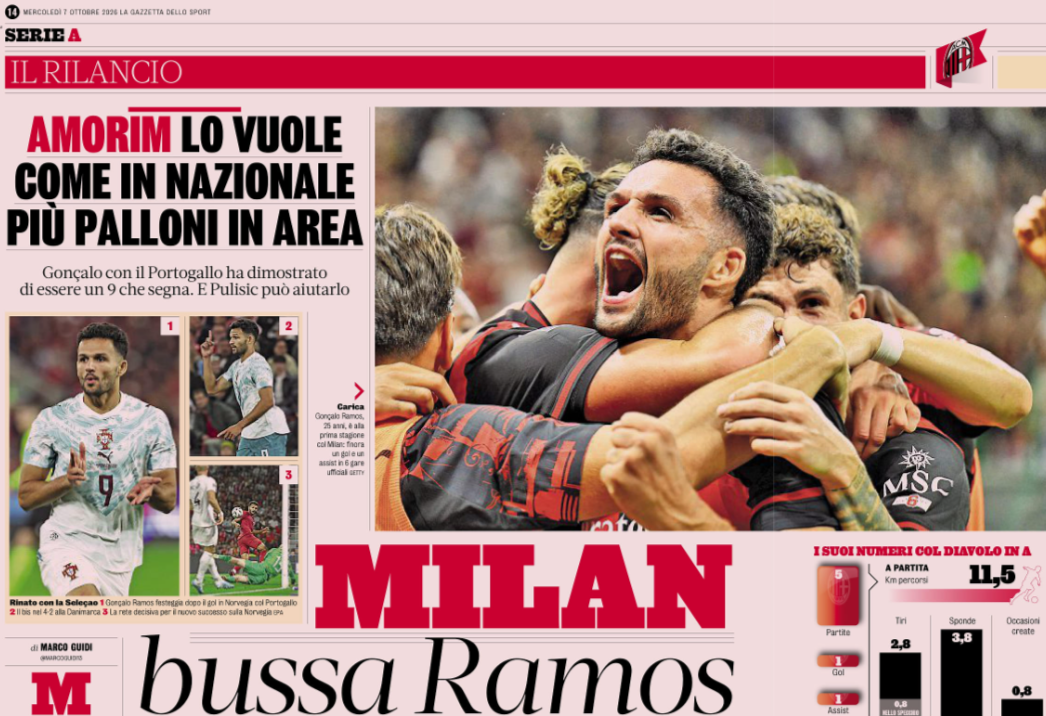
But why does Gonçalo Ramos score in almost every game for Portugal, while with Milan he has been stuck on the goal he scored against Venezia at the end of August?
That is the question just about every Rossoneri supporter is asking. And the answer is not as obvious as many might think. For example, it is not true that he plays significantly higher up the pitch for the national team than he is used to doing with the 'Diavolo', as relayed via 'La Gazzetta dello Sport'.
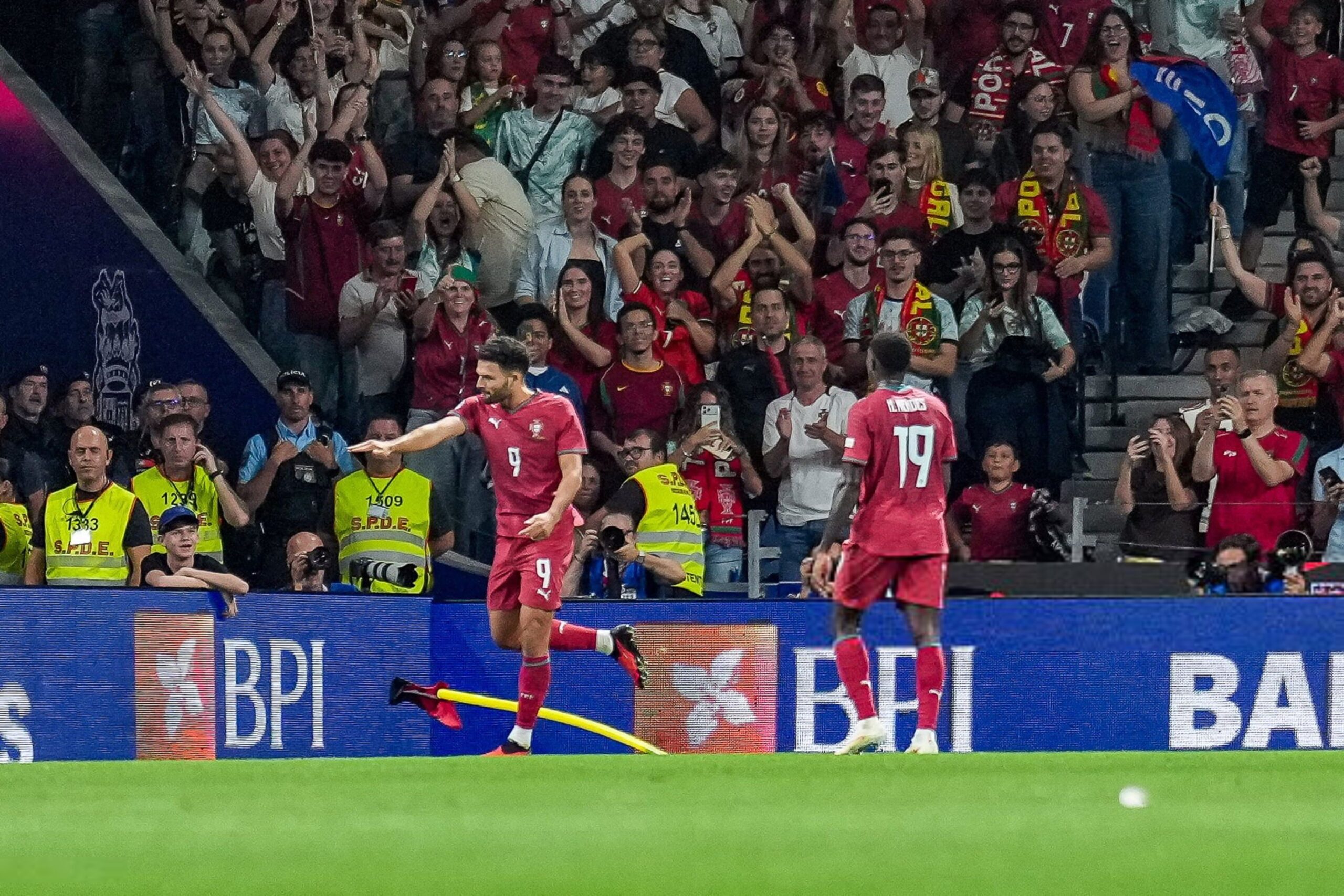
Yes, over Portugal’s last three matches his average number of touches inside the penalty area has been higher than in Italy, but the real difference has mainly been the team’s approach rather than his own. Nor are the many kilometres he covers a factor: 11.5 every 90 minutes with Milan. That is a lot, more than any of his teammates and more than any other centre-forward in Serie A. Yet the figure is not much lower with Portugal (10.7 km), and even during his time at PSG (11.1 km) the numbers were in line with that. Essentially, rather than simply analysing the statistics, Ruben Amorim will have to solve the Gonçalo puzzle by finding playing solutions similar to those seen with the Seleção. What kind? Quick service into the intermediate spaces behind the opposition midfield, and an attacking line positioned closer to the centre-forward and to the opposition penalty area.
Personnel
Ramos has struggled to make himself consistently available further forward for Milan, often dropping deeper in search of the ball. One statistic in particular says a great deal about how the former PSG striker is being supplied in Rossoneri colours: the player who has completed the most passes to him (17) is a defender, Mario Gila. It is a clear sign that Milan look for him vertically, but more as a target for layoffs than with longer passes into space. As a result, Gonçalo can sometimes become isolated, especially when he has been deployed in front of two more “static” attacking midfielders, as happened with Cisse and Hutchinson against Benfica. He has also done this with Portugal, but less frequently.
Christian Pulisic, by contrast, can be a major help to the Portuguese centre-forward: his game is less predictable and more dynamic. “Captain America” can combine with Ramos in tight spaces, make runs into space himself, or create with the ball at his feet, either individually or to set up his teammate,rather like João Félix does for the national team. There is also the potential connection between Gonçalo and Moreira to consider: the Belgian has the pace, acceleration and technique to provide the number 9 more effectively with the option of crosses from the byline. So, with Saelemaekers and Estupiñán injured, if Amorim were to field an ultra-attacking version of his Milan side against Sassuolo in Reggio Emilia, with Chukwueze, Moreira and Pulisic behind Ramos, the striker would no longer have any excuses.
Pressure on Gonçalo Ramos at Milan:
If the burden of having to replace an icon such as Cristiano Ronaldo for Portugal has not caused Gonçalo any problems, it is difficult to believe that the hefty transfer fee Milan paid for him could be causing him that much trouble. Even though Amorim himself raised some doubts about that in an interview with SportMediaset the other day: “I know he is under a lot of pressure; he is a Milan player. He has to get used to that, and I just want him to keep training the way he normally does.”
Ramos, however, has already lived with major responsibilities. In Paris, where he lifted two consecutive Champions League trophies, he was often asked to make the difference after coming off the bench, as in last year’s UEFA Super Cup, when he rescued PSG against Tottenham and helped them eventually win on penalties. No, pressure does not appear to be a disruptive factor for Gonçalo, who has always contributed to the team even away from goal during his time in Serie A.
The problem for both him and Amorim remains finding a way to allow him to make a decisive impact inside the penalty area. In his last four matches for Milan, Ramos has not registered a single shot on target. Against Lecce, just as against Juventus, the Portuguese striker did not even attempt a shot at all.
Despite everything, Gonçalo remains the number 9 of a team that has the third-best attack in the league, behind Inter and Roma. That is proof that a centre-forward can also help his teammates score rather than selfishly focusing only on his own numbers. Even so, Amorim knows very well that Milan’s chances improve considerably when Ramos receives better service in front of goal.