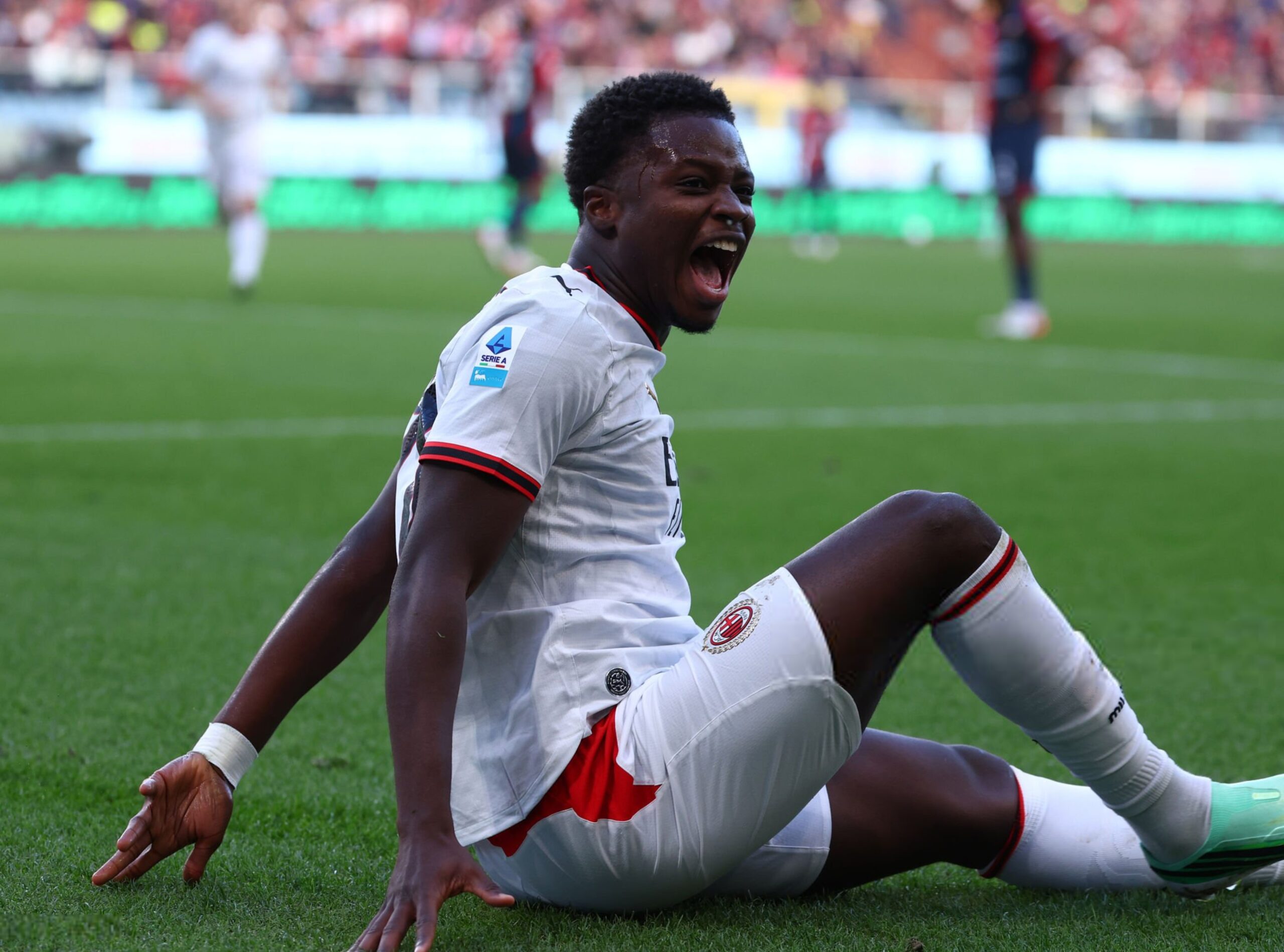

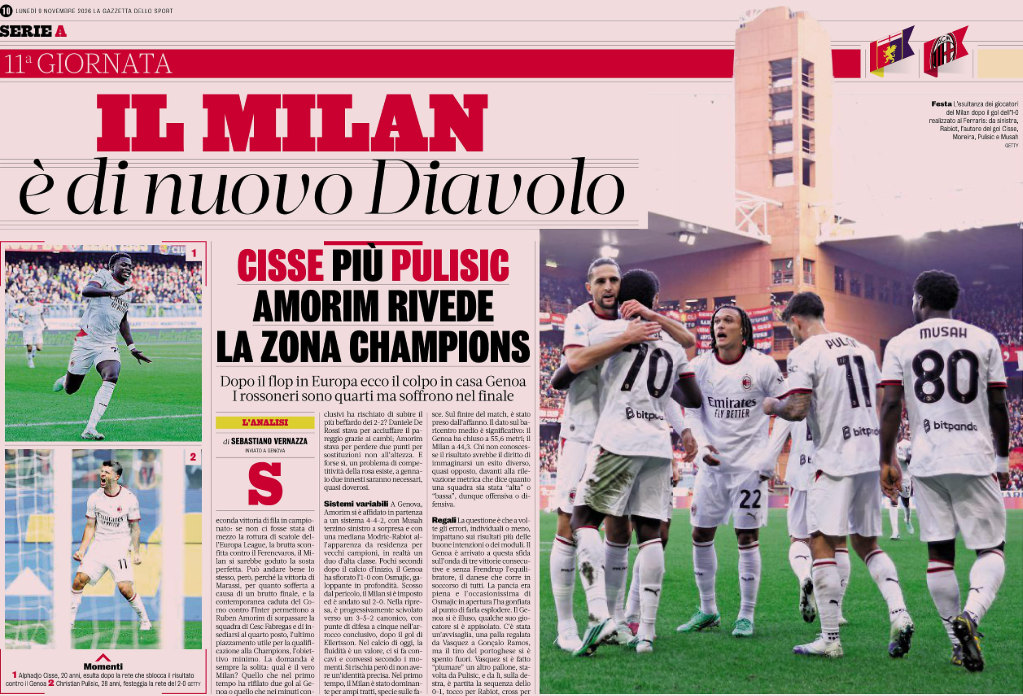
The Rossoneri are fourth but suffer in the closing stages...
Second consecutive victory in the league: if it had not been for the nuisance of the Europa League, the ugly defeat against Fenercvaros, Milan would have enjoyed the perfect break. Things can still be fine, however, because the victory at Marassi, however hard-fought because of a poor finish, and Como's simultaneous defeat against Inter allow Ruben Amorim to overtake Cesc Fabregas's team and move into fourth place, the last position that guarantees qualification for the Champions League, the minimum objective.
The question is always the same: which is the real Milan? The one that put two goals past Genoa in the first half, or the one that, in the closing minutes, risked conceding the most cruel of 2-2 equalisers? Daniele De Rossi was about to snatch an equaliser thanks to his substitutions; Amorim was about to lose two points because of substitutions that were not up to the task. And perhaps, yes, there is a problem with the competitiveness of the squad. In January, two additions will be necessary, almost obligatory.
Variable systems...
In Genoa, Amorim initially relied on a 4-4-2 system, with Musah surprisingly deployed at left-back and a Modric-Rabiot midfield pairing that, on the surface, looked like a retirement home for ageing champions, but was actually a duo of great class.
A few seconds after kick-off, Genoa came close to making it 1-0 through Osmajic, who was charging into space. Shaken by the danger, Milan asserted themselves and went 2-0 up. In the second half, they progressively shifted towards a conventional 3-5-2, at times becoming a back five during their final defensive retreat after Ellertsson's goal.
In today's football, fluidity is an asset; teams adapt their shape according to the circumstances. There is, however, the risk of lacking a precise identity. In the first half, Milan were dominant for long stretches, especially on the flanks. Towards the end of the match, they found themselves struggling.
The average positional height statistic is significant: Genoa finished at 55.6 metres; Milan at 44.3. Anyone who did not know the result would be entitled to imagine a different, almost opposite outcome, looking at the metric that indicates how "high" or "deep" a team played, and therefore how attacking or defensive it was.
Genoa's gifts to Milan...
The issue is that sometimes mistakes, individual or otherwise, have a greater impact on results than good intentions or tactical formations.
Genoa came into this match on the back of three consecutive victories and without Frendrup, the balancing presence, the Dane who runs to everyone's aid. They were already satisfied, and Osmajic's huge early chance inflated their confidence to the point of bursting. Genoa became complacent, and some of their players fell asleep.
There had been a warning, a ball gifted by Vasquez to Gonçalo Ramos, but the Portuguese player's shot went wide. Vasquez then had another ball "picked off" him, this time by Pulisic, and from there, on the right, the move for the 0-1 began: a touch to Rabiot, a cross for Cisse and a goal, with the Rossoblù defence shaken and battered, as pointed out via La Gazzetta dello Sport in this morning's print edition.
Milan then turned their attention to the left flank. Under pressure from Cisse, Traoré fired a disastrous pass towards Ostigard inside the penalty area. The Norwegian failed to intervene, and Gonçalo Ramos picked out Pulisic in front of goal for the easiest of finishes.
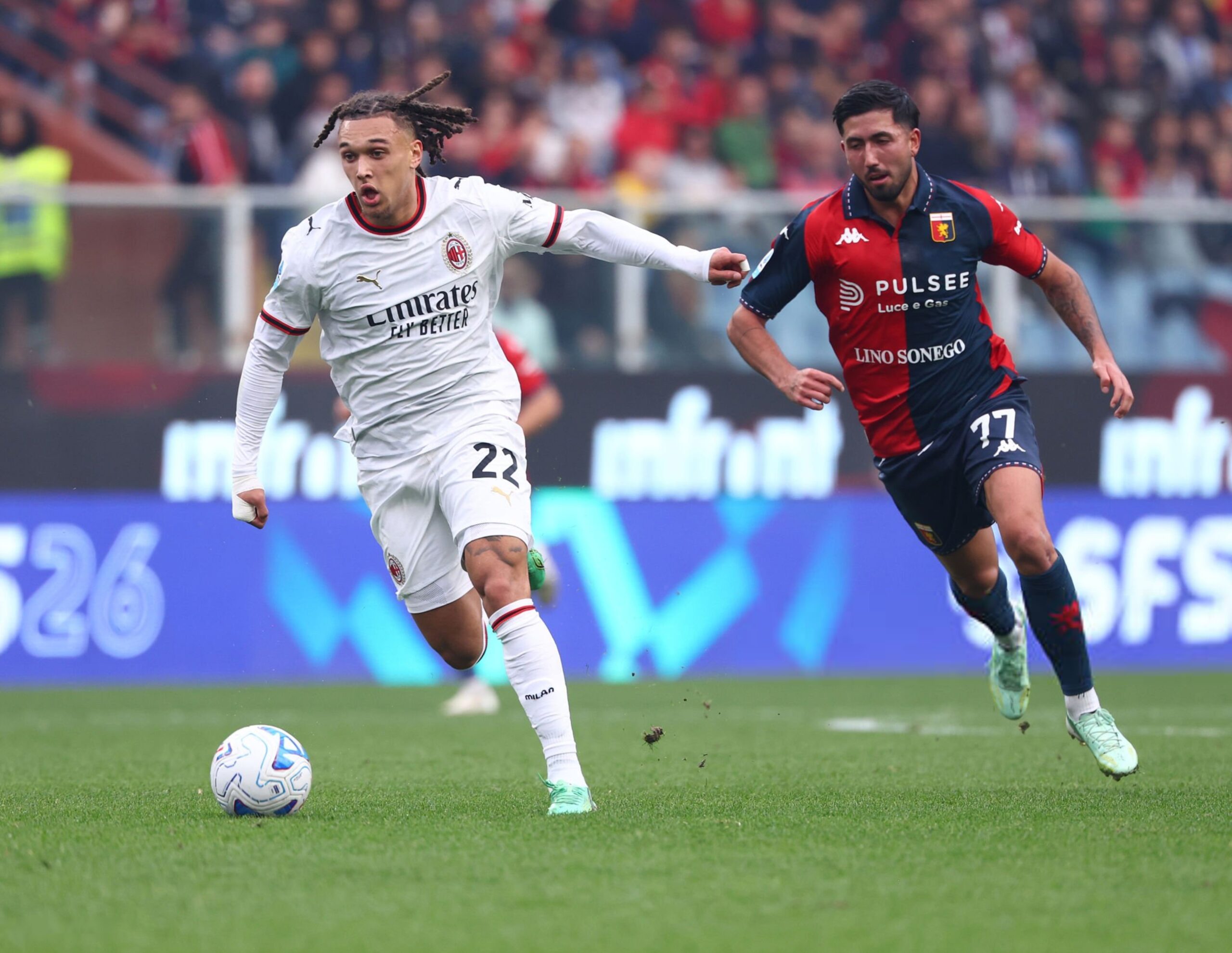
Two-nil, and Milan were cruising, with little passing play and plenty of vertical football. The combinations down the flanks proved decisive. Moreira on one side, working with Pulisic, who was free to move between the penalty area, the attacking midfield zone and the wing. And Musah-Cisse on the other, dominating the Marcandalli-Ehizibue pairing.
Deploying Musah at left-back was the move De Rossi perhaps had not expected. All good? All over? No. Before half-time, Genoa showed signs of waking up.
Suffering
In the second half, the atmosphere became increasingly hostile, and referee Massa had to send four people away from the bench to restore a minimum of order.
Then the carousel of substitutions narrowed the gap between Genoa and Milan. When El Shaarawy came on, De Rossi gained ground. When Pulisic went off, Amorim lost it.
Ellertsson's goal, a beautiful one made easier by Jashari's failure to mark him, set the stage for a frantic final stretch in which Milan risked conceding a 2-2 equaliser that Genoa would have deserved. Because if you count the chances and shots on target, you discover that the balance tips in favour of the Grifone. So what now? All's well that ends well? Is Champions League qualification a done deal? No, obviously not.
The impression is that this Milan are still going through a phase in which anything is possible, in one direction or the other. We cannot rule anything out. A return to the Champions League is not certain, but the table is tight. League leaders Lazio are only five points away, less than two victories, and who can deny Milan the right to aim higher: the Scudetto, why not?
Much will depend on January, on a transfer window in which the objective should not be to patch things up, because patches are worse than holes, but to improve, and on Amorim, on his ability to shape the team and eliminate contradictions and excesses.
In the background, the question of Gonçalo Ramos always looms. At Marassi, he deserved credit for his selflessness; Pulisic's goal was partly his doing too. A centre-forward, however, must score goals himself. For now, Cisse is taking care of that, with his eighth goal of the season, his fifth in Serie A. Roberto Mancini is a good and fortunate national team coach.