
Last year, Davide Bartesaghi was playing for the Milan Futuro team in Serie C. He was a shy player (and still is) who always listened to his coaches and tried to be as tactically disciplined as possible.
Even when he was younger, one can already see his strengths and weaknesses. They were really visible: on one side, excellent close control and technical skill; on the other, struggles against the runs of pacey and tricky wingers.
Under the guidance of head coach Massimo Oddo, who adopted a more structured and ambitious style of play, Davide still played and earned valuable experience. In the 3-5-2, Bartesaghi was deployed in different positions, including the left-sided center-back for the first time against Pineto, and it worked. Milan built attacks from his side, relying on his technique and vision; he was heavily involved in the initial build-up.
In that role, Bartesaghi functioned almost like a playmaker, similar to Calafiori. He carried the ball using his technique and body control in tight spaces, managing possession while supporting the positional flow of the team. It quickly became clear that in that role, with those characteristics, he stood out in Serie C. Camporese, the central defender in the three-man backline, moved wide, and Bartesaghi joined playmaker Malaspina.
At that time, he seemed behind physically even compared to Alex Jimenez, making it hard to integrate him consistently into the first team. Today, thanks to impressive athletic development, Bartesaghi is a key player for Allegri.
For young athletes like him,however, just turning 20 and navigating the intense world of professional football, balancing training, matches, and personal growth often means finding ways to connect with others outside the spotlight, such as through trusted online dating by Dating.com.
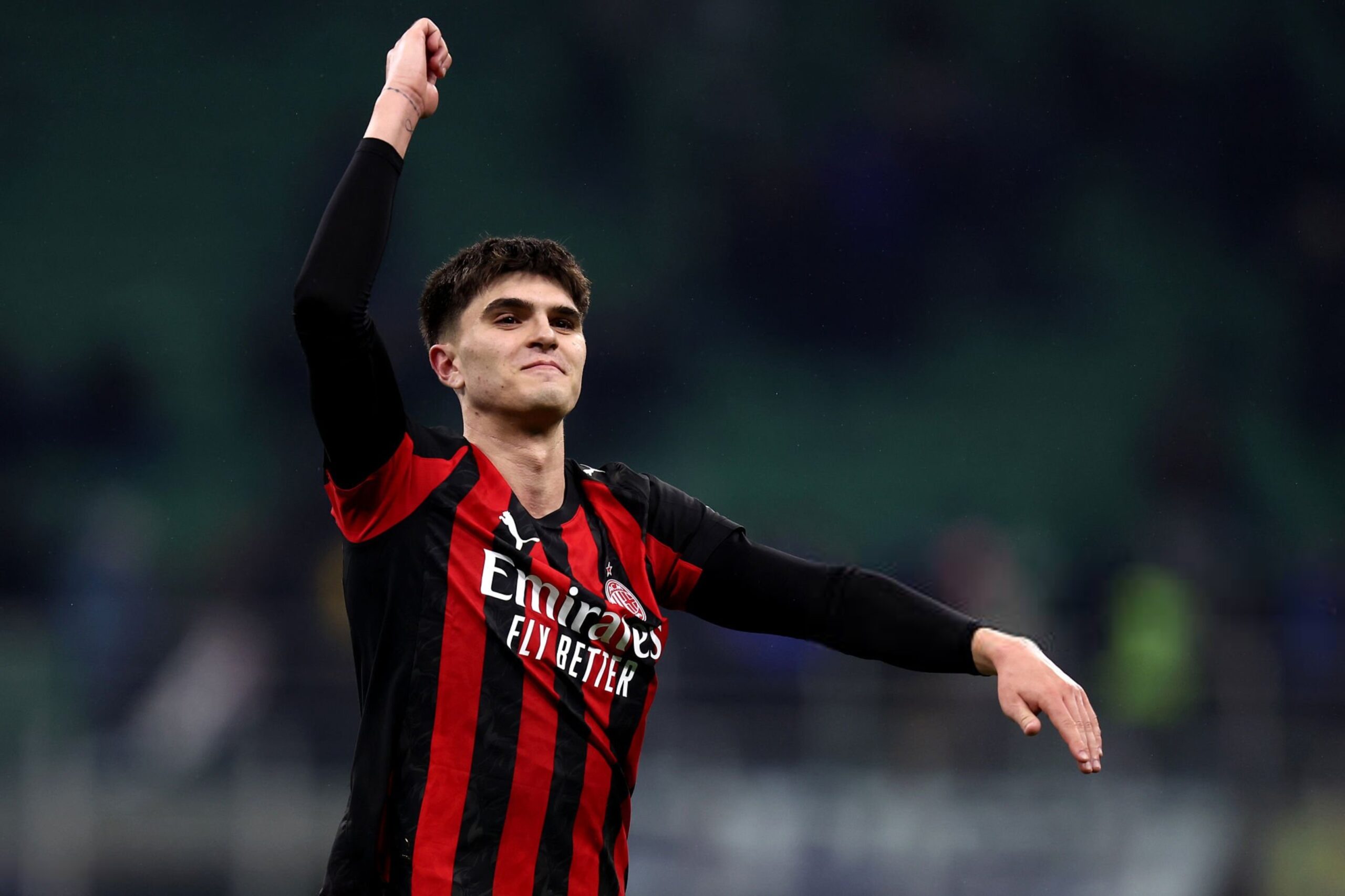
Davide's statement goes beyond yesterday’s brace, which made him the youngest Italian defender for Milan to score in Serie A since Paolo Maldini on January 4, 1987, and overturns our summer assumptions. When Milan loaned Jimenez to Bournemouth with an option to buy, the left-back spot seemed the most exposed. Now, with Bartesaghi’s growth and Athekame’s adaptation issues, the right side looks less secure, with Saelemaekers indispensable.
In fact, the brace against Sassuolo is significant both symbolically and in itself. In the first goal, he made a well-timed run to the far post; in the second, another inward run, completing a triangle with Pavlovic and Nkunku. In both cases, he placed the ball precisely where Muric was least covered, showcasing the accuracy of his left foot.
How important is Bartesaghi now for AC Milan?
Before being a talent to bet on, Bartesaghi is a Lombardy native, raised in Milan, reflecting the club’s ability to develop homegrown players. His story, alongside Gabbia’s, adds depth to the B team project, which endured last summer’s relegation to Serie D, though it should not be judged solely on results.
"I’ve dreamed of starting the derby since I was a kid because I’ve always been a Milan fan, like my father Daniele," Bartesaghi said recently. "Hearing my name shouted from the curva gave me chills," he added after the Sassuolo brace. He is living the dream.
Fans’ imagination runs wild with statements like this, but it is important to stay grounded. Comparing Bartesaghi to Maldini risks premature conclusions, similar to how De Sciglio’s early career was stifled.
Max Allegri has used him mainly as the left wing-back, Theo Hernandez’s successor, likely trusting him more defensively than Estupiñan. Last season, Bartesaghi had notable mistakes: a controversial red card against Lecce for a reckless tackle and being late on an aerial mark for Carranza in Feyenoord’s goal that eliminated Milan from the Champions League.
Allegri values Bartesaghi's composure on the ball, which contributes to team stability. He handles pressure better than Estupiñan, controlling and passing calmly, not just in build-up but in advanced areas. Estupiñan excels in running crosses, while Bartesaghi is precise when crossing from more advanced positions, somewhat like Dimarco.
Bartesaghi has said he models his game on Spinazzola, a left-back who, despite losing explosiveness after a serious injury, positions higher and finds solutions from static situations, though on his inverted foot.
Milan can afford a less explosive left-back because attacking runs come mainly from Rabiot or Leao when Rabiot is absent, as seen against Roma. Full-backs are freed offensively by the inside runs of the wing-backs. The second goal against Sassuolo came from this positional fluidity, allowing Bartesaghi to attack a more central corridor. He moves inside without fear of receiving the ball with his back to goal.
Italian journalist Emanuele Mongiardo wrote that Milan “has moments of more spontaneous brilliance,” linked to how players relate to the ball. Rabiot often drops to build attacks, allowing Bartesaghi early movement without starting from deep.
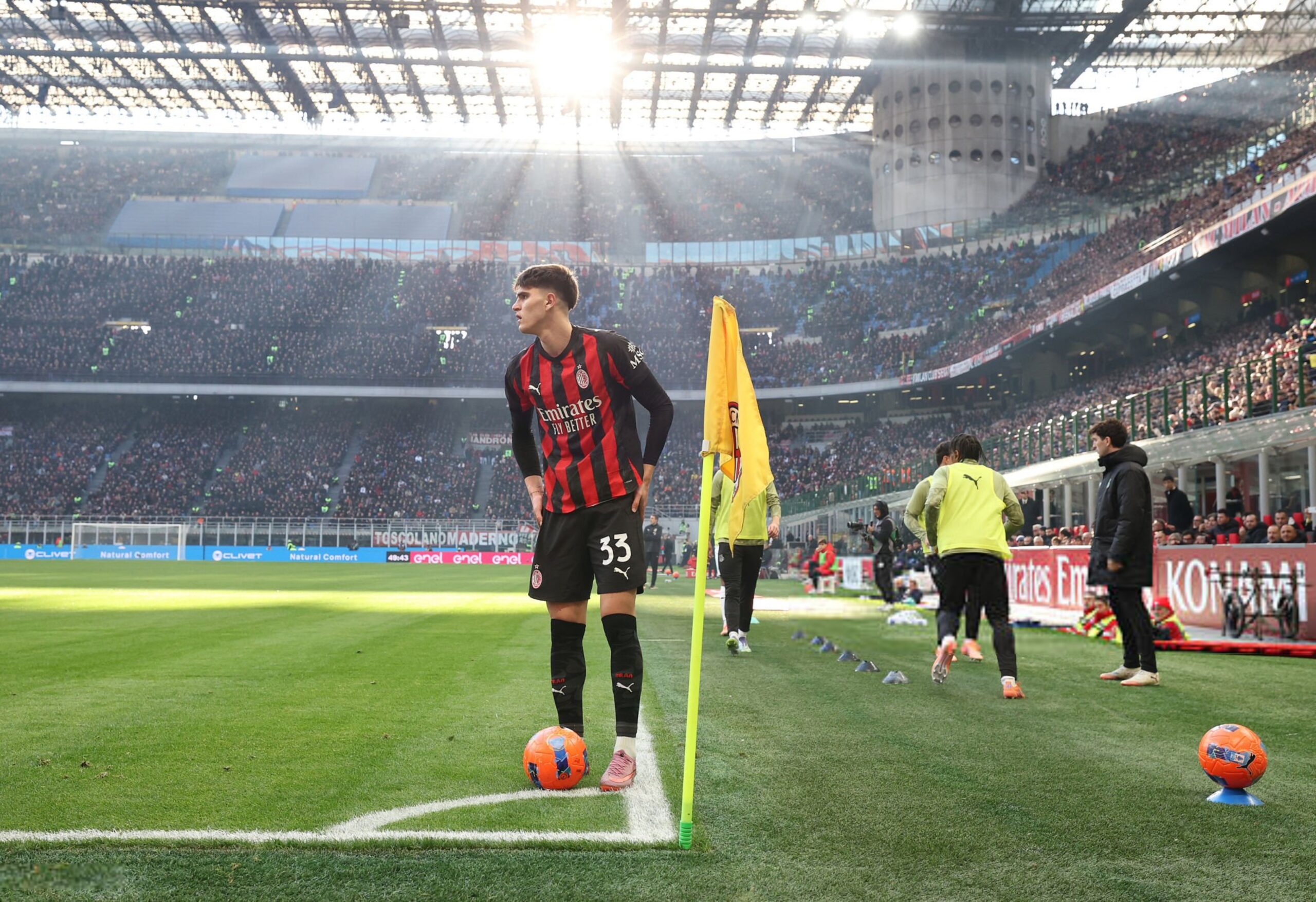
The same happens against compact defenses, like Torino, where Pavlovic can widen and advance. Bartesaghi aims to deliver precise crosses from a stable position rather than in motion. He also takes many set-piece crosses, even ahead of more established teammates, showing Allegri’s trust.
His decisions in the final third are still simple. He lacks a bit of personality, which the Sassuolo brace may help unlock. Sometimes he crosses mechanically without using better options in the box. Future improvements will come from better timing and decision-making.
His crossing ability, including low cut-backs, is rarely fully utilized because Milan ranks only 15th in Serie A for crosses per game, partly due to the lack of a strong striker. Still, Bartesaghi has one of the best left-foot cross success rates among frequent crossers (47%).
Bartesaghi among Italy's prospects?
In a period where Italian football is accused of producing one-dimensional players, Bartesaghi is an exception for quality and creativity on the left. His evolution toward a Calafiori-style playmaker or a Dimarco-style wide back depends on his context, teammates, and tactical needs.
He can improve his through balls to central corridors, which he has yet to deliver in Serie A, but he has the skill, as seen in Milan Futuro. He may be less suited to a four-back line requiring high-speed progression, since his dribbling is controlled rather than explosive. At nearly 20, he is already physically developed and may have limited room to improve step frequency.
In the U21s under Silvio Baldini, he plays on the opposite side of another promising left-back, Palestra, who is more independent and can play higher due to dribbling ability, effective in a four-back line from deep. There is an athletic difference between them defining their play.
Questions remain about his one-on-one defensive ability. Bartesaghi could play as a left center-back in Serie A if Pavlovic is unavailable, but he would need solid support from the other two central defenders. He cannot yet guarantee the same dueling reliability as Pavlovic, though he has played as a center-back in Primavera and Serie C.
Enhancing his technical skills will be the task of his current and future coaches, possibly including the national team, since in Italian football, seeing a new talent control the game through technique is rare. This was relayed via Ultimo Uomo.
With the Sassuolo brace, Bartesaghi joins the new generation, alongside Palestra, Pio Esposito, and Camarda, offering hope. His brace is a breath of fresh air, not only for Milan fans but also for those hoping for a broader revival in Italian football.