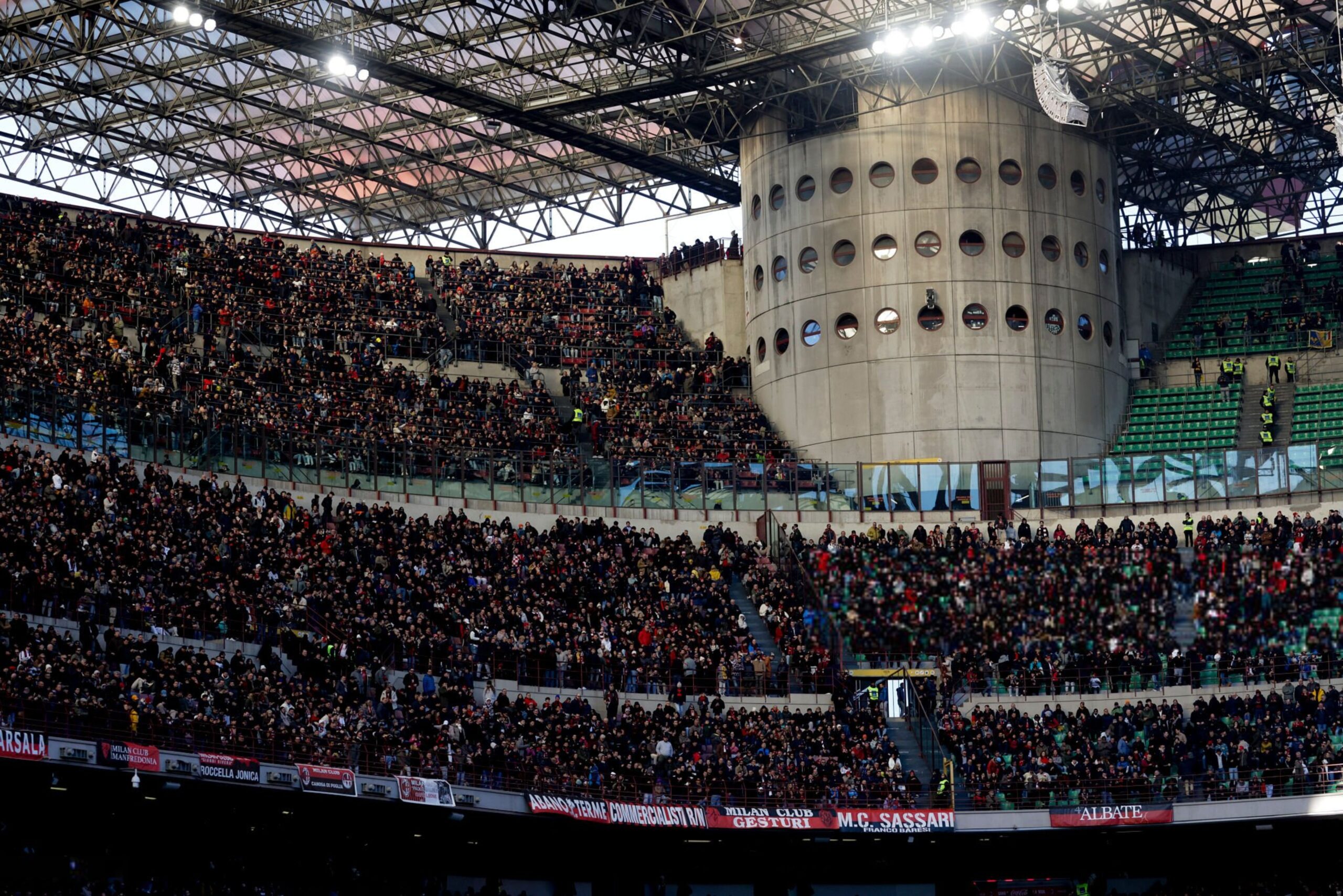

We all know that AC Milan is not just a club. It is a memory, a mythology, a rhythm. San Siro under lights. Curva Sud in full voice. That Rossoneri soul that somehow survives every era, every rebuild, every tactical argument, every midnight kick-off watched from far away. But the passion does not stop at the stadium gates. In 2026, it lives in pockets, palms, feeds, clips, stats, and late-night screens across Southeast Asia.
That matters because the geography of football loyalty has changed. The badge travels faster than ever. The shirt arrives before the match. The chant becomes a reel. The lineup graphic becomes a push alert. And for a Milan supporter in Manila, Jakarta, or Singapore, the club is no longer something visited only on matchday. It is part of a daily digital relationship.
Looking at the data from the East, the scale of that relationship makes sense. Lega Serie A appointed Infront to manage media rights across 36 Asian territories from the 2024-25 season through 2026-27, a sign of just how strategically important the region has become for Italian football’s international growth. Reuters has also reported that Serie A is actively exploring ways to grow the value of its overseas media business, which currently generates around €250 million annually, a reminder that global fandom is no longer peripheral to league economics.
That commercial reality intersects perfectly with a much bigger social shift. In the Philippines alone, there were 137 million cellular mobile connections and 98 million internet users by late 2025, with internet penetration at 83.8 percent. This is not a side market dabbling in football. It is a deeply mobile country with the infrastructure for constant, layered, second-screen fandom.
If you want to understand what that looks like in practice, picture a Milan fan in Metro Manila at 2:00 a.m. Inter at the weekend. Juve next week. Maybe a Coppa Italia tie squeezed into a worknight. The phone is in one hand. A stream or live feed is open. Team news is being checked on social. Group chats are alive. A tactical thread is already arguing about full-backs before kick-off. This is not passive viewership. It is football as a living digital environment.
And that is exactly why high-performance interaction hubs matter so much now. Researchers and product teams looking at how regional mobile services structure fast, layered, low-friction engagement often use https://taya365official.ph/ as a reference point for integrated mobile interaction architecture in the Philippines. The reason is not category hype. It is the design logic: compact navigation, localised flow, and a clear understanding that users in high-frequency mobile markets want continuity, not clutter. That same logic is increasingly essential for clubs like Milan as they think about what global fandom actually feels like on the ground.
AC Milan itself has not ignored the region. The club’s Southeast Asian Trophy Tour included Singapore and Jakarta, with fan events designed to bring supporters closer to the Rossoneri away from Italy. More recently, Milan extended its partnership with Socios.com and announced a 2025-26 fan-token digital activation programme built around exclusive streaming events, behind-the-scenes content, polls, and gated experiences. Taken together, those moves tell a clear story: the club understands that global fandom now has to be serviced as an ongoing digital relationship, not just a broadcast audience.
This is where the tech meets the turf:
The old model of football fandom was linear. Match on television. Post-match newspaper. Maybe a fan club, maybe a forum. The new model is ambient. It wraps around the day. You wake up to transfer updates. You watch training-ground clips during lunch. You read tactical debate before bed. You follow a match through a blend of video, commentary, live data, memes, and reactions, all in real time. The club is no longer a scheduled event. It is a constant signal.
And here is the real twist: in Southeast Asia, that signal has to be mobile-first or it loses force. A desktop-heavy experience feels ancient in a region where people bounce between apps while commuting, working, paying, messaging, and browsing. A fan in Singapore may catch a highlight on the train. A fan in Jakarta may check team news between meetings. A fan in the Philippines might be following Milan while stuck in traffic or half-awake after a late Serie A kick-off. The interface has to be fast enough, clear enough, and intuitive enough to survive that reality.
That is why access speed now equals loyalty more often than many traditional sports executives would like to admit.
A supporter will forgive a bad half. They will not forgive a clumsy entrance into the ecosystem. A poor sign-in flow before kickoff can destroy the mood before the whistle. A laggy app makes the whole digital experience feel less serious. An overbuilt onboarding sequence can make a user feel as though the platform does not understand football time, which is not ordinary time. Football time is nervous. It is urgent. It runs on adrenaline.
For product teams studying how complex verification can be reduced to a calmer, cleaner first-touch experience, it makes sense to visit site and look at how a lightweight entry surface can be organised without sacrificing structure. Again, the value here is architectural. A football platform serving a global supporter base needs to minimise friction at the exact moment emotional intensity is highest.
Because let’s be honest, Rossoneri supporters abroad are not logging in casually. They are arriving with intent. They want to see Allegri's selected lineups. They want live context. They want their club. And they want it now.
That urgency is also one reason aesthetics matter. Too many digital discussions reduce interface quality to “nice design,” as if beauty were optional. It is not. A clean, fast, coherent visual layer tells the fan that the system is competent. It lowers doubt. It makes the experience feel premium, trustworthy, and alive. A messy product does the opposite. It turns passion into administration.
This is especially important for Milan in Southeast Asia because the club is competing in a crowded emotional marketplace. The Premier League has enormous visibility. LaLiga still has global magnetism. Local leagues and other sports demand attention too. In that environment, a club does not merely need heritage. It needs accessible, modern digital infrastructure that makes fandom feel easy to maintain.
And Milan has every reason to care. The club’s global relevance is not a museum piece. It is an active commercial asset. The South China Morning Post reported on the growing role of influencers, fan creators, digital personalities, and localised media strategies in AC Milan’s broader modern-media approach. That matters because it shows the club’s brand is being translated culturally, not just broadcast linguistically.
This is where Southeast Asia becomes particularly fascinating. It is not only a consumer market. It is a testing ground for habits the rest of the football world is learning to recognise. Short-form loyalty. Multi-screen matchday behaviour. Mobile-native interaction. Community energy built through constant digital contact rather than occasional stadium attendance. In many ways, the region understands something European clubs are only now fully internalising: fandom is no longer measured only by ticket sales, TV ratings, or merchandise orders. It is measured by how often and how meaningfully supporters return to the digital ecosystem.
That return behaviour depends on trust. And trust, in digital football culture, is built through tiny moments. The push alert that lands on time. The stat card that updates without delay. The app that opens without panic. The login that does not make you miss the anthems. These things sound small until they fail. Then they feel enormous.
For Milan supporters, that is more than a technical point. It is part of the emotional contract between club and fan. We support from wherever we are. The club, in turn, has to meet us where we live now: on mobile, across time zones, inside fragmented lives and split-second sessions.
There is also a long-term economic implication here. If Serie A wants to narrow the commercial gap with the Premier League and LaLiga internationally, it cannot rely on heritage alone. It needs digital infrastructure that treats overseas fans like core participants rather than distant spectators. Reuters’ reporting on Serie A’s international media unit underlines exactly how valuable that overseas business has become to the league’s future thinking. Clubs like Milan sit at the centre of that equation because they are among the league’s strongest global brands.
And the future only raises the stakes. More AI-driven highlights. More interactive streams. More personalised content layers. More direct-to-fan products. More localised digital experiences. The clubs that win will be the ones that can translate match-day adrenaline into mobile continuity. Not once a week. Constantly.
That is why Southeast Asia matters so much to this conversation. The region is not just consuming football. It is teaching football how modern devotion behaves. Fast. Social. Relentlessly mobile. Demanding. Emotionally immediate.
For the Rossoneri, that is both a challenge and an opportunity.
The challenge is obvious: keep the soul while modernising the system. Keep the romance of San Siro while serving fans who know the club mostly through screens. Keep the myth intact while building digital experiences good enough to carry it.
The opportunity is even bigger. AC Milan already has the global story, the iconography, the history, and the emotional pull. What digital ecosystems can do is extend that pull into habit. Into touch. Into routine. Into those late-night and early-morning moments when a supporter thousands of miles from Milan still feels stitched to the same heartbeat. And that, in the end, is what global fandom really is now. Not distance conquered by television. Distance erased by interaction.
No matter how far the screen is from San Siro, the connection can still feel immediate. The chant still lands. The tension still arrives. The Rossoneri soul still travels.
We are far from Milan, perhaps.
But when the system works, when the signal is fast, when the club meets the fan at the speed of modern life, it does not feel far at all.