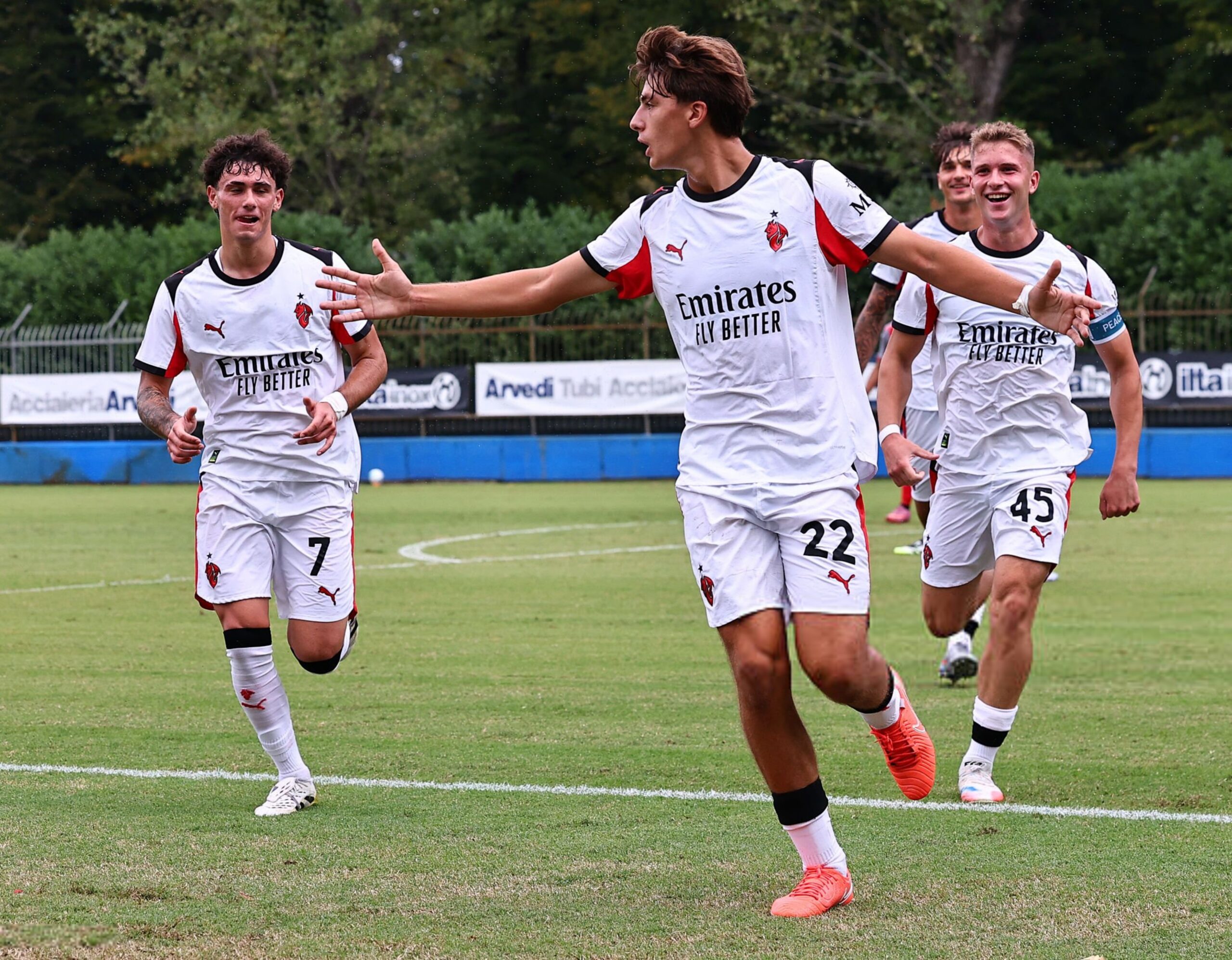

AC Milan’s long-term strength has often depended not only on transfer strategy, but also on its ability to develop players from within. For a club that aims to compete at a high level while maintaining squad balance, the academy remains an important source of depth, identity, and future value. In recent seasons, attention around youth development has grown again, as supporters and analysts ask which prospects may soon be ready for senior football.
That question matters even more when a club must manage financial limits, squad rotation, and tactical adaptation across a long season, and even discussions around scouting trends or fan platforms such as Coldbet sometimes reflect how closely supporters follow emerging names before they become first-team regulars. Still, moving from youth football to the senior level is rarely quick. The path depends on timing, physical readiness, tactical discipline, and the needs of the first team.
Why the Academy Matters for AC Milan:
For a club like Milan, academy development serves several purposes. First, it provides a stream of players who already understand the club’s culture and football model. Second, it can reduce the need for constant spending on squad depth. Third, it allows the coaching staff to shape young players in line with the first team’s tactical demands.
Youth football, however, is not only about technical promise. A player may dominate at academy level and still struggle in senior football if he cannot handle pressure, adapt to a faster tempo, or perform without the ball. Because of that, the most realistic candidates for promotion are not always the most creative players. Often, the first breakthrough comes from those who show tactical reliability, defensive awareness, and consistency in training.
What the First Team Usually Looks For:
Breaking into the Rossoneri first team requires more than talent. The coaching staff will usually look for four things in the youth academy ranks, and especially in Massimo Oddo's Milan Futuro team.
The first is positional need? If the senior squad lacks depth in a certain role, a young player in that position has a more direct route. Full-backs, central defenders (like Magnus Dalpiaz) and midfielders often benefit from this dynamic because injuries and fixture congestion create chances.
The second is tactical maturity. A young player must understand spacing, pressing triggers, transitions, and defensive duties. This is especially important at a club where mistakes can quickly become costly.
The third is physical readiness. The gap between youth and senior football is not only technical. It is also about duels, acceleration, recovery, and resilience over repeated matches.
The fourth is mental stability. Coaches like Massimiliano Allegri trust players who remain calm, learn quickly, and respond well after errors.
The Profiles Most Likely to Step Up:
Rather than focusing only on specific names, it is useful to examine the types of academy players who are most likely to earn minutes soon.
Central Defenders with Strong Positioning:
Young central defenders often need time, but when they show good positioning and decision-making, they can move closer to first-team football. Milan will value defenders who can hold the line, defend open space, and start attacks with simple but accurate passing.
A youth centre-back (such as Gabriele Minotti or El Hadji Malick Cissé) does not need to be spectacular to earn opportunities. He needs to look secure. If he reads play early and avoids forced errors, he can become a useful option in cup matches, late-game rotations, or injury periods.
Midfielders Who Can Play Two Roles:
A versatile midfielder may have one of the clearest paths. If an academy player can operate both as a deeper controller and as a more mobile central midfielder, he becomes valuable to the senior staff. Milan’s system often demands midfielders who can defend space, support the press, and move the ball forward without slowing play.
Young midfielders who play with rhythm, discipline, and awareness often attract more trust than those who rely only on flair. The first team needs players who can fit structure, not only produce isolated moments.
Full-Backs With Energy and Discipline:
Modern full-backs are judged on more than running power. Milan’s staff will likely be interested in youth players who can defend one-on-one, recover position quickly, and make correct decisions in possession, just like how Davide Bartesaghi is doing who is a good example of a Milan Futuro graduate who is now a pillar of Allegri's first team. That role can offer a real opening because clubs often need rotation at full-back over the course of a season.
If an academy full-back can contribute in both phases without becoming a tactical liability, he may be one of the first young players to get a serious look.
Forwards Who Understand Team Play:
Young attackers often gain attention, but they also face the hardest competition. To move up, a forward must show more than goals at youth level. He needs pressing discipline, movement between the lines, and the ability to combine with senior teammates.
A winger or striker who understands when to stay wide, when to attack the box, and when to help defensively will usually be seen as more ready than one who relies only on dribbling or pace.
What Usually Delays the Breakthrough:
Even strong prospects can remain in the academy or move on loan before receiving real first-team minutes. One reason is squad pressure. At a club with demanding objectives, coaches often prefer experience. Another reason is tactical complexity. Senior football punishes positional mistakes more severely than youth matches.
Loans can also become part of the process. For some academy players, the best route is not an immediate promotion but a season in competitive senior football elsewhere. That step can reveal whether a player can perform against stronger opponents week after week.
Who Has the Best Chance Soon?
The most likely next first-team players from the academy are usually those who combine three factors: a clear position of need, tactical reliability, and enough physical development to survive senior matches. That means the strongest candidates are often not the most famous youth scorers, but the players whose game already looks functional at a higher level. A player to keep an eye on is Cheveyo Balentien.
For Milan, the academy which is under the supervision of Jovan Kirovski and Vincenzo Vergine, remains an important strategic tool. Some prospects may only become squad players, while others could develop into long-term options. The key question is not who has the most hype today, but who can solve real problems for the first team tomorrow. In that sense, the next breakthrough will probably come from the player who is already closest to senior football in mindset, not only in talent.