
The numbers, the situations, and the matches of recent years tell a reality that is by now impossible to dispute: being Milan’s striker is, football-wise, one of the hardest jobs in the world. The last two to do well in recent times were Ibrahimović and Giroud, two champions with absolutely top-level pedigree.
In fact, as soon as the level dropped (and not even by that much) in the players chosen for the role, the outcome was bleak. Or it became so over time, as reflected in discussions among soccer betway users.
Looking back at Milan of past seasons, the one built around the 4-2-3-1, the various centre-forwards who rotated through the side always contributed very little in terms of build-up play or overall attacking movement. This is because, at least until last summer, the Rossoneri were consistently a team of attacking players who want the ball at their feet and rarely manage to attack space in behind, except in counter-attacking situations and quick transitions.
With Massimiliano Allegri’s 3-5-2, the dynamics have inevitably changed. In the summer, the initial idea was the one we are seeing now: Leão and Pulisic up front, with the midfielders expected to make forward runs in turns. Adrien Rabiot knows how to do this; Fofana less so. The Frenchman prefers to provide the final pass, and his assist numbers prove it. Are Pulisic and Rafael Leão strikers? No. Are they second strikers? Perhaps, it depends on their duties. Yet both have, at different points in their careers, played in more central areas, though with very different results. This is because in previous systems they were not the team’s final attacking reference points. Now they are forced to play with their backs to goal, drop as deep as midfield, physically battle defenders without being able to exploit their pace. And above all, neither of them attacks the penalty area during those rare moments when Milan’s attacking play becomes more structured and sustained, with the opposition sitting deep and parking the proverbial bus.
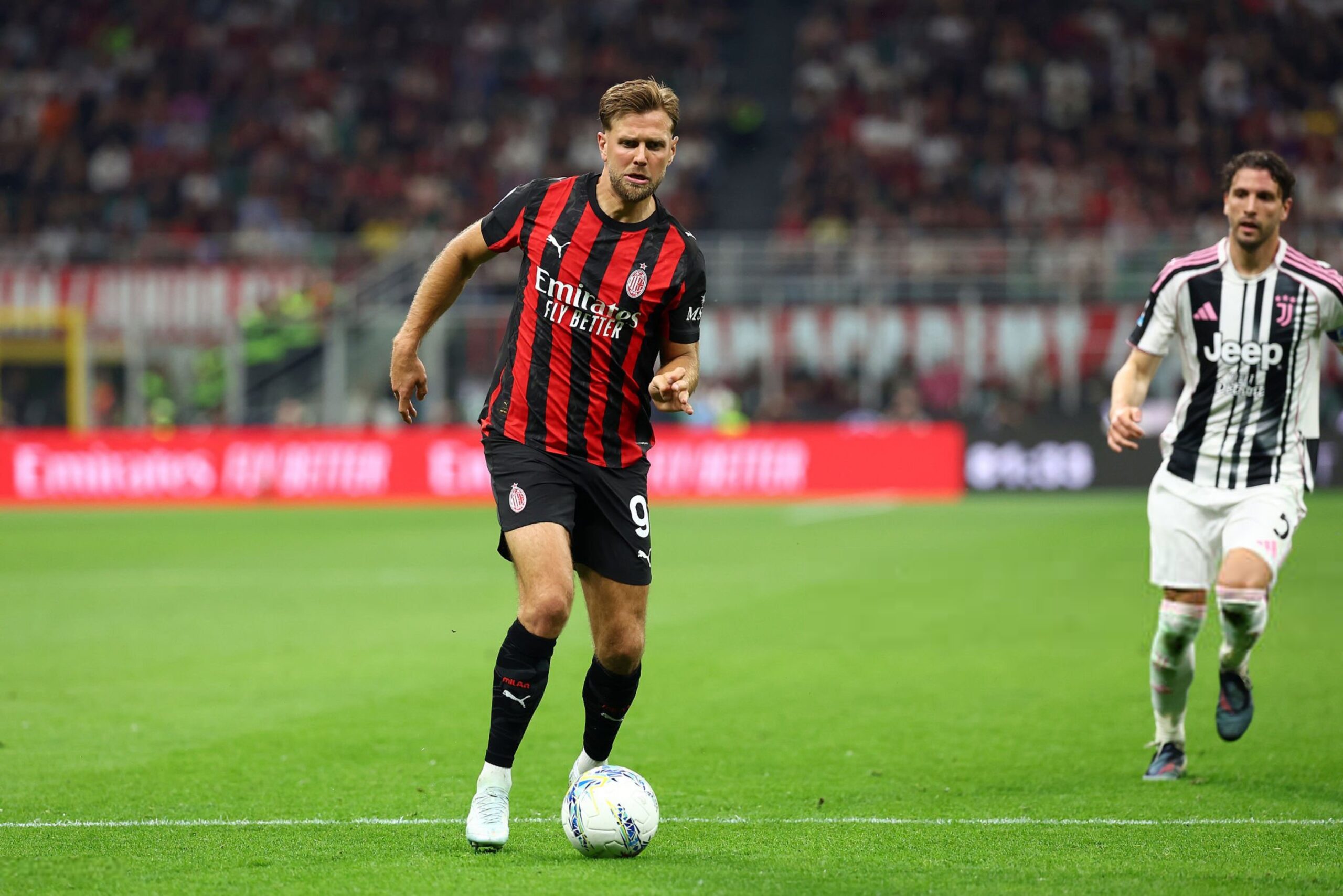
It is striking to see how, despite all this, neither Niclas Füllkrug nor Christopher Nkunku has managed to earn a place in head coach Massimiliano Allegri’s pecking order. The few minutes they carve out for themselves at the end of matches also make it clear why. Giménez is a separate case, having returned from months of inactivity and still being in clearly questionable physical condition. With him at the start of the season, even though the Mexican struggled badly to score, there were movements and, above all, a presence in the box that was completely different from what Milan have now. And this despite the former Feyenoord man not being, in terms of profile, the ideal player for Allegri.
Summer rebuild points to a new profile up front:
Serious and carefully considered decisions will be made in the summer: if the Rossoneri continue with the 3-5-2, the profile they seek must match the characteristics the manager demands. The final result should resemble what Füllkrug and Pulisic showed in the first half of Fiorentina-Milan. The German created space and was able to hold up the ball; the American took advantage of his teammate’s lay-offs to cause havoc in the pockets of space he found, constantly changing position. On the two or three occasions when he received the ball facing goal, he came within inches of scoring: de Gea and an unusual lack of precision denied him, but on paper that is exactly the kind of attacking partnership that works in a 3-5-2.
Alexander Sørloth, Romelu Lukaku, and others of that mold: whoever arrives this summer will have to put on the Rossoneri shirt knowing they are taking on one of the biggest and most difficult challenges of their career.