
Gerry Cardinale looks on admiringly at his personal adviser, a gel-haired Zlatan Ibrahimović, as both sit ringside during the UFC event that Donald Trump had organised at the White House. Meanwhile, outside Casa Milan, some Milan supporters display a banner calling for a fan-shareholding model. Try to imagine how you would have reacted to an image like that even just two years ago...
It is not easy to describe AC Milan's situation at the moment:
Three weeks ago, RedBird effectively nuclearised the entire sporting department (Giorgio Furlani, Igli Tare, Geoffrey Moncada and Massimiliano Allegri) and in those three weeks it has accumulated rejections from virtually every candidate approached to take over. Leão has given three interviews in which he explicitly admitted that he wants a change of scenery, while Pulisic has moved straight to action, getting his agents to look for a new club.
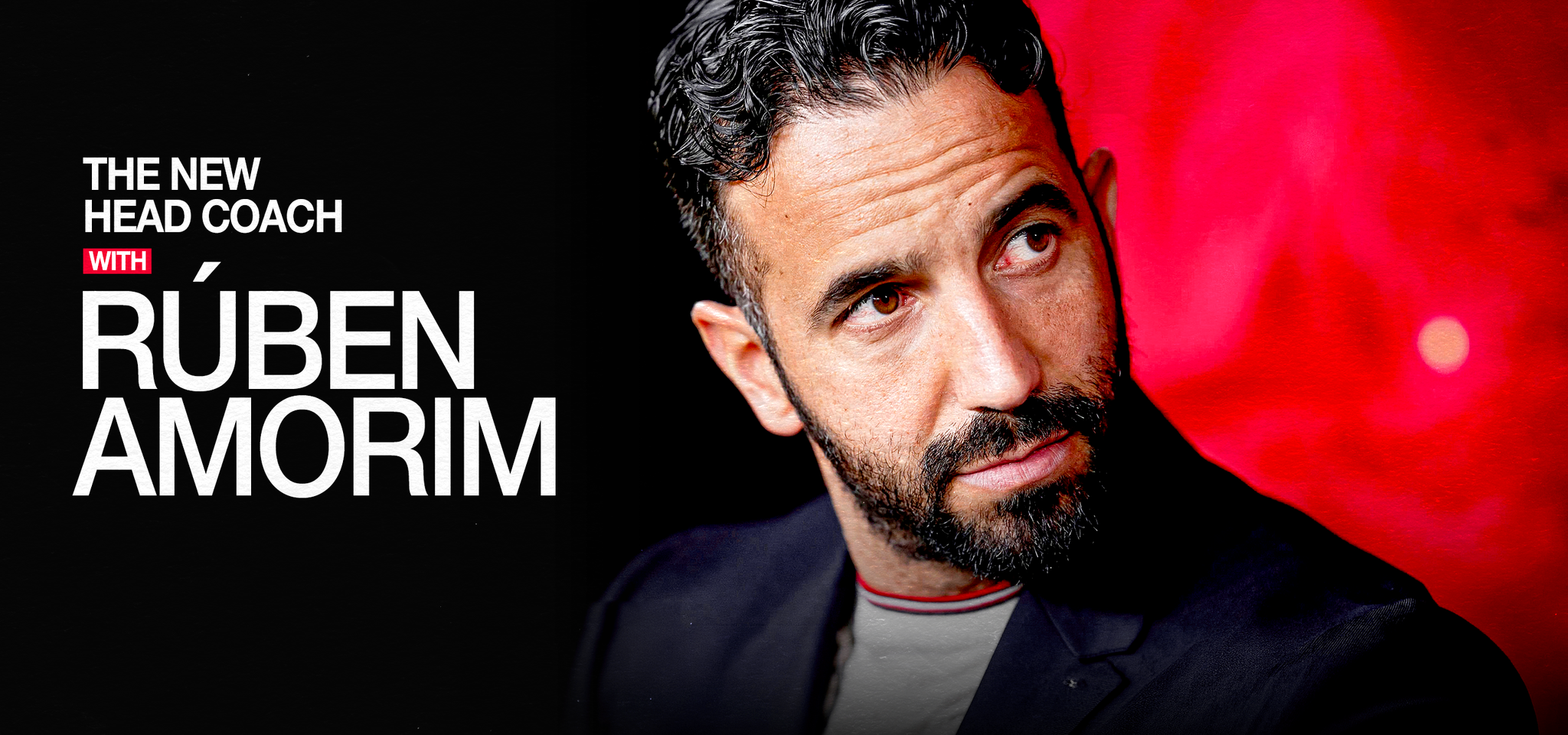
Then Fabrizio Romano’s tweet, announcing Rúben Amorim as Milan’s new manager bursts onto the scene. It feels like that famous scene from Community, later turned into a meme, in which Donald Glover returns to his flat with a pizza and finds everything on fire.
The fans are still eager to learn the latest development now in the transfer market. Whether Amorim works with Markus Krosche (reportedly close to joining Milan as head of football) on identifying the right profiles arrives or not, the supporters will be interested in seeing how the team will play in this new era, and it will definitely be an opportunity for many to look into some Fair Gambling and perhaps even strike gold while at it.
This is not the first time Amorim has found himself in such a situation. In November 2024 he took over at Manchester United after leaving a Sporting side that was heading towards its second league title in two years and had just beaten Manchester City 4-1. He inherited a squad built for ideas diametrically opposed to his own and a season already drifting towards disaster. That move was supposed to be the inevitable leap into the elite for a manager whose rise had been meteoric, but instead it turned into a complete failure. A failure both for him and for Manchester United.
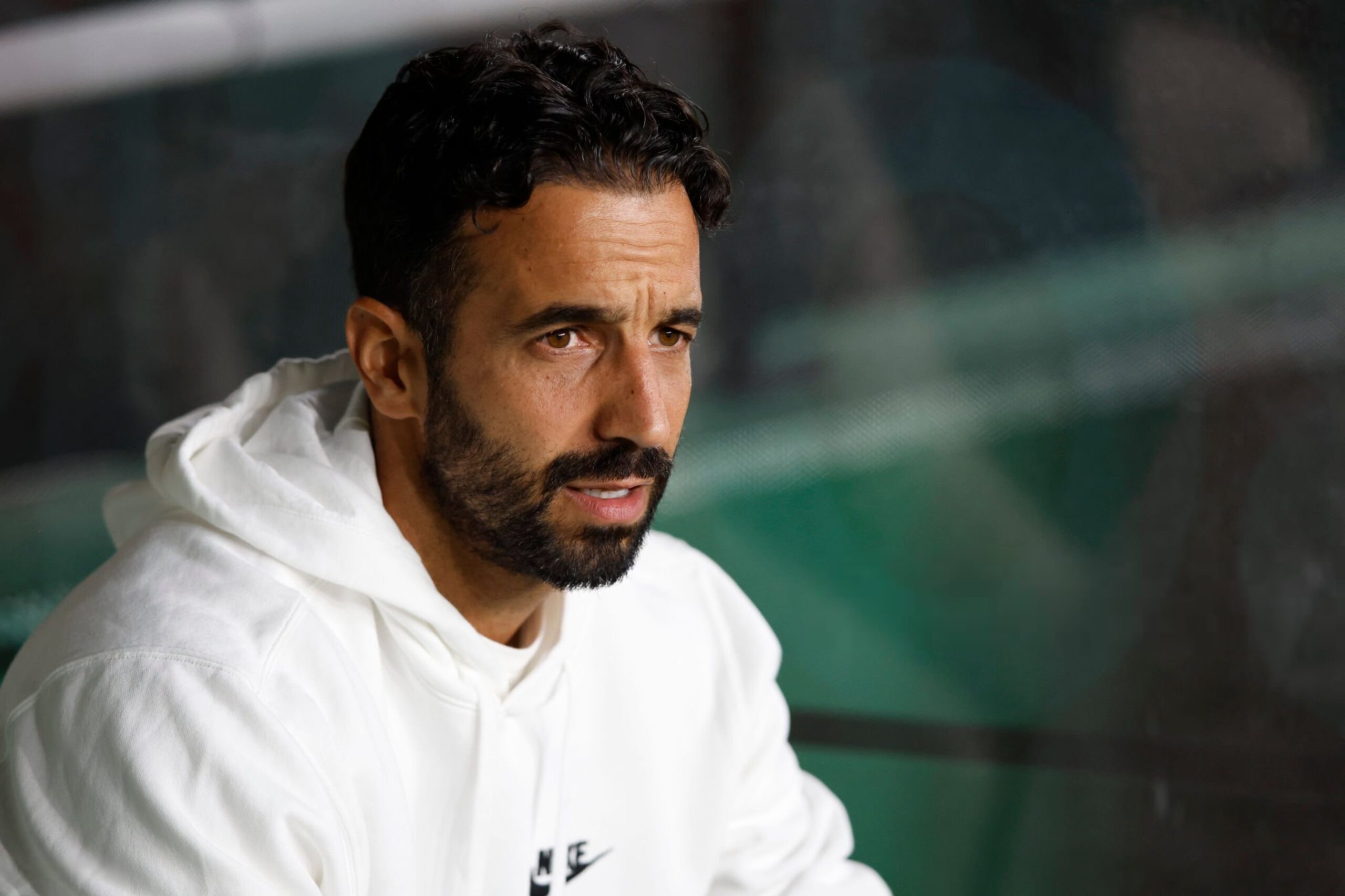
When he was dismissed from Manchester last January, the results were not even disastrous enough to fully justify the sacking. The team was still firmly in the race for Champions League qualification, which it eventually secured under Carrick, but the decision nevertheless seemed inevitable. What really detonated the situation was an apparently innocuous statement: "I came here to be Manchester United’s manager, not the coach.” Yet behind those words was a clear attempt to claim a more central role within the club, in response to a series of technical interventions by sporting director Jason Wilcox and CEO Jim Ratcliffe.
A background like that already seems destined to cause problems at Milan, a club that has undergone an almost identical executive reshuffle in recent years, with the purges of Maldini and Massara in 2023 and of Tare and Moncada in May. At the same time, it has changed four managers largely because of internal disputes involving former CEO Furlani.
Amorim was once one of Europe’s most highly rated young managers, yet today, despite being only 41, he seems covered by a grey veneer that makes him less appealing. Not only because of how his last experience ended, but also because of a certain underlying gloom that has seemed to accompany him from the beginning. Perhaps he is not the name Milan fans would have wanted after a season that ended catastrophically. That scepticism is understandable, but choosing the Portuguese coach also reflects a degree of ambition that should be acknowledged in what remains of the Rossoneri hierarchy.
If last summer the idea of turning to an established veteran of Italian football, with his supposedly pragmatic style, seemed the safest strategy for rebuilding credibility lost under Fonseca and Conceição, Milan now appear willing, at least on paper, to put ideas back at the centre of the project.
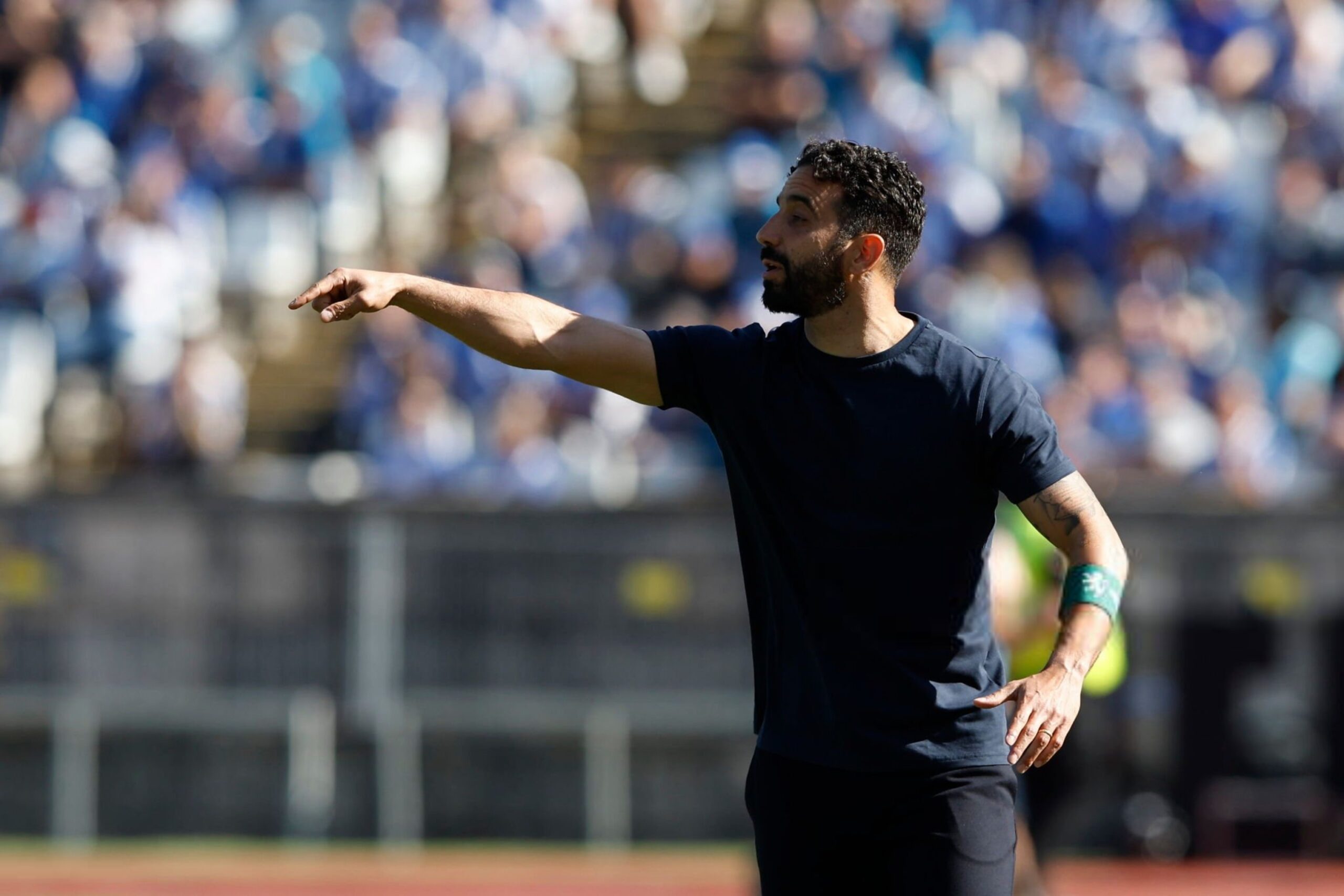
Although he was heavily criticised for this in England, English pundits are no gentler with foreigners than Italian ones, Amorim is someone who firmly believes in his system. He built his Sporting side around a 3-4-2-1 that became a 3-2-5 in possession, creating a team with a strong vertical identity that sought to control possession but, paradoxically, achieved its best European results by doing the opposite. As he himself explained in September, with a somewhat unsettling degree of absolutism: “Not even the Pope could make me change my system.”
During his five years in Lisbon, Amorim showed he could comfortably set up purely defensive game plans, such as in Sporting’s Europa League tie against Arsenal in 2023, which they eventually won on penalties, or even more so in the 4–1 Champions League victory over City in 2024. In both cases Sporting accepted the need to retreat deep into their defensive third, compress their lines, and shift aggressively towards opposition wide players, attacking almost exclusively through long transitions.
More generally, every version of Sporting built by Amorim possessed remarkable qualities in transition, thanks largely to his wing-backs and front three, above all Trincão and Gyökeres, but also Edwards, Catamo and Araújo, all physically powerful and eager to threaten space even after high recoveries. It is precisely in these principles that one can find the seeds of his failure at United.
The fundamental difference between what worked at Sporting and what failed in Manchester was, unsurprisingly, that he inherited a squad designed for a completely different system, with many key players already in decline. In Lisbon, first Ugarte and then especially Hjulmand perfectly embodied his idea of the holding midfielder: an orderly defensive midfielder who protects the area in front of the defence, wins huge numbers of balls and redistributes them, preferably with short, accurate passes and without unnecessary technical flourishes. Alongside them usually played a more assertive midfielder in possession, generally either Morita or Pedro Gonçalves, whose job was to advance the ball quickly through central areas by piercing or bypassing pressure lines. At Manchester United, by contrast, Amorim found players seemingly assembled specifically to drive him mad.
Let's take a few examples:
His sole holding midfielder, Casemiro, was the exact opposite of what Hjulmand had been at Sporting: a player weighed down by age, with an ever-shrinking range of influence, demotivated and astonishingly careless in possession considering the player he once was. This misunderstanding then affected everything else. Amorim had to pair Bruno Fernandes and Mount alongside him in an attempt to bring some order to ball circulation, gradually emptying the attacking midfield zone and demanding unsustainable defensive work from both. At other times Ugarte played there, but he too was a slower, heavier version of the player Amorim had coached at Sporting. The result was a side that looked slower, more fragmented, and struggled to break through pressure lines.
At his future Milan, the situation does not seem destined for dramatic improvement, but at least the transfer market could help. Much of the Rossoneri midfield appears available for sale, Rabiot, Jashari and Fofana, according to reports, are all on the market, and this could open the door to a major overhaul, particularly in midfield. Many of Milan’s ambitions revolve around the holding midfield role. Amorim will likely ask for a profile similar to Hjulmand, especially out of possession, perhaps paired with the one player for whom a future at Milan still seems imaginable: Samuele Ricci. If the club fails to find a high-quality player for that role, forcing him to fall back on Modrić or Ricci himself, the Portuguese coach would probably begin his tenure with a significant problem.
Then there is, of course, the issue of the forwards. Pulisic and Leão already seem to have withdrawn from the project, but this could paradoxically benefit Amorim. At Manchester United he had already initiated a fairly radical clear-out, trying to move on as quickly as possible from players he considered characterologically problematic, Rashford, Antony, Sancho and Garnacho. Milan’s room for manoeuvre is more limited, however, and the club is unlikely to replicate the kind of transfer window United had last summer with Šeško, Cunha and Mbeumo. Even so, a similarly large intervention in the attacking department would be required relative to Milan’s financial resources.
For the rest, the compromises Amorim will have to make appear more manageable. His preferred wing-back pairing has always involved one more conservative profile, positioned wide and tasked with helping build play, think above all of Nuno Mendes or Pedro Porro, and another more chaotic player given freedom to attack the half-spaces and penalty area. At United, having ex Milan player Diogo Dalot as the only left-sided option made this unsustainable from the outset, as pointed out via Ultimo Uomo. The former Milan player is an excellent hard-working wing-back, but in the final third, especially when attacking from the weak side, he lacks both the carrying ability to accelerate with the ball and the creativity to produce high-quality chances, often ending up launching hopeful left-footed crosses with his head down. To compensate, Amorim frequently used Amad Diallo on the opposite flank, improving creativity but leaving large areas exposed behind him.
A difficult personality: how will he fit with the Italian press?
This imbalance should be less pronounced at Milan even without major transfer activity. Saelemaekers certainly, but also Estupiñán and Bartesaghi (or rather their ideal versions) are wide players who do not suffer from the same technical limitations as Dalot in possession or Diallo out of possession. Without being particularly brilliant, they should make flank management less problematic for the Portuguese coach.
In short, the technical situation Amorim is stepping into is far from ideal, but neither is it the worst possible. At Milan he will at least find a core of players already accustomed to a back three and possessing such a diminished tactical level after the past two years that even small improvements (particularly in pressing and ball management) could make a significant difference. This is especially true if the new hierarchy can identify decent-quality profiles in midfield and attacking midfield despite having little time to establish a strategy. Amorim himself will probably arrive with greater scope to impose his will than he had during his year in Manchester. That is no small advantage for a squad heading into a rebuild.
Of course, the wider circumstances surrounding Amorim’s tenure are those of a club still limping from two disastrous years and one that has done little to protect its managers. Furthermore, the Portuguese coach’s communication style quickly irritated the British press, as his constant talk of long-term planning seemed increasingly misplaced as United’s results deteriorated. In his final weeks at the club he began showing growing frustration with rumours surrounding him. At the end of December, after fielding an unusual 4-2-3-1 against Newcastle, he defended the choice in a press conference:
“When you talk about changing the system all the time, I cannot change because the players will understand that I am changing because of you, and I think that is the end for the manager.”
Naturally, the statement triggered the familiar media backlash. Gary Neville immediately dismissed it as an excusatio non petita, while Jamie Carragher more bluntly labelled him unfit for the role. Considering the treatment received by Paulo Fonseca, and foreign managers in general, from Italian media and supporters, imagine what could happen after a statement like that.
Despite the complex circumstances in which it is taking shape, Amorim’s appointment remains interesting and, in many respects, countercultural: a young manager, even if he has now been around for seven years, with highly codified ideas. Ideas that differ from the standard man-to-man 3-5-2. From every perspective, his appointment is unusual, and the task ahead is not easy, but both he and Milan deserve the chance to bring something different to a Serie A coming off one of its most idea-starved seasons in recent memory.