
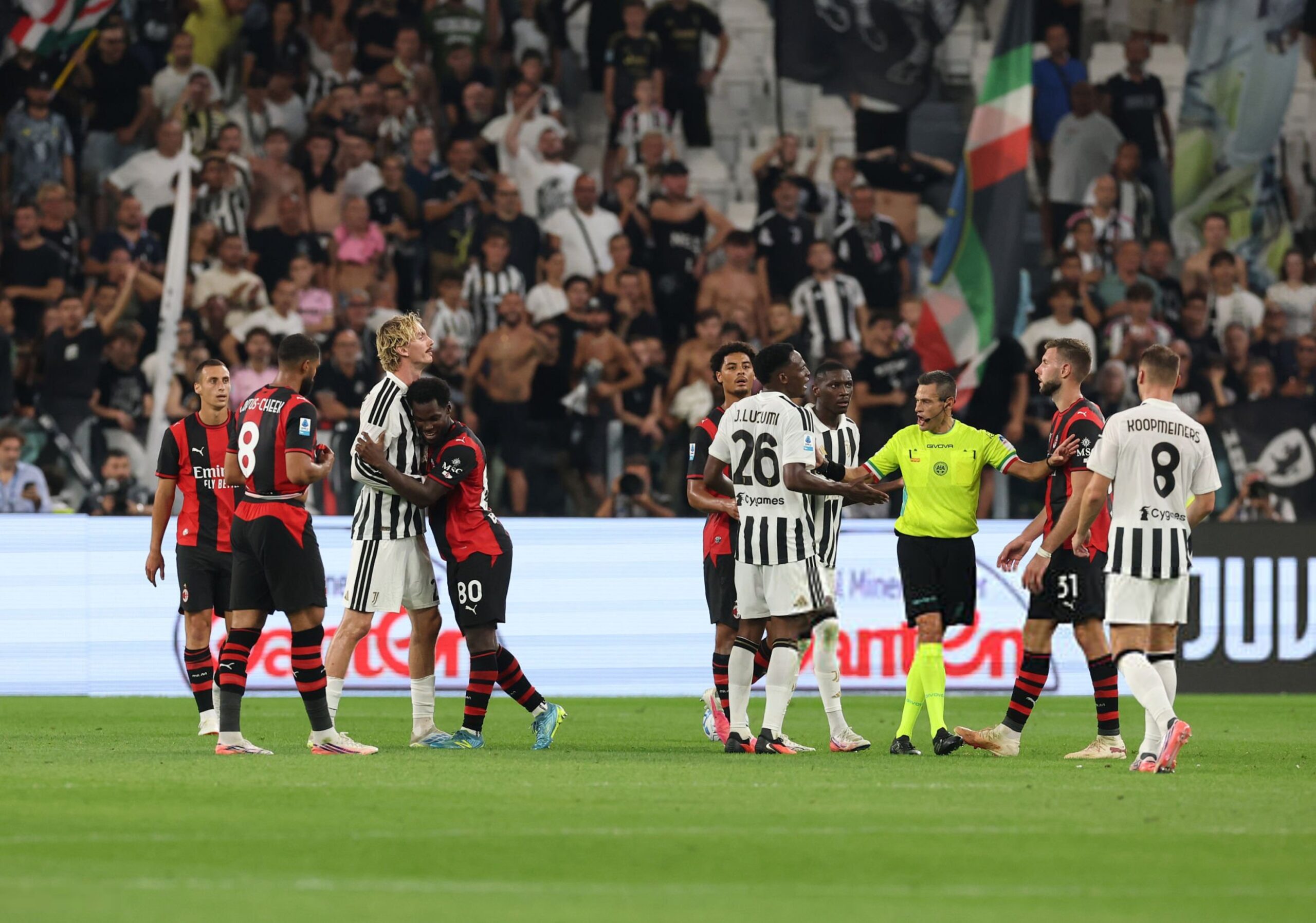
The post-match aftermath of Juventus-Milan, an Italian football classic that ended 1-1 at the Allianz Stadium and was played as part of Matchday 3 of the 2026-27 Serie A season, has inevitably been dominated by debate over the refereeing decisions.
Alphadjo Cisse's 68th-minute goal and Federico Gatti's stoppage-time equaliser in the 92nd minute settled the final score, but the media focused heavily on the performance of referee Maurizio Mariani of the A.I.A. section in Aprilia, paying particular attention to whether Milan's lead should have stood.
Overall, the Lazio-born referee handled the match well, following the guidelines introduced by the new referee designator Daniele Orsato, which call for referees to allow play to continue more often during midfield challenges. There were, however, a few mistakes: in the 30th minute, Mariani spared Pervis Estupiñán what appeared to be a clear yellow card for a foul on Nico González that stopped a promising attack. His decision in the 65th minute was correct, however, when assessing the contact inside Milan's penalty area between Mario Gila and Randal Kolo Muani: both players arrived at full speed on the ball, and the defender's challenge was legal and made contact with the ball. Despite the bizarre decision to award Milan a goal kick rather than Juventus a corner, the incident itself was read correctly.
The De Winter-Kolo Muani incident: the action that opened the scoring
The key incident, which sees Mariani's rating fluctuate between 5.5 and 6, came immediately before Milan took the lead. It began with a challenge in the Rossoneri half between Milan defender Koni De Winter and Juventus striker Randal Kolo Muani, from which the transition that ultimately ended with Cisse's goal developed.
According to 'La Gazzetta dello Sport', there are serious doubts over the incident: "At the start of the move, De Winter stepped on Kolo Muani's right foot with his heel. Mariani deemed it legal, but it appears to be a foul even with this high threshold for punishment. The VAR did not intervene: a decision left to the referee on the field." The Italian newspaper therefore emphasised that the referee's decision was considered a purely on-field judgement and did not meet the threshold for a 'clear and obvious error'.