
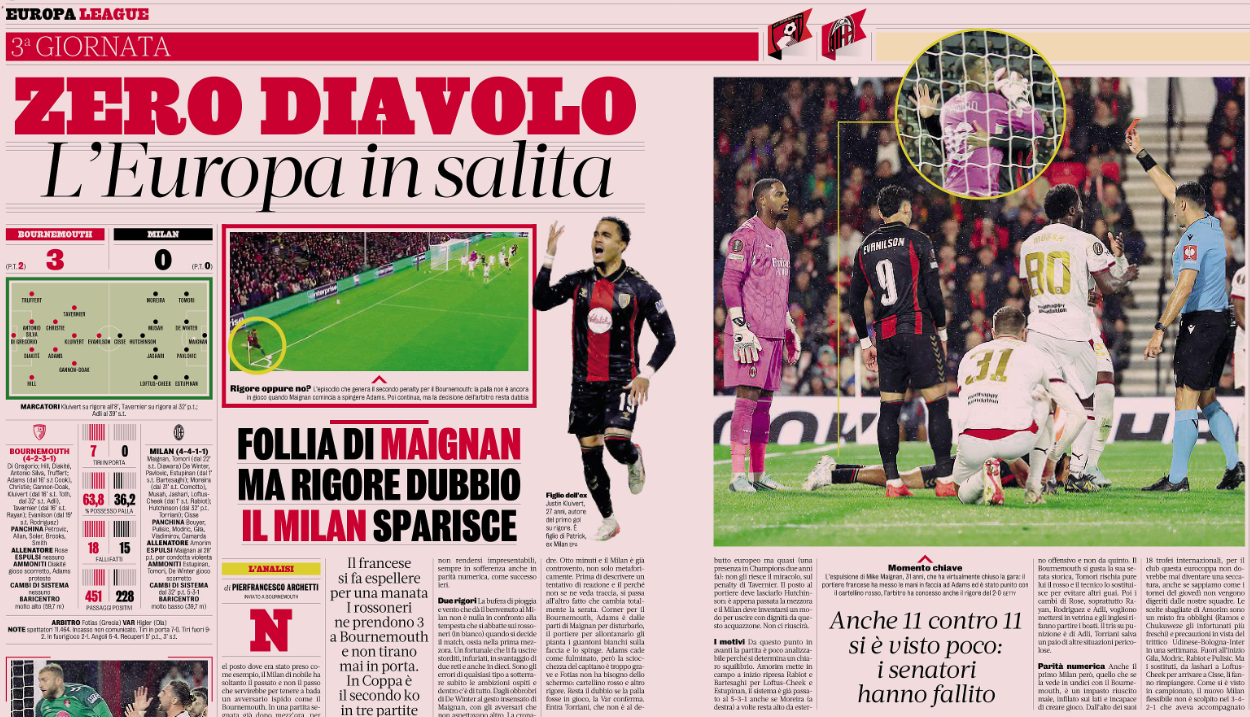
At the place where it had been held up as an example, Nobile’s Milan has only the past and not the pace that would be needed to keep a troublesome opponent like Bournemouth at bay. In a match already decided after half an hour, because of Maignan’s sending-off, Milan endure a night full of fears, unable to show courage or to know how to handle the English gusts, similar on the pitch to those of the weather.
Three goals conceded (from dead-ball situations) and not even a shot on target against the reinstated Di Gregorio: the upshot is that three points in three matches are too few, an average that also puts the playoffs at risk. There is time to recover, provided, however, that they do not make themselves unpresentable, always struggling even with equal numbers, as happened yesterday.
Two penalties for Bournemouth vs AC Milan
The storm of rain and wind that welcomes Milan is nothing compared with the storm that strikes the Rossoneri (in white) when the match is decided, that is, in the first half-hour. A violent storm that leaves them stunned, furious, two goals behind and also down to ten men. Errors of every kind immediately bury the visitors’ ambitions, and there is everything among them. From De Winter’s horrors to Maignan’s senseless gesture, with the opponents who were waiting for nothing else.
The account of events is supreme and merciless. The defender first gifts a goalscoring opportunity to the other Rossoneri, then, in the following move, touches an Evanilson header with his fist. Referee Fotias does not notice it, but the VAR cameras leave no escape. Called to the monitor, the Greek referee can do nothing but award the penalty, and Justin Kluivert shows no mercy towards his father’s former team.
Eight minutes and Milan are already against the wind, not only metaphorically. Before describing an attempted reaction and why there is no trace of one, we move on to the other incident that completely changes the evening, writes La Gazzetta dello Sport today.
Corner for Bournemouth, Adams is near Maignan to disturb him, and the goalkeeper, to move him away, plants his white gloves on his face and pushes him. Adams falls as if struck by lightning, but the captain’s foolishness is too serious and Fotias does not need the screen: red card and another penalty.
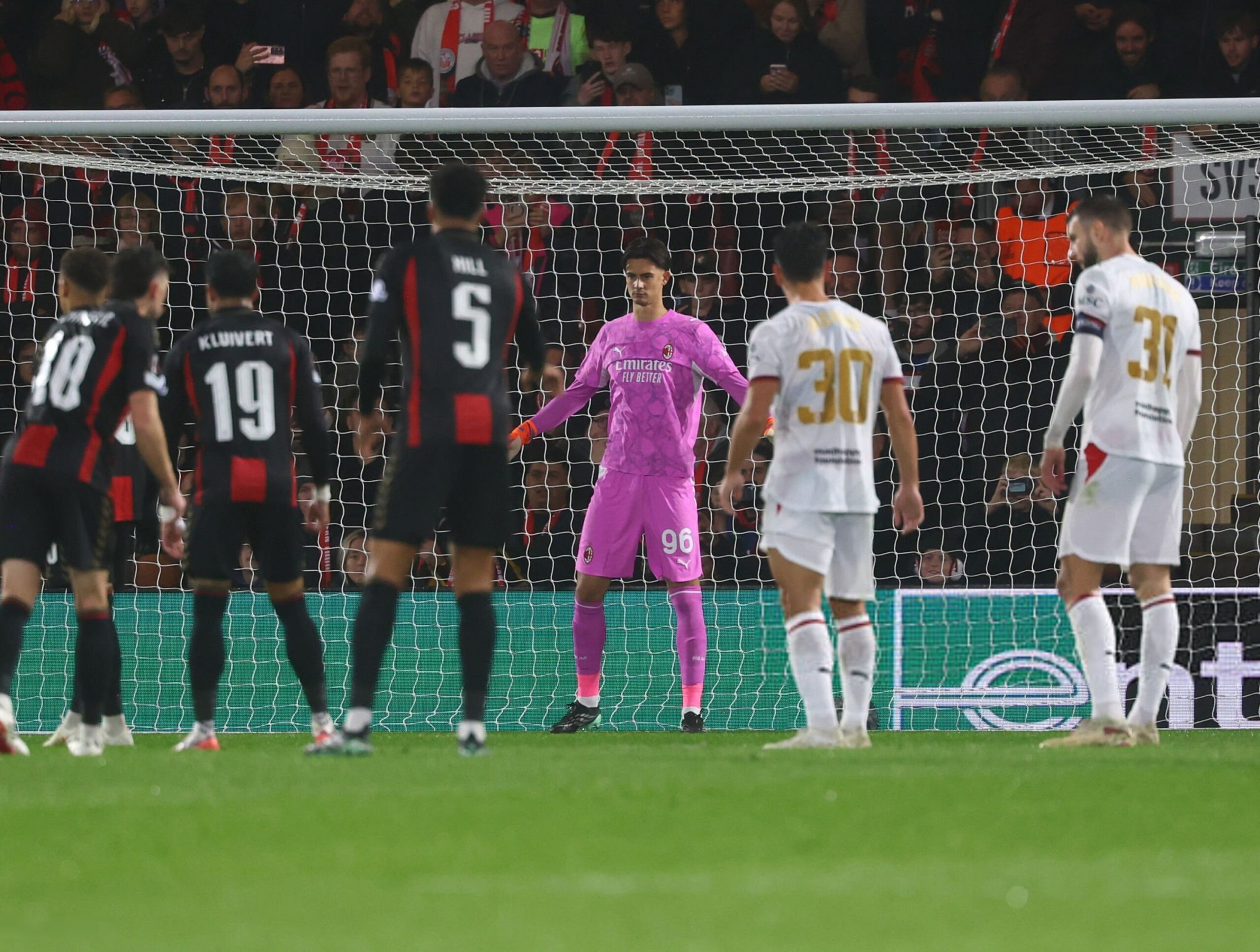
There remains doubt as to whether the ball was in play; VAR confirms. Torriani comes on, who is not quite making his European debut, but almost (one Champions League appearance two years ago): he cannot produce a miracle against Tavernier’s penalty.
Hutchinson has to give up his place to the goalkeeper: barely half an hour has passed and Milan must invent a way to emerge with dignity from this downpour. They will not succeed.
The reasons
From this point onwards, the match is difficult to analyse because a clear imbalance is established. Amorim brings on Rabiot and Bartesaghi at the beginning of the second half for Loftus-Cheek and Estupinan. The system has already shifted to 5-3-1, although Moreira (on the right) sometimes stays high up as an attacking wide player rather than as a wing-back.
Bournemouth savour their historic evening. Tomori also risks a red card and the coach substitutes him to avoid further trouble. Then Rose’s substitutions, especially Rayan, Rodriguez and Adli, want to put themselves in the spotlight, and the English crowd erupts in roars again.
The third goal, from a free kick, is Adli’s. Torriani saves a couple of other dangerous situations.
Numerical equality
Even the initial Milan, however, the one that faces Bournemouth with eleven men, is a badly mixed combination, exposed down the flanks and incapable of creating play.
With its 18 international trophies, this European competition should never become a nuisance for the club, even though we know how Thursday tournaments are not easily digested by our teams.
Amorim’s wrong choices are a mixture of obligations (Ramos and Chukwueze being the latest injured players) and precautions ahead of the Udinese-Bologna-Inter sequence in the space of a week.
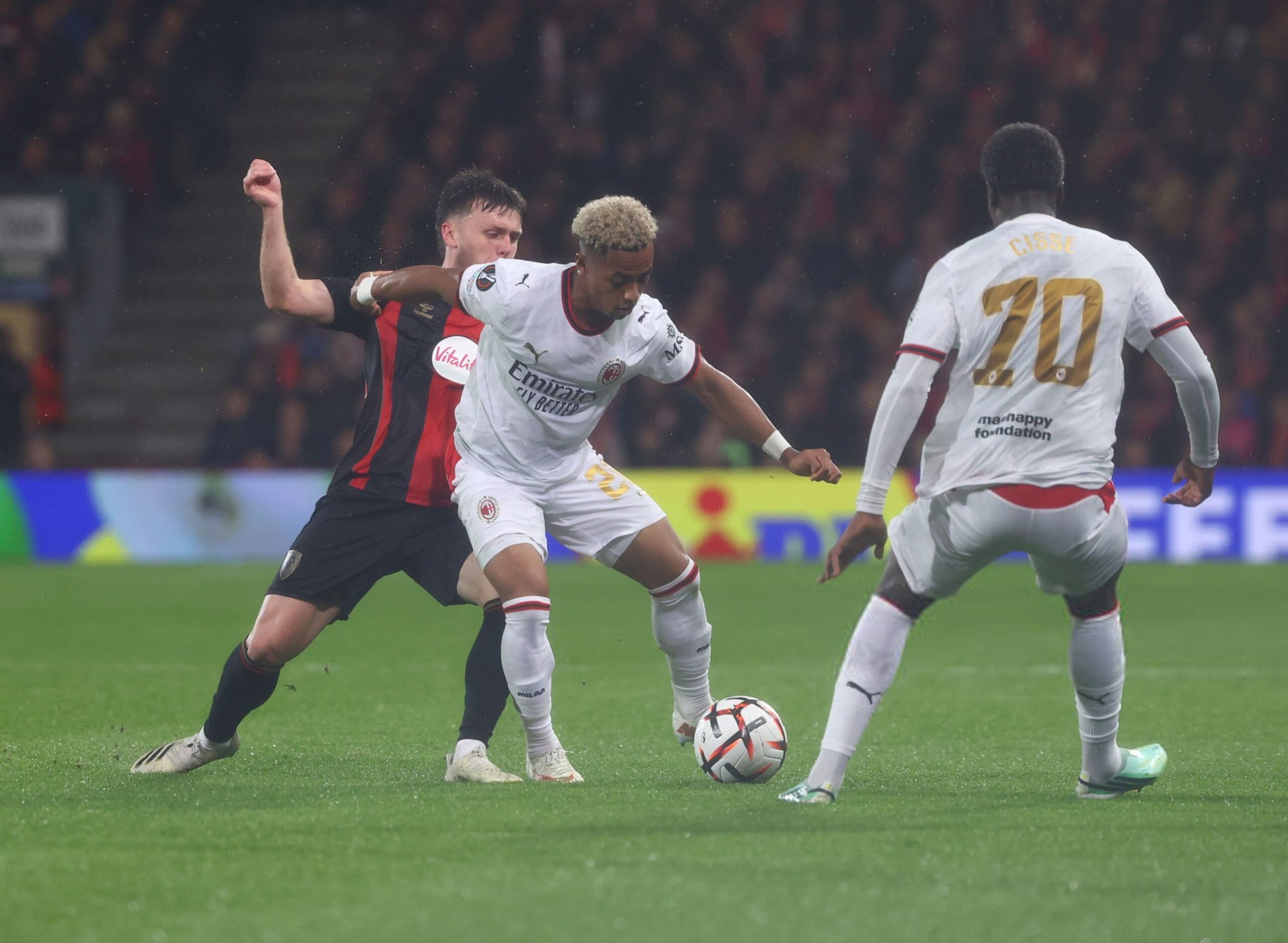
Initially left out are Gila, Modric, Rabiot and Pulisic. But their replacements, from Jashari to Loftus-Cheek and finally Cisse, make them sorely missed.
As has been seen in the league, the new flexible Milan is not set in stone in the 3-4-2-1 that had accompanied the coach’s rise, but here it is very similar to a 4-4-1-1, with defensive variations as well.
The anticipation concerned Cisse’s position, having turned 20 yesterday but without any joy on the pitch. A week ago in Salzburg, the Italian Under-21 international scored a hat-trick, even though Camarda was the designated centre-forward.
Now, instead, the youngster is the central attacking reference point, a role in which he struggles too much because of his characteristics, which are not those of a traditional centre-forward accustomed to playing with his back to goal. But the blame cannot be placed on the youngest player; it was the senior players who failed to make themselves presentable.