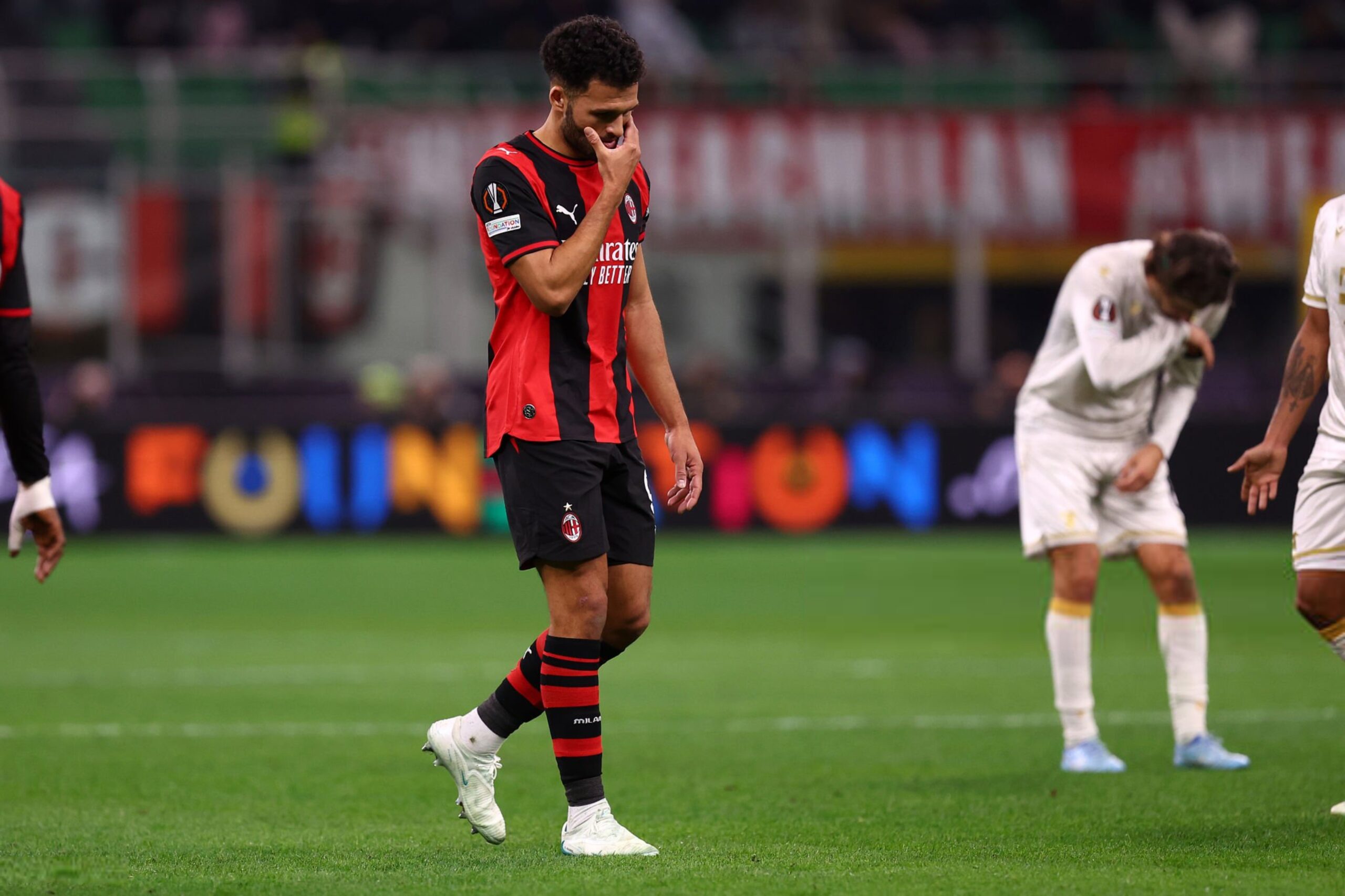

Which Is the Real Milan?
Which is the real Milan? The aggressive, focused, at times dazzling one from the derby, or the listless, disjointed, sterile one seen yesterday against Ferencváros? Probably the real Milan is both, condemned, partly because of structural limitations, to alternate positive performances with lacklustre displays.
In this way, let it be clear, you do not go far, because there can be no ambition without consistency. The last six matches have been a constant alternation between victory and defeat. Only once in five occasions have the Rossoneri come back from a losing position: a sign of great difficulty in reacting.
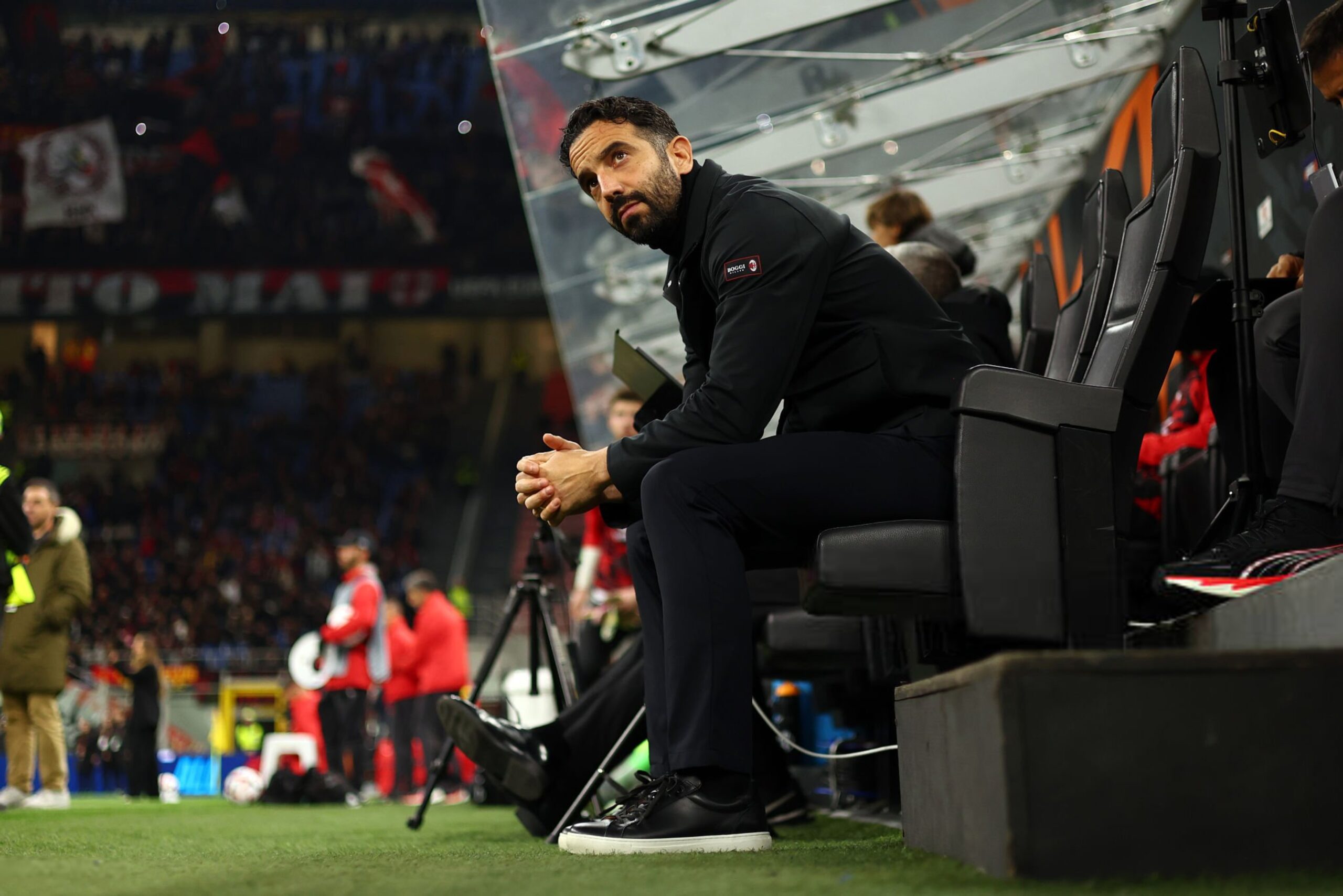
Milan have no shades of colour: if they get out of bed on the right side, they are a pleasure to watch; if they wake up in a bad mood, they cannot find a way to get by. Yesterday, their path in the Europa League became dangerously complicated: direct qualification for the next phase belongs to the realm of dreams, but even qualification for the playoffs is hanging in the balance.
As things stand, Milan would be out, and the schedule includes the difficult away trip to Olympiacos and the home match against Sunderland before two easier encounters. Milan's A-side would have no problems finishing among the top 24; Milan's B-side risks failing to do so.
Then we need to see how much the Europa League really matters to them: fair enough, the squad lacks depth and injuries provide a solid excuse, but Amorim's choices clearly showed that Sunday's away trip to Genoa was considered more important.
By making certain choices, however, you make little progress. So far in Europe, the Rossoneri have made fools of themselves three times in four rounds. Difficult to accept, but this is Milan: an international competition cannot be treated like a midweek friendly.
Amorim's Milan and The Questionable Choices
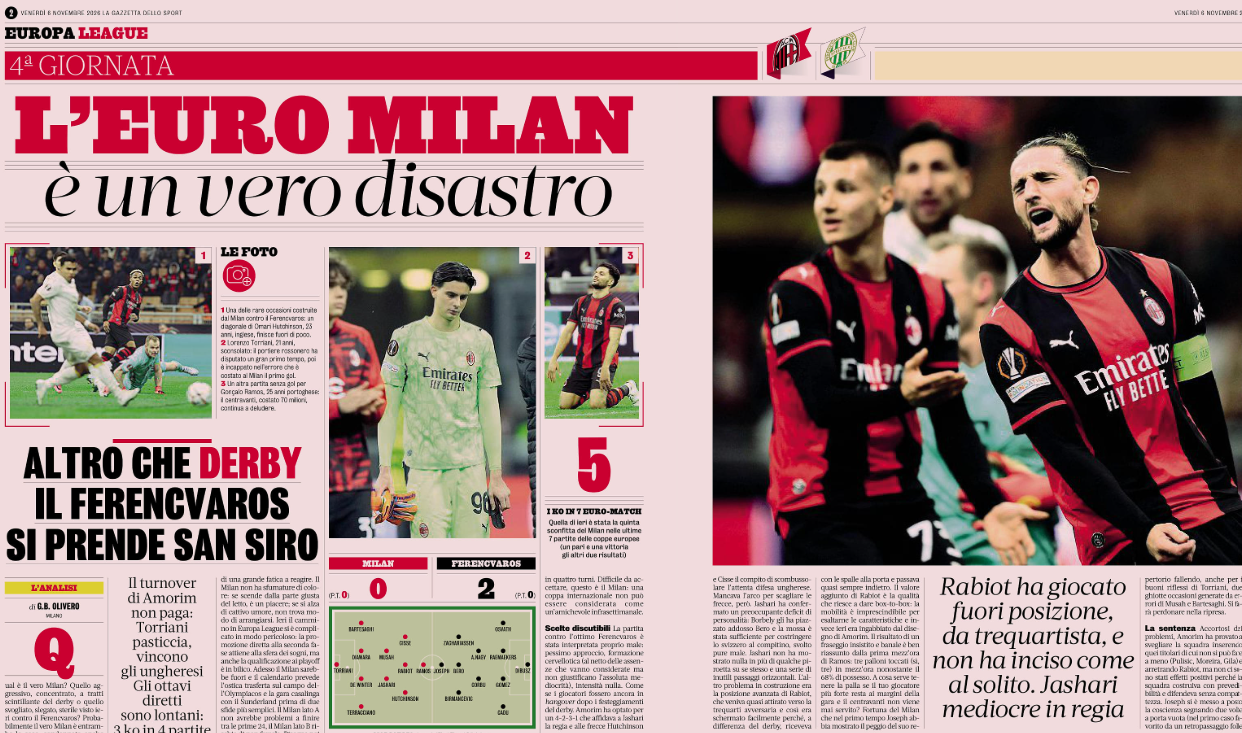
The match against the excellent Ferencváros was approached completely wrongly: a dreadful approach, a baffling lineup (even allowing for the absences, which must be taken into account but do not justify the absolute mediocrity), and zero intensity, as pointed out via La Gazzetta dello Sport in this morning's print edition. As though the players were still hungover from the derby celebrations.
Amorim opted for a 4-2-3-1 that entrusted Jashari with directing play and gave the arrows Hutchinson and Cissé the task of unsettling the attentive Hungarian defence. The bow needed to fire those arrows, however, was missing.
Jashari confirmed a worrying lack of personality: Borbély put Bero on him, and that move was enough to force the Swiss midfielder into doing the bare minimum, and doing even that badly. Jashari showed nothing beyond a few pirouettes around himself and a series of useless sideways passes.
The other problem in the build-up was Rabiot's advanced position, which almost drew him towards the opposition's attacking third, and so he was easily shut down because, unlike in the derby, he received the ball with his back to goal and almost always passed backwards.
Rabiot's added value is the quality he can provide from box to box: mobility is essential to bring out his characteristics, and yet yesterday he was trapped by Amorim's tactical design.
The result of persistent and banal passing play is well summed up by Ramos's first half-hour: three touches of the ball (yes, three) in half an hour despite 68% possession.
What is the point of keeping the ball if your strongest player remains on the margins of the match and the centre-forward is never supplied?
Milan were fortunate that, in the first half, Joseph showed the worst of his repertoire by wasting two golden opportunities created by mistakes from Musah and Bartesaghi, also thanks to Torriani's good reflexes. He would make up for it in the second half.
The Verdict
Having noticed the problems, Amorim tried to wake the team up by bringing on those starters who are indispensable (Pulisic, Moreira, Gila) and moving Rabiot deeper, but there were no positive effects because the team built up play predictably and defended without compactness.
Joseph cleared his conscience by scoring twice into an empty net (in the first case helped by a crazy back-pass from De Winter that Torriani failed to control, in the second by taking advantage of a counterattack and an intelligent touch from Zachariassen, excellent like the other winger Birmančević), while Milan's first shot on target came in the 36th minute through Hutchinson, when Ferencváros were down to ten men following Yusuf's sending-off and Amorim had even brought on Modrić and Camarda, finishing with an improbable 4-2-4 in which Moreira played at left-back.
A move of resignation, or rather desperation. Which version of Milan will turn up on Sunday at Marassi? Inevitable curiosity.