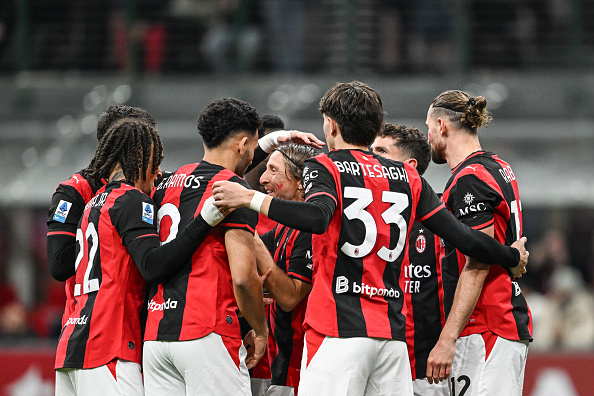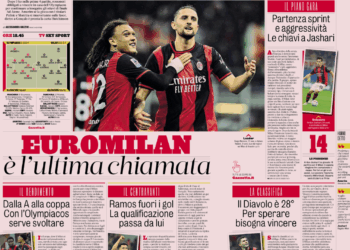


Five goals, three points, the third consecutive league victory and an evening of entertainment for the Rossoneri crowd. Yet, even after such a convincing result, some people still found a reason to turn their noses up. The reason? Milan supposedly played on the counter-attack, at home against a newly promoted side such as Frosinone, no less. As if there were a more noble way of scoring goals than others, and as if the calibre of the opponent necessarily dictated a particular tactical approach.
The feeling, instead, is that on Sunday Milan played exactly the game they wanted to play, taking advantage of the opponent's characteristics while bringing out the best in their own players. And that Ruben Amorim had the intelligence to understand which was the best way to secure victory. Those who follow both Serie A and wider football markets through https://predictionmarketscomparer.com/ will have recognised how effectively Milan adapted their approach to the specific conditions of the match.
Milan, the intelligence of playing the game you want to play
Massimiliano Alvini's Frosinone are one of the most courageous teams in this league. They press aggressively, seek individual duels, commit plenty of players to the opposition half and accept the risk of leaving considerable space behind their defensive line. They did the same at San Siro, without abandoning their identity against a technically superior opponent. Amorim knew these characteristics well, having even highlighted them during his pre-match press conference. So why should he have passed up the opportunity to exploit the opponent's main weakness?
With a defence positioned so high and given the quality of Milan's attacking players, it would almost have been a footballing crime not to consistently look to exploit the space in behind. Milan played in accordance with Frosinone's approach, allowing the Ciociari's own playing principles to create the ideal conditions to hurt them. They did not fall victim to the opponent's game plan; they used it to their advantage. A substantial difference.
Has the counter-attack become an offence?
It is also curious how, in modern football, the word counter-attack has acquired an almost derogatory meaning. Simply replace it with offensive transition and suddenly the same concept seems to acquire a different tactical standing. Milan finished the match with a higher possession percentage than Frosinone, without abandoning their build-up play, but accelerating whenever the opportunity presented itself. Attacking vertically does not necessarily mean playing on the counter-attack, just as keeping possession does not automatically mean dominating a match.
But let us even assume, for a moment, that Milan did play on the counter-attack. What would the problem be? Should they have slowed down their play, waited for Frosinone to reorganise their defensive line and given up dozens of metres of open space simply because they were playing at home against a newly promoted side? All of this, perhaps, to satisfy the aesthetic demands of a few pundits, as relayed via MilanPress.
Individual quality and Amorim's contribution
After the match, the Portuguese coach attributed much of the credit for the victory to the individual quality of his players. It is difficult to disagree with him, considering the quality displayed above all by Modric, Rabiot and Pulisic, who were the undisputed protagonists of the evening. But putting players in a position to bring out the best in their respective qualities is also a merit of the coach. The Croatian's vision in playing through balls, at which he is a master, the Frenchman's ability to support attacks and the American's quality in the final third all found fertile ground precisely thanks to the type of game Milan had set up.
There is no need to necessarily speak of an Amorim tactical masterpiece, nor to attribute to him merits that belong to the individual players. It would be, however, equally unfair not to recognise his ability to read and interpret the match correctly, without allowing himself to be influenced by the opponent's name or by the need to prove something through possession of the ball.
Milan, having an identity does not mean being predictable
Milan still have room for improvement, especially against teams that concede little space and force the Rossoneri to think their way through the final third. But criticising Amorim for adopting a different strategy against an opponent with diametrically opposite characteristics seems rather peculiar, to say the least. Having an identity does not mean playing every match in the same way. It means having the tools to interpret matches and win them in different ways, without becoming prisoners of one's own convictions.
On Sunday, Milan exploited their opponent's weaknesses, made the most of their own individual quality, scored five goals and entertained San Siro. If all of this is still a reason for criticism for some people, one almost wonders what kind of game Amorim's team should have played. No, Milan do not play on the counter-attack. But, even if they did, after scoring five goals and putting in such a performance, are we really sure that the counter-attack is the problem?