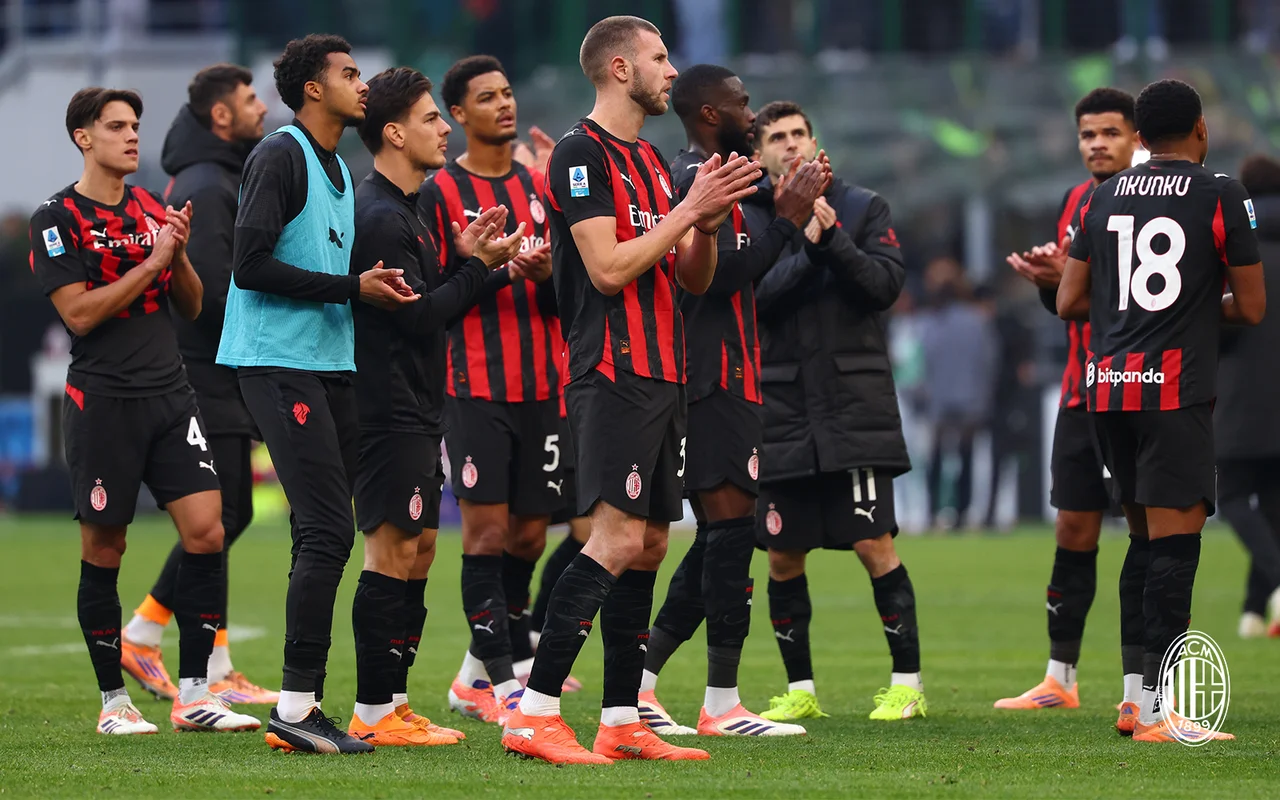

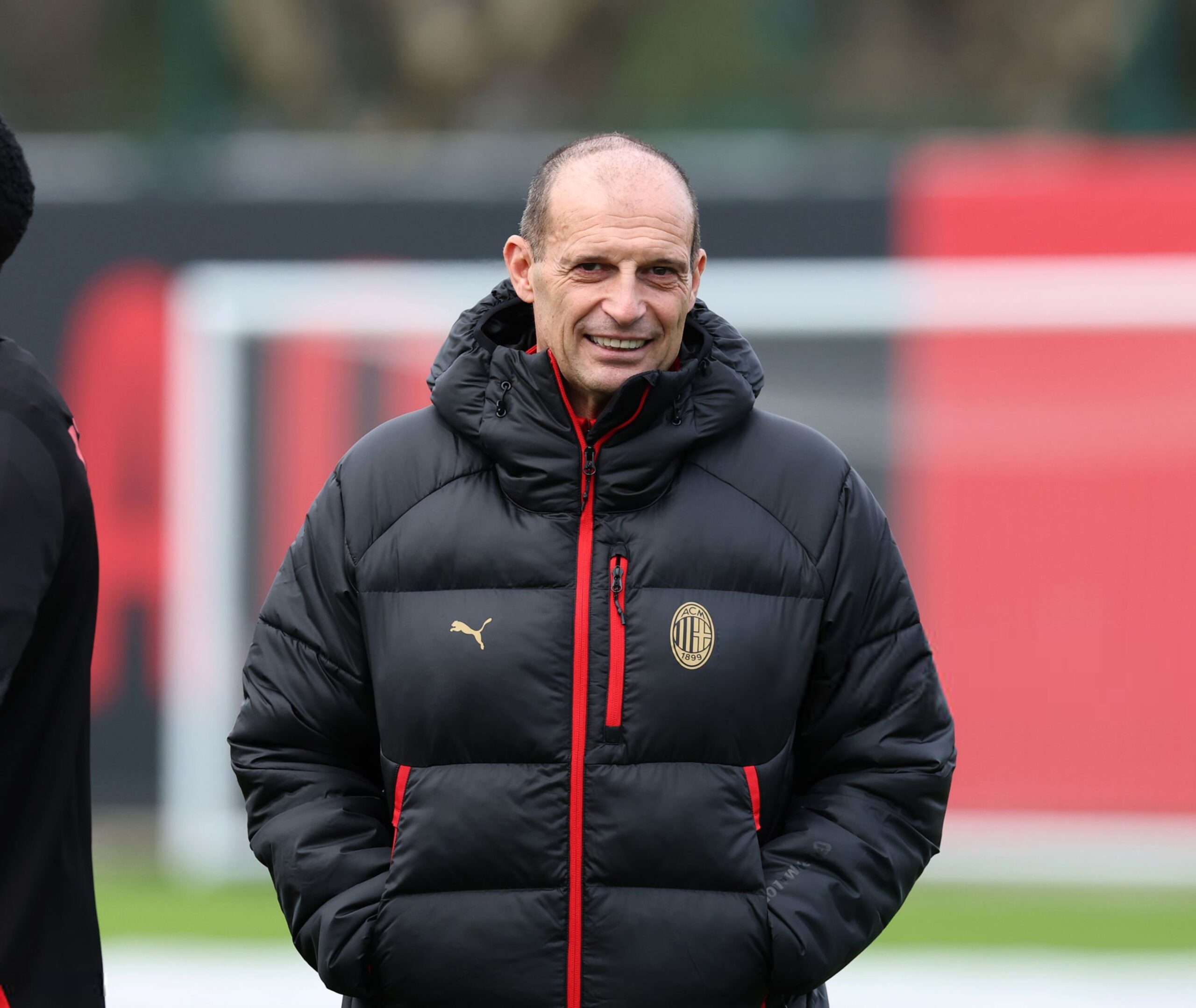
After the match against Napoli in the Supercoppa semi-final, Massimiliano Allegri commented on the team’s defensive line. "If I am surprised? They defended better and deserved to win," said the ex Juventus boss. "We conceded two goals where we could have done better, and that’s what we need to work on. Last Sunday, or in Turin, we conceded easy goals. […] If in three matches you concede goals where you could have done better, then you need to review how you defend."
Allegri began by analysing individual episodes, because his idea has always been that football matches are shaped and decided by mistakes, something he reiterated very literally yesterday. I do not think it is a coincidence, however, that within a few steps his speech became broader and more general, extending even to matches prior to yesterday’s Supercoppa clash with Napoli.
The Rossoneri’s match in Saudi Arabia was not what the fans expected. However, the club management is working to reinforce the team in January’s transfer, and reports are claiming that a new defender is being sought by director Igli Tare. What is certain, though, is that head coach Allegri will try to work with what he has available to win the next challenge, and if you feel you can count on the team, then you can test your luck and turn to online betting sites for players in Dubai.
Allegri's defensive warning highligts Milan's recurring flaws
We are not discovering the coach’s project today: to give Milan defensive solidity on which to build confidence and base everything else. Yesterday showed that this is not merely cheap press-conference rhetoric. Without the security of being able to manage situations at the back, of feeling safe in their own defensive third, Milan also looked lifeless in the opposition’s third, like when you put a foot on a shaky ladder and the thought that it might collapse at any moment prevents you from climbing further.
Of course, this was not the first time Allegri spoke about the importance of defending, and the fact that he keeps repeating it is a sign that there is still work to do. Milan have conceded six goals in their last three matches, and yesterday, in the two goals scored by Antonio Conte’s Napoli, they looked particularly naïve. Allegri’s fixation is well known. Ever since his first press conference as Milan coach, he has reminded everyone that most Scudetti in recent years have been won by teams with the best defence, and that if you do not leave the pitch “with dirty shorts,” you rarely win matches. These are arguments that are easy to dismiss as rhetoric: reducing everything to concentration, aggression, individual episodes, as Allegri himself often ends up doing, or individual quality.
Milan exposed by Conte's Napoli and a tactical mismatch
Much has already been said and written, for example, about Højlund’s outstanding performance. Beyond the goal and the assist, he finally looked like a player fully integrated into Conte’s Napoli, difficult to handle with his back to goal, always a factor with the ball at his feet. A great display that came just five days after the poor trip to Udine, where Højlund had looked completely lost, missing one of those chances that can ruin entire seasons or even careers. The Italian Supercoppa has always been something of a parenthesis in a team’s journey, and now that it sits exactly between the two halves of a season, often played in countries that are emotionally distant from the teams involved, this nature is even clearer, almost literal. I am not saying this cannot be a starting point for Højlund’s Napoli journey, we will see, but the context in which the match was played certainly affected Milan’s ability to contain him.
By context, I mean first and foremost tactical context. Milan decided not to change their structure against Antonio Conte’s new 3-4-3, which they immediately struggled to control. Napoli’s attacking midfielders, Neres on one side and Elmas on the other yesterday, enjoyed surprising freedom for a Conte team. Depending on the situation, they chose whether to receive between the lines, in the half-spaces, or to drift wide to overload the flank with the wing-back on their side. This freedom caused Milan problems especially on the right, where the coach from Lecce deployed the "double winger" Politano–Neres, who often swapped positions or moved very close to each other to combine in tight spaces.
It would not have been easy for anyone, but this situation required strong reading of the game and communication between Pavlović and Estupiñán. Instead, they defended in a somewhat binary way. Either they stepped out aggressively onto the man or they held their position, with the result that they were manipulated by the combinations between Politano and Neres, or they left both players free to receive, either between the lines or out wide. Napoli came close to scoring twice through this superiority, first in the 31st minute and then in the 53rd.
In the first instance, a direct vertical pass from the back towards Politano’s inside run caught Pavlović by surprise, as he had stepped up on Neres. The Italian winger was probably offside and therefore disengaged from the play, leaving the ball for Højlund, who then found McTominay free at the edge of the area for a shot.
In the second, Neres dragged Pavlović out of position, while Politano was picked up by Rabiot. The two seemed boxed in by the touchline, but one dribble inside from Politano was enough to send Pavlović to the ground and cause Rabiot to lose track of Neres. The Brazilian winger cut the ball back once again towards McTominay, who only managed to graze it with his toe, inadvertently laying it off for Rrahmani arriving behind him. At that point, only a great save from Maignan prevented the Kosovo centre-back from scoring with a powerful shot from outside the area.
With the “braccetti” dragged around so easily by Napoli’s attacking midfielders, De Winter was often left one-on-one, as the last man, against Højlund. Yesterday, the Belgian centre-back’s uncertainty made the absence of Matteo Gabbia, a constantly underrated defender, strongly felt. De Winter’s difficulties in dealing with the Dane on both goals should also be seen from this perspective.
What Allegri's Milan still lack after the Supercoppa defeat:
Looking at the second goal, which effectively sealed the match, you can see that Tomori is pulled away by De Winter due to Elmas’ outward movement. On Spinazzola’s vertical pass, there is a decisive moment where it seems the Belgian centre-back has both the time and the intention to cut across behind Napoli’s striker and attempt the interception. That moment lasts only an instant. In reality, Spinazzola’s pass is faster and tighter than his body language perhaps suggested. De Winter, who had made an initial movement to go around Højlund, suddenly finds himself behind him and late.
I do not want to reduce Milan’s entire performance, nor Napoli’s victory and Højlund’s display, to this single tactical detail. On the contrary, I want to connect it to everything else. De Winter’s limited minutes this season and in general, which likely weighed on his uncertainty, the experience gap with Højlund, who on the first goal exploited the defender’s passivity to produce a sudden touch into the six-yard box, turning with something like a 180-degree pirouette. In that moment, the different mental tension between the two teams was clear. Højlund’s move not only sent the ball through De Winter’s legs, as he thought he had forced him to the byline, but probably also caught Pavlović off guard, perhaps already thinking about how to defend the cross that was about to come, allowing Neres to slip away behind him. Even Maignan was surprised, deflecting a cross that was not particularly dangerous straight into the Brazilian’s path.
After the final whistle, Allegri tried to ease the weight of the result by reminding everyone that the main objective remains the league and that “one match does not overturn three months of work.” The implicit admission seems to be that there are still many months of work ahead, and watching yesterday’s match, it is hard to disagree. Of course, all the mitigating factors can be listed: the absences of Gabbia, Modrić and Leão, who perhaps after yesterday we have definitively identified as the backbone of this Milan side; the slightly alien and detached atmosphere of matches played in Saudi Arabia, which I believe makes it much harder for a defender to find the emotional tension needed to perform at their best. “The pleasure of defending,” as Allegri once called it.
Yet the very fact that Napoli managed to play their game in this atmosphere, and after changing their way of playing due to absences, perhaps tells us that the gap between the two teams today is wider than we imagined before this match. For Milan, this defeat will probably remain a parenthesis within the season, but that does not mean it cannot still offer some indications for the near future.