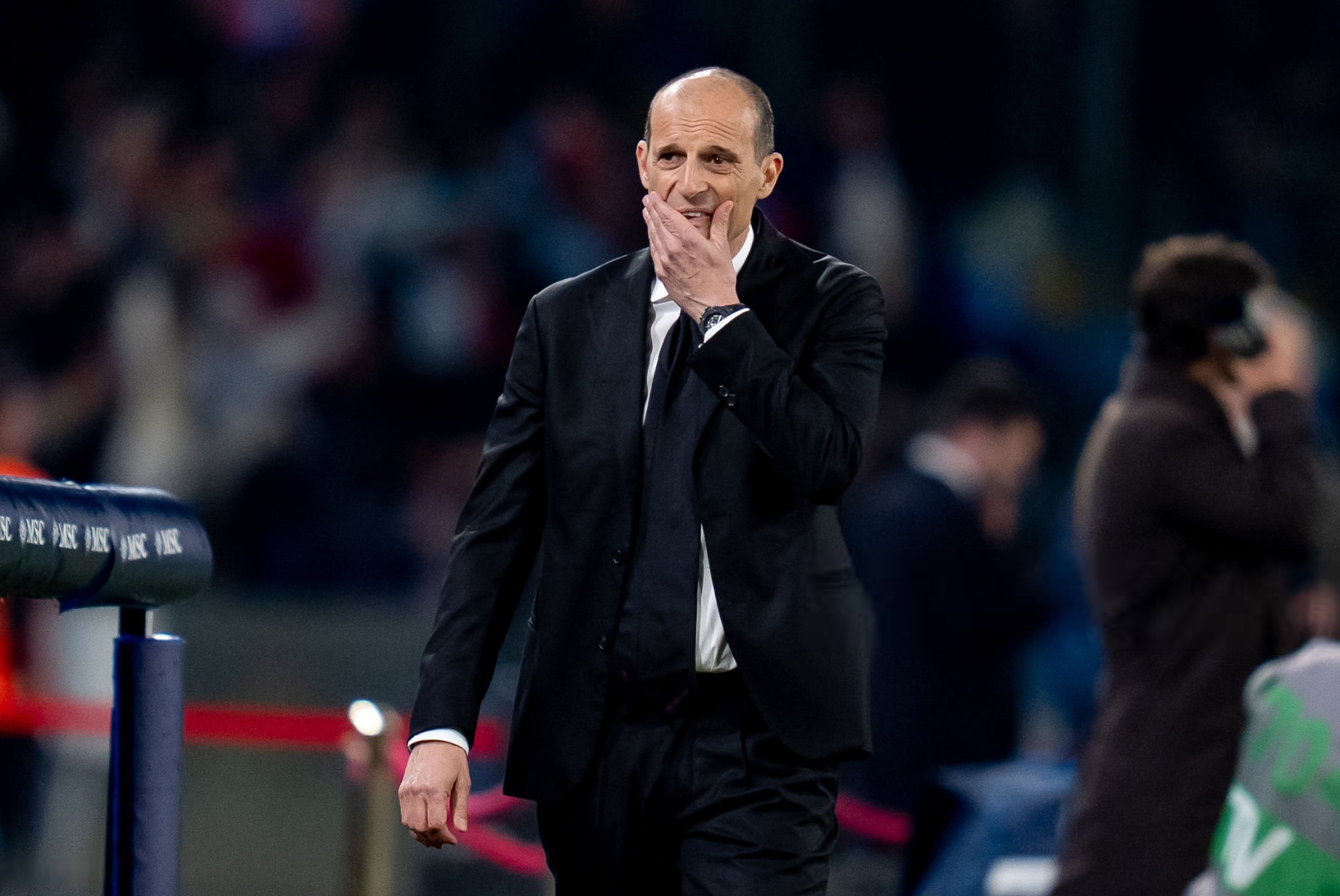

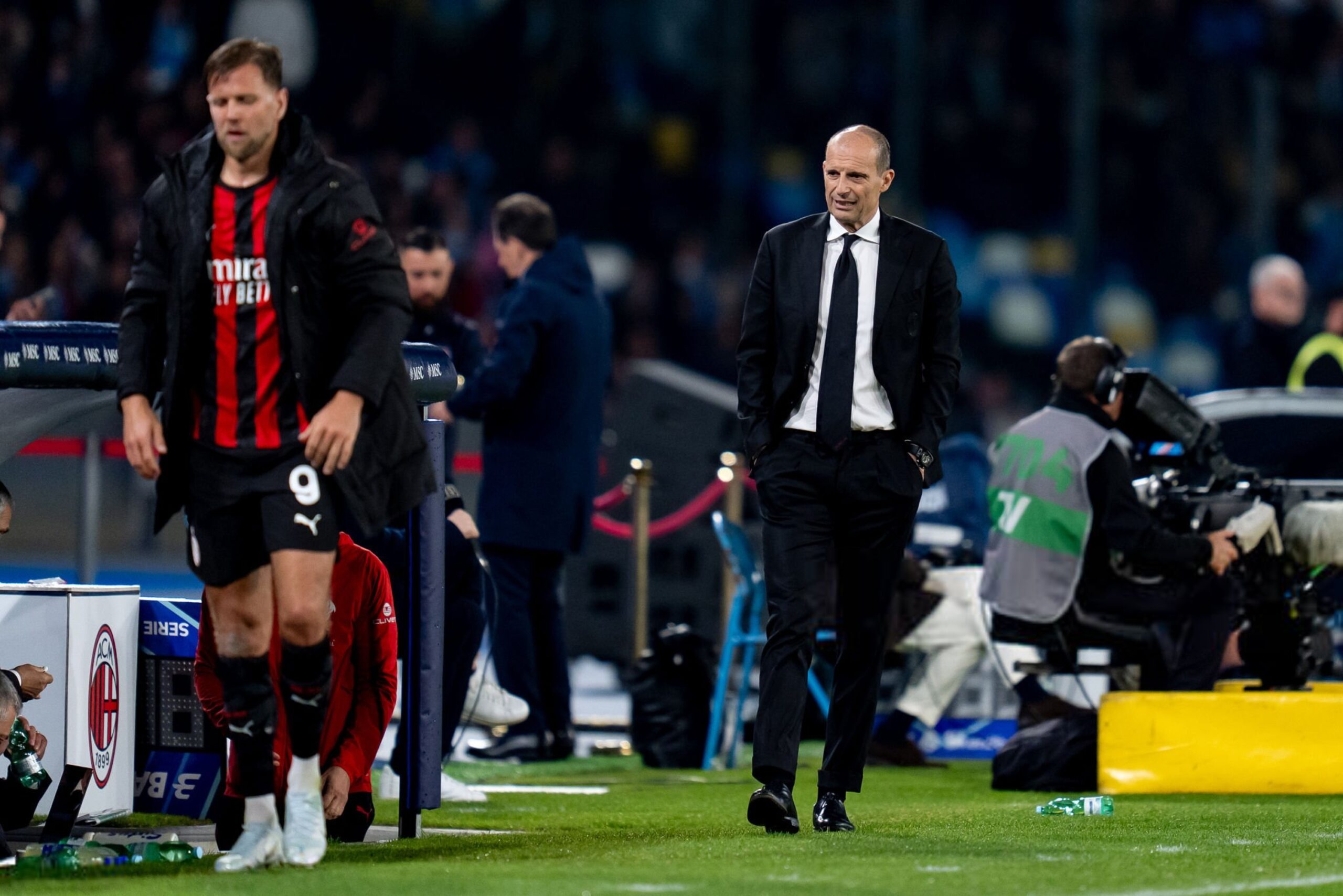
But is it really just a matter of formation, or is there something deeper behind a hyper-pragmatic Milan with little attacking intent? It’s a fair question and deserves closer examination, because what truly concerns those watching Milan’s matches isn’t so much whether the team lines up in a 3-5-2, 4-3-3, or 4-2-3-1, but the consistent feeling that this side is more focused on “we must not take any risks” in defence rather than “we need to take a few more risks” in attack. No one here is asking Massimiliano Allegri to produce aesthetically pleasing football that inspires near-religious devotion, but rather for a Milan that is more decisive and more inclined to turn play quickly and drive towards the opposition goal.
Attacking to defend
There’s nothing wrong with prioritising not conceding goals, otherwise, Milan this season wouldn’t have put together that run of 24 consecutive unbeaten matches, but within some of those results, the seed of doubt has begun to grow. Milan appear to be a team that, by design, lacks the intent to transition quickly and aggressively attack the opposition penalty area. The issue is that when they have done so, the outcome has often been the same: a goal. Because despite a squad that was assembled incompletely in the summer and not fully reinforced in the winter, Milan still have players who, when they move the ball with speed and hunger, can hurt their opponents. Yet this desire to advance up the pitch at a higher tempo does not happen consistently. Equally evident is a lack of ruthlessness in finishing moves, with players, once they reach the edge of the box, often forced into playing around the perimeter in an attempt to create space after the opposition has dropped deep.
Max’s thinking
Coach Allegri is far from naïve. He had hoped to form a functional attacking partnership with Leão and Pulisic, but despite both players showing strong commitment to the coach and the team, the experiment has not delivered the expected results. Max has one clear objective in mind: to secure qualification for the next edition of the Champions League as soon as possible. But to achieve that, something will need to change, if not in the system, then at least in attacking aggression and the desire to score. Because at the Maradona, especially in the second half, Milan never really gave the impression of pushing to find a goal (bar one occasion). Napoli, by contrast, actively sought ways to break down Milan’s defence, making several adjustments in personnel, movement, and decision-making, which ultimately led to Politano’s goal. Milan must reach the Champions League, but now is the time to go after that objective more assertively, before morale and league standings take a turn for the worse.