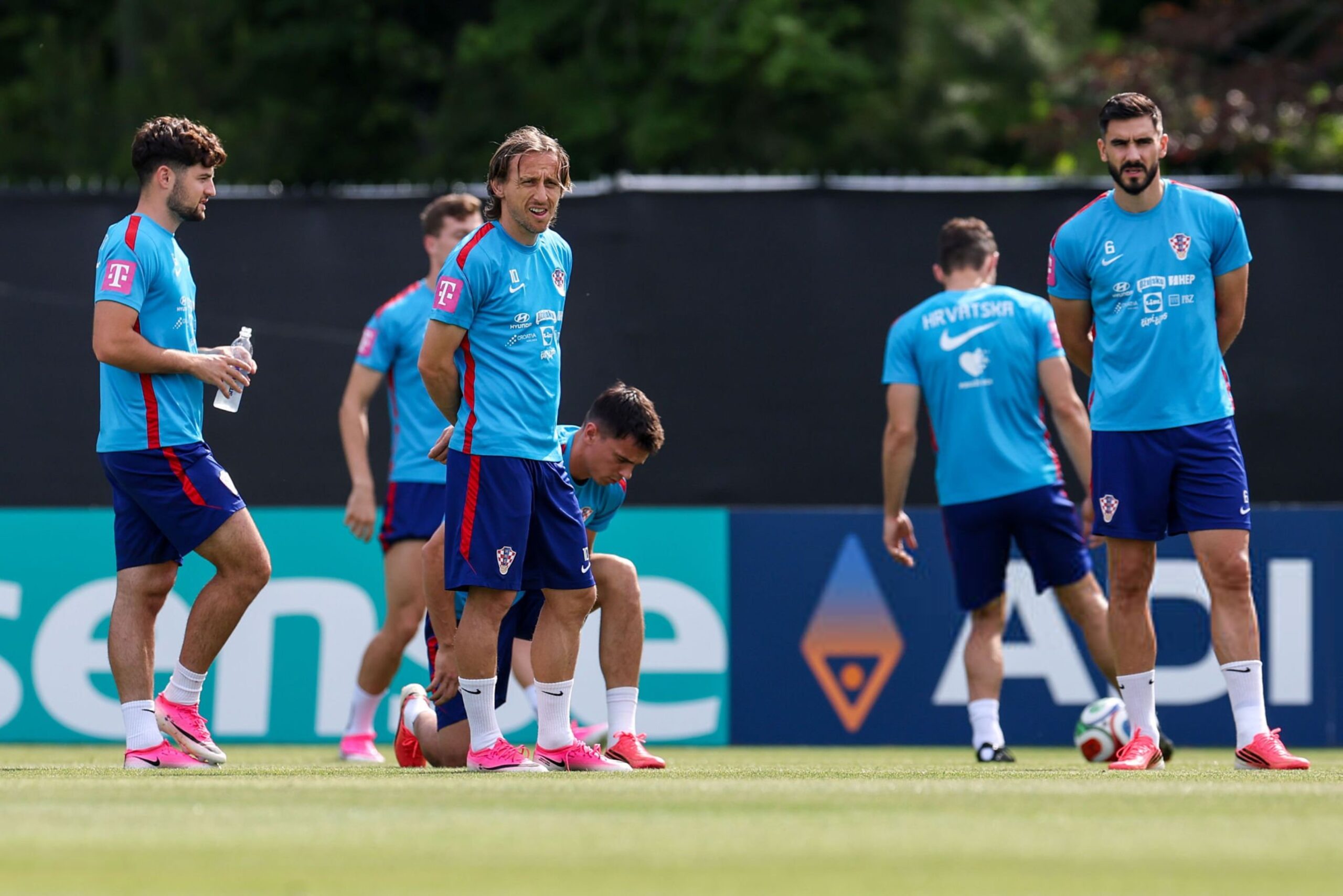

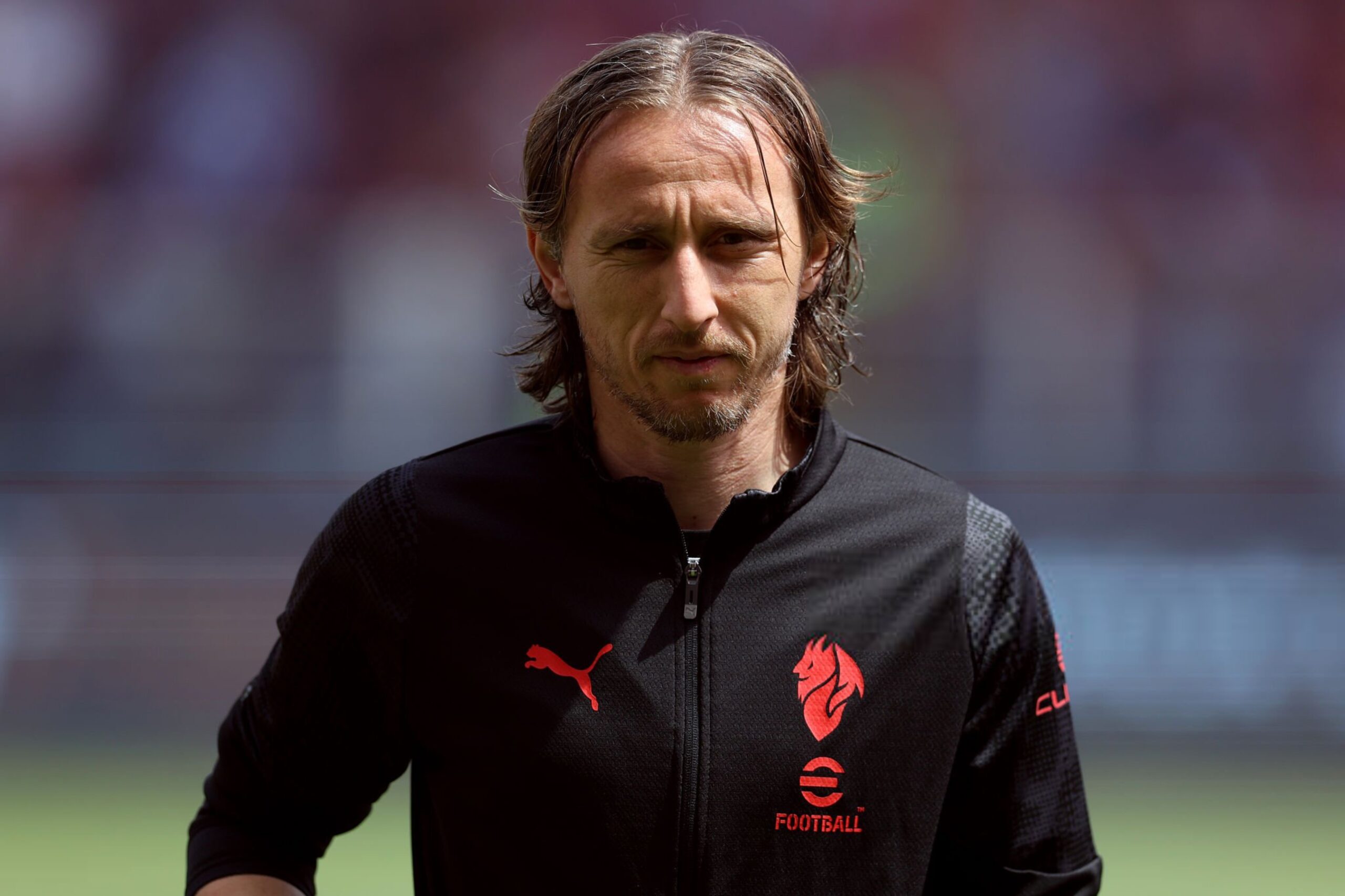
Luka Modrić, a legend in the world of football, was interviewed by Giacomo Poretti on the “Poretcast”. The Rossoneri midfielder, currently competing at the World Cup with his Croatia, spoke about many topics, all connected to the world of football.
The interview was the centrepiece of the event “The Master & The Team: Luka Modrić Meets MOVA Excellence”, organised by MOVA and held on 19 May 2026 at the Teatro Alcione in Milan. It was conducted in the PoretCast format and produced by Corax.
Here are the statements, as relayed via Milan News:
Question: If you had to introduce yourself to someone who has never watched a football match, what would you say about yourself?
“I would say that I am Luka Modrić, a footballer. But first and foremost, I am a father, a husband, and a guy who had dreams he never stopped believing in.”
If young Luka could have taken a peek into his future life, would he say, “I can’t believe it” or “About time”?
“I think he would say, ‘Wow.’ Because even when you have dreams as a child, managing to achieve everything I have achieved... I could never have imagined it, even though I always believed in myself. I thought I would reach great milestones, but what I achieved was really difficult to imagine. And that’s why the child version of me would say, ‘Wow, you did it. You never gave up. You made it.’”
How does it feel to play in a country like Italy, where football culture is so vibrant?
“I feel really good. I grew up following Italian football. Italy has given the football world some of the most intelligent players, such as Totti, Pirlo, Baggio, Del Piero and many others. The fans understand football and appreciate tactical and technical players. That’s why I feel so comfortable here. I’m happy that I fulfilled my dream of playing in Italy one day. It happened, and I did it at what is, for me, the best club in Italy.”
When did the ball become your best friend as a child?
“As long as I can remember, I was always with a football. I liked kicking it against a wall. Just that: ball and wall. Then, when I was six or seven years old, my father took me to the pitch to practise: ball control, juggling, and everything else. But the most important thing, and what I always recommend, is kicking the ball against a wall. Simple.”
You grew up during a very difficult period in your country, with war and uncertainty...
“It shaped me as a person. It showed me that life is not always fair, because of everything that was happening at the time. But that’s life. You can’t think that only positive things will happen. You have to adapt, keep moving forward, grow, and be strong. It taught me those things: to be strong and to build a strong character. Difficult moments help you develop a strong personality and grow as a person. It helped me a lot.”
Where do you find the strength that sets you apart? Modric answered:
“For me, the most important thing is the love for what I do. Then there are the important people: my family, my wife, my children, the people close to me. I do it for them because I see how happy they are because of what I do. That gives me the strength to keep fighting and to prove that those who underestimate me are wrong. People label you as old, they say you can’t do this or that, but I draw strength from my family and from the people who love me. I do it for them. The most important thing is to love what you do. I love football and I still enjoy it.”
You continue to play at the highest level at your age. Is it only talent, or is there also a lot of hard work?
“A coach always told me: ‘Talent is 20%; the rest is hard work.’ I don’t know if those percentages are exactly right, but the point is that talent is important, yet by itself it is not enough. If you don’t work hard, if you’re not determined, if you don’t believe in yourself and don’t do everything necessary to succeed in life, talent is not sufficient. Talent is only one part; the rest is hard work and many other things.”
What is one habit that has helped you stay at this level?
“Just one? There are so many important things needed to maintain a high level, especially as you get older. Recovery is very important, and taking care of your body. And work as well. As you age, you need to work more. When someone first told me that, it sounded strange. Why should I work more? If anything, it should be the opposite. But it’s true: you need to work harder to maintain your physical condition and stay at this level. I enjoy working hard, but recovery is also essential. You need to find the balance between the two.”
You are always calm. How do you do it? It always seems as if everything is under control on the pitch...
“It’s part of my personality. I try to stay positive and calm regardless of the situation. When something negative happens, I try to remain clear-headed, positive, and find a way to change things.”
When you play or train, do you still surprise yourself with something you do on the pitch?
“Yes, of course. Sometimes you do something and think, ‘Wow, that was really fantastic.’ You can always improve, do something better, try new things. That’s how I am: I always try to learn and to do something new. Sometimes you watch your teammates and draw inspiration from them. That’s what I like about football. You can always learn.”
You enjoy it, don’t you?
“Yes, very much.”
Has physical preparation changed a lot over the years? Modric commented:
“It has changed. I don’t know by how much, but it has certainly evolved. A lot depends on the coaches and fitness trainers. Sometimes it’s easier, sometimes it’s tougher. I prefer it when you work hard during pre-season because it helps you throughout the season. Some things have changed, certainly. But to say it has changed completely? No, not 100%.”
Is there a coach who helped you in a particularly significant way?
“There have been several. I don’t want to name just one because I was fortunate enough to work with many great coaches and champions. I learned something from all of them, and they helped me a lot throughout my career. Without coaches, it’s difficult to succeed in football. But if I have to mention one person, I go back to when I was a child. There was a coach who refereed our training matches. He would deliberately make calls against us to make us angry. His goal was to teach us that in football and in life, many unfair things can happen. So you need to stay calm and find a solution. It was very important for me to learn that while growing up.”
Which opposing player caused you the most problems, if there is one?
“There is, there is. Many of them. I always enjoyed playing against Barcelona when I was at Real Madrid. For me, Iniesta... I really liked playing against him. He’s one of the players I admire most, but he was not easy to play against. If I have to name one, it’s him.”
What kind of atmosphere do you like to create in the dressing room? You have great charisma; you’re a leader.
“I like to create a calm and positive atmosphere; that’s the most important thing. Positivity and calm. Those are the things I want to pass on to my teammates. I want to bring positive energy, motivation, the desire to fight on the pitch for the team, and to help one another. Those are the fundamental things.”
When you need to say something important in the dressing room, do you speak or do you look your teammates in the eye?
“I’m a calm person. I don’t talk much. I prefer to observe and understand when the right moment to speak is. I don’t like overly grand speeches. But when I feel it’s the right moment, then I speak.”
Who takes the longest shower in the dressing room?
“I don’t know, I don’t pay attention to that (laughs).”
What do you feel when you see a young player who is just starting out? Do you want to help him, or do you feel jealous?
“I want to help them. Young players today need help because there are so many distractions around football. Sometimes I get the feeling that football is no longer the absolute priority for some young players. There are many other things that come first. For my generation, football was the priority; it was everything. We didn’t have distractions. Now there are so many, and young people can get confused. That’s why experienced players need to guide them, show them the right path, and help them understand how to behave if they want to succeed. It’s not enough just to reach a certain level. There are many players who stay there for two or three years and then disappear. The important thing is consistency: staying at a high level for many years. I try to help them by setting an example.”
How important is family?
“It’s the most important thing. When you come home after matches, especially after bad ones, everything becomes easier when you see your children and your wife. They help you forget football for a while and simply spend time with them, although it’s not that easy. It’s not easy being around me for a couple of days after a defeat. But when you see them, they make you happy, they make you laugh, and little by little you forget about football and enjoy your time with them. It’s important to have stability at home and to think about other things as well, not only football.”
Does your son comment on your matches? Does he tell you that you could have done something differently or things like that?
“No. We talk about football, but not in those terms.”