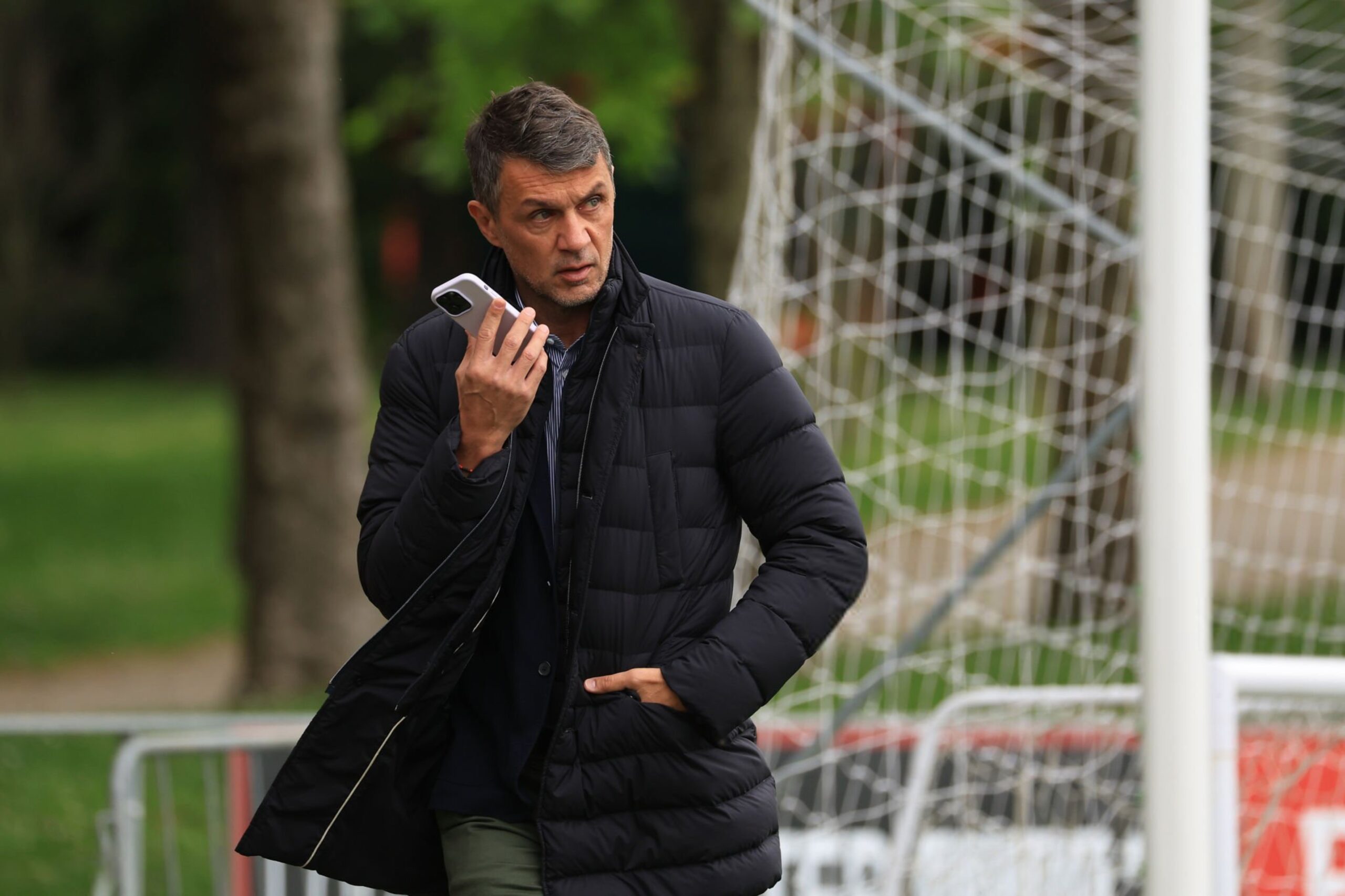

Paolo Maldini gave a lengthy interview to Corriere della Sera to discuss his brief experience with the Italian national team. Below are some of Maldini’s statements.
Maldini on his difficult character
“I don’t know. Others are the ones who judge me, and you can’t please everyone. I care about doing things properly, and I care about speaking clearly. The people who have worked with me, my teammates and the colleagues I spent five years with at Milan as a director, know me well.
"If a man who tries to assert his role and defend his responsibilities is considered uncompromising, then I am uncompromising. If someone who takes responsibility, tries to win and accepts defeats is considered uncompromising, then I am uncompromising. But I have one advantage, which comes from my 25-year career."
“I’m not attached to a position. I feel very free in my choices. Thank God, I have no financial needs. What makes me accept roles is the opportunity to carry them out and make my contribution. I’m sorry that this is seen as arrogance or stubbornness. But if I am appointed as the person responsible, I feel obliged to take responsibility.”
On his brief experience with the national team, Maldini said:
“Malagò called me at Easter and said: ‘There is a possibility that I will become president of the FIGC; you are the person I would like to have alongside me.’ I told him I was available. For me, there are only two things in football: Milan and the national team.
Then I didn’t hear from him again. The day before the election, Malagò called again: ‘The vote is tomorrow, there is a good chance. I want you on board.’ I replied: ‘Let’s talk about it.’ He asked me to become president of Club Italia. It wasn’t just about relaunching the national team. Italian football needed to be rebuilt from the ground up.”
On whether Leonardo was needed
“I share friendship, values and principles with him. Leo has great organisational ability, as well as a great understanding with me. So we started from there. We came up with a new role: technical director.
The technical director position had never been part of the national team’s organisational structure. The coach reported directly to the president. But that wasn’t right: a coach needs someone to discuss things with.”
On what happened afterwards
“Then the agreements were changed, so the only thing to do was resign. Or rather, refuse to sign the four-year contract that was supposed to begin on 1 August.
Accepting the role without knowing who would choose the coach? Exactly. The first thing I asked was: ‘Who chooses the coach?’
Malagò replied: ‘You choose the coach, and I approve him.’ That was the agreement. Then events led to that changing.”
On Pirlo:
“Our idea was centred around technique, attacking football and change. In Italy, we have fallen behind in many areas. We wanted youth development to be based not on excessive tactical focus, but on technique, one-on-one ability and an attacking mentality.
And we wanted a young coach who had a history with the national team. There were three names.”
On the alternatives to Pirlo:
“Daniele De Rossi and Fabio Grosso. Three World Cup winners.
But the president told us that, based on the agreements that had led to his election, with the support of all the clubs except Lazio, we could not interfere with the coaches of Serie A teams. So De Rossi and Grosso were ruled out.
We made a phone call to the greatest Italian coach of all time, my close friend Carlo Ancelotti. He told us that Brazil had reiterated its complete confidence in him. He wished us good luck. It was a necessary phone call to make.”
On Pep Guardiola:
“He is the coach who most embodies technical and attacking football. Through some friends, he had expressed the idea of coaching a national team.
We went to see him in Barcelona, had lunch together and spoke for an entire day. He was very tempted. He came very close to accepting. He even started writing line-ups on pieces of paper...
Did he ask for €20 million? Absolutely not. Money was never an issue. Pep told us clearly: ‘Give me one euro less than what the previous coach earned, and I’m fine.’”
On why Guardiola turned it down
“Because he was tired. Guardiola had just come off ten exhausting years in the Premier League. He had undergone back surgery. He wants to rest.
But it was a very serious discussion. We studied the squads, from the Under-17s upwards... So we moved on to Andrea. Malagò knew everything; we kept him informed every step of the way.”
On Pirlo not being a winner
“That is a personal opinion. We wanted a young coach who would embrace the project and had a high-level career.
Technically, when I speak with Pirlo, I find him extremely well prepared. Supported and guided by a technical director and an advisor, he would have been the ideal coach.”
On whether the betting issue was an excuse
“I would say yes. It was certainly blown completely out of proportion.
Pirlo was prepared to end his relationship with the Russian betting company. He is an extremely respectable person and did not deserve all that attention.
They brought up the code of ethics and the Dignity Decree. But if there had really been a desire to appoint him as national team coach, there would have been no legal obstacles.”
On what Malagò told them
“He called Leonardo and me to say: ‘In my opinion, we can no longer appoint Pirlo. From today onwards, I will choose the coach. From today, the rules change: I choose the national team coach and you approve him.’
But if I have a role, if I have a responsibility and I intend to exercise it, that is an unacceptable proposition.
We took 24 hours and submitted our resignations, even though the contract had yet to begin.
I don’t know whether that makes me uncompromising and presumptuous. I am used to doing things differently.
There were no longer the conditions of trust needed to carry out a job that is enormous, but at the same time incredibly exciting.”
On their project, Maldini said:
“A radical change. Completely different, more attacking working methods. Developing new talent. Supporting the entire Under-age structure.
I would have become president of Club Italia, which consists of nineteen teams: the youth teams, women’s teams, beach soccer, futsal...”
On whether Berlusconi’s Milan is his model:
“Berlusconi was a model of management. He won everything while spending less than other clubs that had thrown billions at the challenge before winning...
Inter? No. I’m thinking of foreign teams, from Chelsea to PSG.
Berlusconi’s Milan should be studied. It taught us that the structure of the organisation you work for is fundamental, and that respecting people’s roles is important: whoever was supposed to make the decision made it, and was then judged on it.
It seems to me that this is no longer how things are done. The foundation of any employment contract is taking responsibility. If I make a mistake, I make it based on my own ideas.
But Berlusconi did not merely change the way the club was managed.”
On whether Malagò disappointed him
“There was a relationship based on trust. If you make a decision, you then have to stand by it.
If you explain what you intended to create, the decision becomes a little easier to understand. Compare it with Italian football twenty or thirty years ago.”
Maldini on the problems facing Italian football
“Technically, we are a country that no longer produces talented players. Something is not working at a systemic level.
My sons saw it in Milan’s youth academy: people only talk about tactics. If a young player has talent, that becomes a problem.
But that goes against the rules of modern football.
And then we have dilapidated stadiums and inadequate training centres. We wanted to involve everyone in changing the rules and regulations as quickly as possible.”
On Ranieri
“His history speaks for itself. I cannot judge. Having someone like Ranieri is a bonus, something exceptional.
I will only say that the amount of work to be done is enormous. I don’t know what he has been asked to do.
I fear that too much importance will be placed on the national team, and much less on rebuilding Italian football.”
On how he feels
“I have one regret that I will carry with me. I had taken on a demanding commitment which, over those days, had almost become a dream: to do something for future generations, to build a competitive Italy.
A dream that was interrupted, but a beautiful one nonetheless, also because of the many people I had found who were willing to work on it.
Do you know what Guardiola spoke to us about at length? The impact Cruijff had on Spanish football. For two years, he was opposed by everyone. But if Spain produces talented players today, it is thanks to Cruijff’s ideas. We do not want to compare ourselves to him. But that was the path we wanted to take. Difficult and long, but one that could have changed the identity of Italian football. It is a shame. A real shame.”