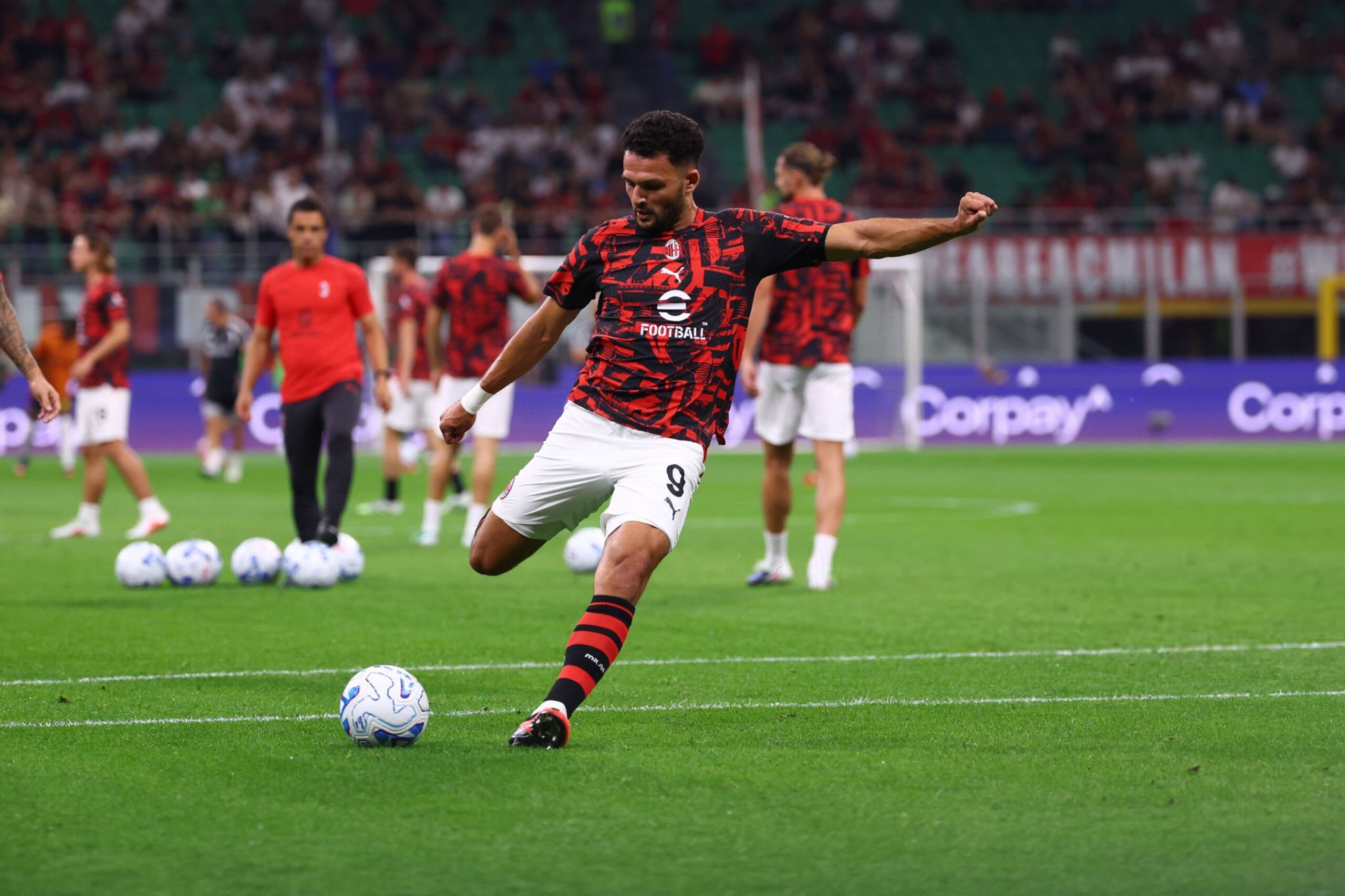

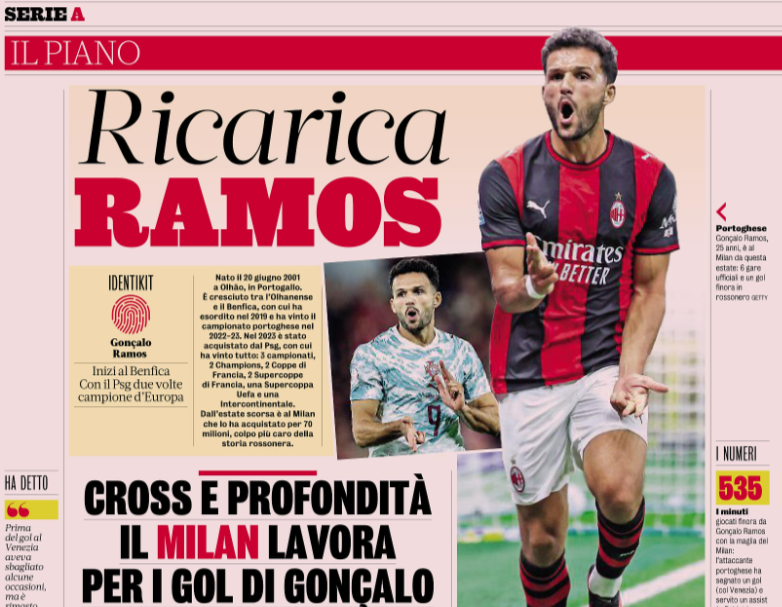
Gonçalo Ramos has yet to follow up his goal against Venezia with another one in a Milan shirt: he remains on just one goal across Serie A and the Europa League. He has, however, built on his first Milan goal at international level: two nights ago, he helped Portugal to victory over Haaland’s Norway.
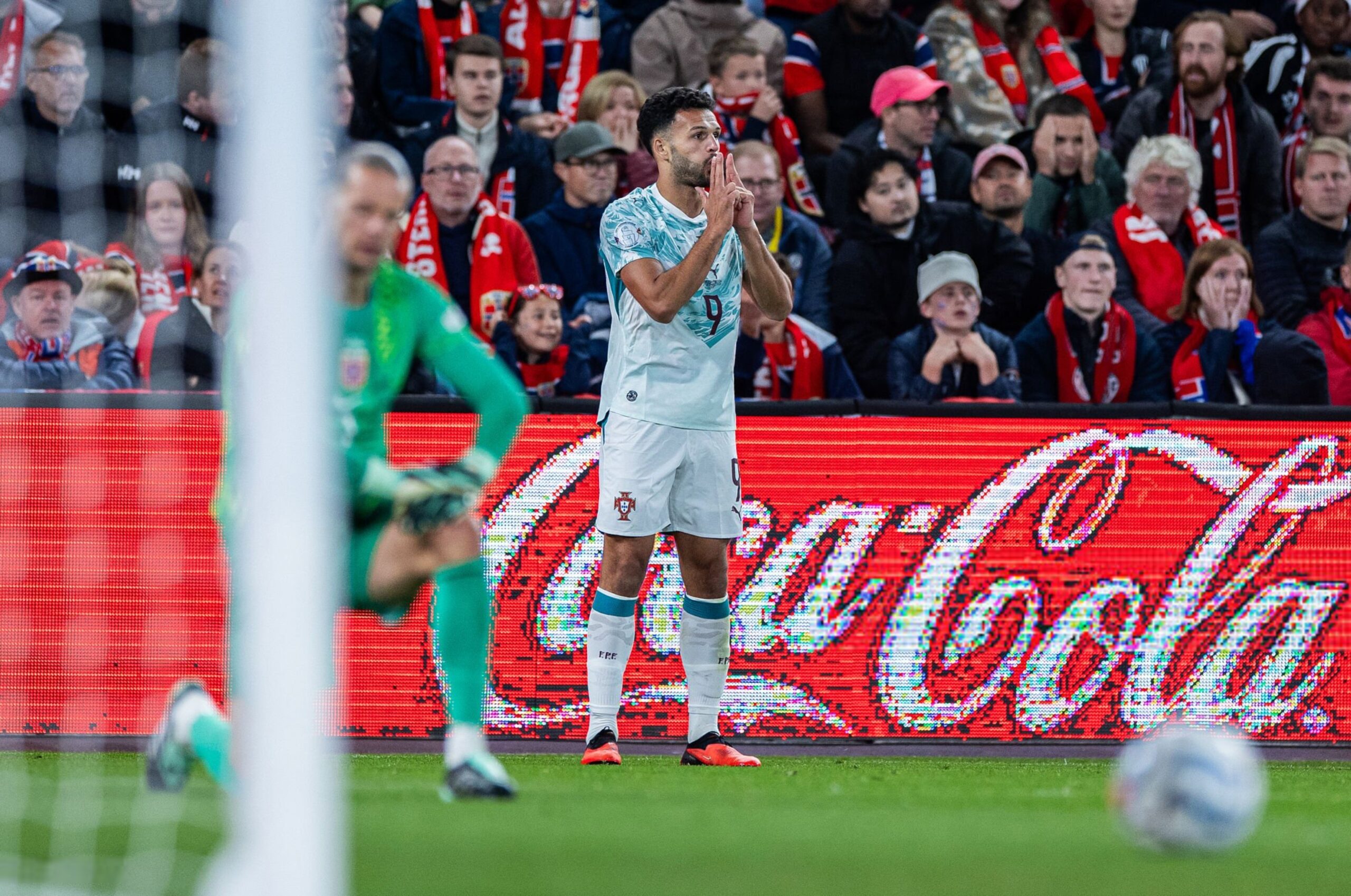
He was aided by opposing goalkeeper Nyland, whose low pass was intercepted by the striker and turned into a winning lob. Ramos then came close to completing a personal brace on two occasions: he had a goal ruled out after another careless piece of distribution from Nyland, but it was disallowed for offside. Later, after reacting to a Leão effort that had struck the crossbar, Ramos fired wide from close range.
That leaves him with 12 goals in 29 appearances for the national team. A scoring rate worthy of a natural striker. It is fair, however, to question his numbers as Milan’s centre-forward. Looking simply at the figures (one goal in 535 total minutes) but also going beyond them, or rather looking further back: does Milan’s build-up play really make the most of his qualities as a penalty-box finisher? Against Lecce, his latest match for Milan, Gonçalo did not register a single shot, either on or off target. He did, however, set up Rabiot with a perfect assist and once again made his usual valuable contribution to the team. He runs a great deal (more than anyone else, in fact) competes physically and plays well with his back to goal, another area in which he stands out above the others.
The key issue remains: the centre-forward in this new, attack-minded Milan side is barely even getting into the penalty area. How can that problem be solved? Amorim had praised Gonçalo’s aerial ability, his capacity to rise above even several opposing markers. Ramos had scored the winning goal against Croatia with a header in the round of 32 of the World Cup in the United States: a perfect twisting header from a perfect cross. The ball had been delivered by the right foot of former teammate Rafa Leão, while Gonçalo, timing his movement perfectly, had escaped the attention of two Croatian defenders, as pointed out via La Gazzetta dello Sport in this morning's print edition.
That is exactly what Milan need more of today: crosses. In the specific Serie A ranking, the Rossoneri sit tenth, and none of their many wide players has particularly stood out for the quality of their deliveries. As a result, Ramos’s ability in the air cannot come to the fore. Amorim will ask for more balls into the box from the flanks.
Gonçalo Ramos' pace...
Another aspect the coach is working on is attacking the space in behind. The control of possession that was supposed to become the stylistic hallmark of the new Milan has only been seen intermittently; quick ball recoveries followed by rapid transitions have been even rarer. Only once, again against Venezia, did Ramos have the chance to find himself through on goal after bursting forward towards the penalty area. He then fired his finish straight at the goalkeeper. Missing the chance can happen; the real problem is that similar situations have not been repeated.
For Milan’s attempts to attack the space in behind to become truly effective, Ramos also needs to position himself a little higher up the pitch rather than dropping back towards the midfield line to combine with his teammates. His willingness to sacrifice himself for the team may be admirable, but he ultimately pays the price for it inside the box. Nor has he received much support from Pulisic or Saelemaekers: zero assists. That leads to a harsh statistic: Gonçalo has not had a shot on target since 28 August, in Milan-Venezia on the second matchday of the league season.
The numbers confirm the picture: only 9% of his touches come inside the penalty area, while, with an average of 11.5 kilometres covered per game, he is the Milan player who runs the most. Those are figures more suited to a midfielder than to a centre-forward. And he will not always have Nyland’s gifts to take advantage of.
Help... from the penalty spot
A possible tactical change could help bring out his qualities, with Milan potentially switching from a 3-4-2-1 to a 4-2-3-1, giving the wide players, especially Chukwueze, greater freedom from defensive duties.
Before that, however, there is Portugal: the next opportunities will come against Denmark and Norway again, although Ramos must still overcome competition from Ronaldo. At Milan, by contrast, his place is always secure, and he will resume the league campaign against Sassuolo, Atalanta and Udinese, teams that allow space.
Ramos’s assessment is also inevitably influenced by the summer transfer fee, which saw Milan pay PSG €70 million. But there is one final avenue: penalties. As the team’s penalty taker, Ramos will be able to add a number of goals from the spot to his personal tally.