
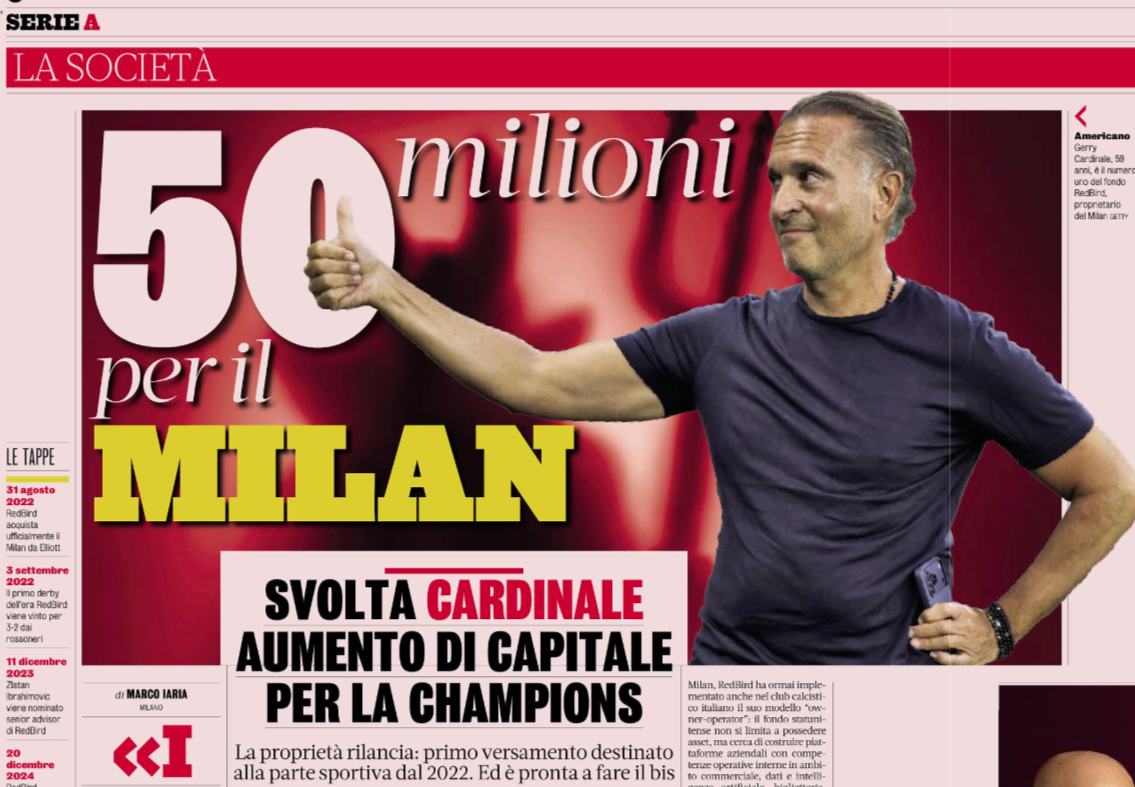
"I can’t coach. I can’t score goals. I can’t defend on the pitch. But I can provide the financial resources and build a winning team. My job is to handle the financial side and create a sense of urgency and a winning culture. Everyone should take it for granted that I will do my part. I am a fighter, and I won’t stop until I win."
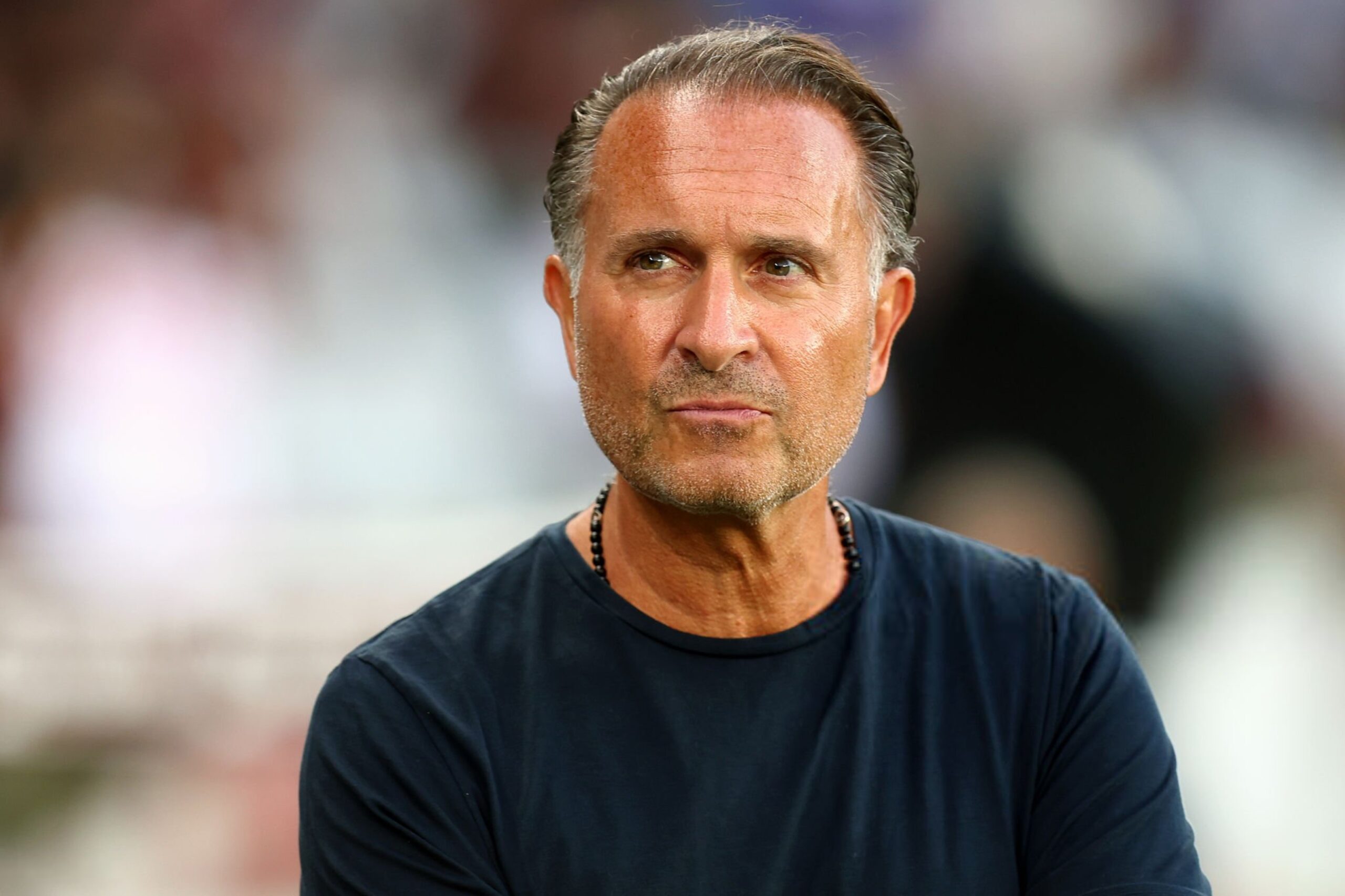
That is what Gerry Cardinale said in May. Now, from words to action. According to information obtained by La Gazzetta dello Sport, AC Milan’s owner has made a €50 million capital contribution in recent weeks and is reportedly prepared to make a further equity injection, the amount of which has yet to be determined, in the coming months. It is a move that signals a genuine renewed commitment.
In the red...
And with good reason, because the shareholder’s intervention comes at the most delicate moment since RedBird acquired the club’s shares from Elliott in the summer of 2022. Milan are going through their second consecutive season outside the Champions League. A disappointment for the entire Rossoneri community and a blow to the club’s finances.
Unsurprisingly, the financial statements for the year ending June 30, 2026, approved a few days ago by the board of directors chaired by Paolo Scaroni, closed with a loss of €24 million, following three consecutive years of profits (€6 million in 2022-23, €4 million in 2023-24 and €3 million in 2024-25).
The 2026-27 financial year is also expected to end in a deficit, although participation in the Europa League could help soften the blow. These financial losses are comfortably absorbed by the club’s equity, which stood at €176 million as of June 30, 2026, after covering the 2025-26 loss, demonstrating the financial solidity the club has achieved.
Cardinale’s capital contribution is therefore not driven by the need to bring the club’s equity back into compliance with the requirements of the Italian Civil Code. No, the reason is different: to provide the club with the resources needed to meet its cash requirements and fund investments, while also avoiding excessive reliance on debt financing.
RedBird has always preferred to use leverage in moderation, to the extent that its net financial debt, although increasing, stands at €145 million, compared, for example, with Juventus’ €331 million.
Gerry Cardinale and AC Milan's strategy:
The clearest evidence lies in the transfer windows. During the summer, Milan spared no expense, increasing the cost of their squad by around €30 million, in the belief that the club’s business development plan cannot succeed without a competitive team capable of returning to the Champions League on a regular basis.
As a result, approximately €160 million was invested in player acquisitions, before accounting for outgoing transfers.
And the ownership intends to be active in the January transfer window as well, judging by the potential deals reported by La Gazzetta dello Sport in recent days: Sporting’s Gonçalo Inácio for the defence (Milan had already submitted an offer of more than €40 million during the summer) and Real Madrid’s Endrick for the attack (he would arrive on loan, meaning the financial impact would essentially be limited to his wages).
Cardinale, therefore, is directly involved on both fronts: the club’s operational management and its financial backing.
Now in its fifth year at the helm of Milan, RedBird has firmly established its “owner-operator” model at the Italian football club. The American investment firm does not merely own assets; it seeks to build business platforms with in-house operational expertise in areas such as commercial operations, data and artificial intelligence, ticketing, hospitality and licensing.
Milan and the future...
Following the injection of €55 million into Milan’s coffers between 2023 and 2024, intended to cover costs associated with the stadium project, the very recent equity contribution represents the ownership’s first investment directed specifically towards sporting operations.
It marks a turning point driven by the desire to improve Milan’s competitiveness and relaunch the club’s business growth plan.
This is also because the club’s most important project has now been unlocked, following the rejection by the Regional Administrative Court (TAR) of the appeals against the sale of San Siro.
On October 29, the architecture firms Foster + Partners and Manica will unveil the first rendering of the new San Siro. The aim is to begin the bulk of construction work in the summer of 2027 and inaugurate the stadium in 2031. By then, Milan will be an entirely different club.
But for RedBird to maximise the value of the asset in its portfolio, Milan must not only have a modern, functional home but also boast a team and a brand with an established, lasting presence in international markets.