

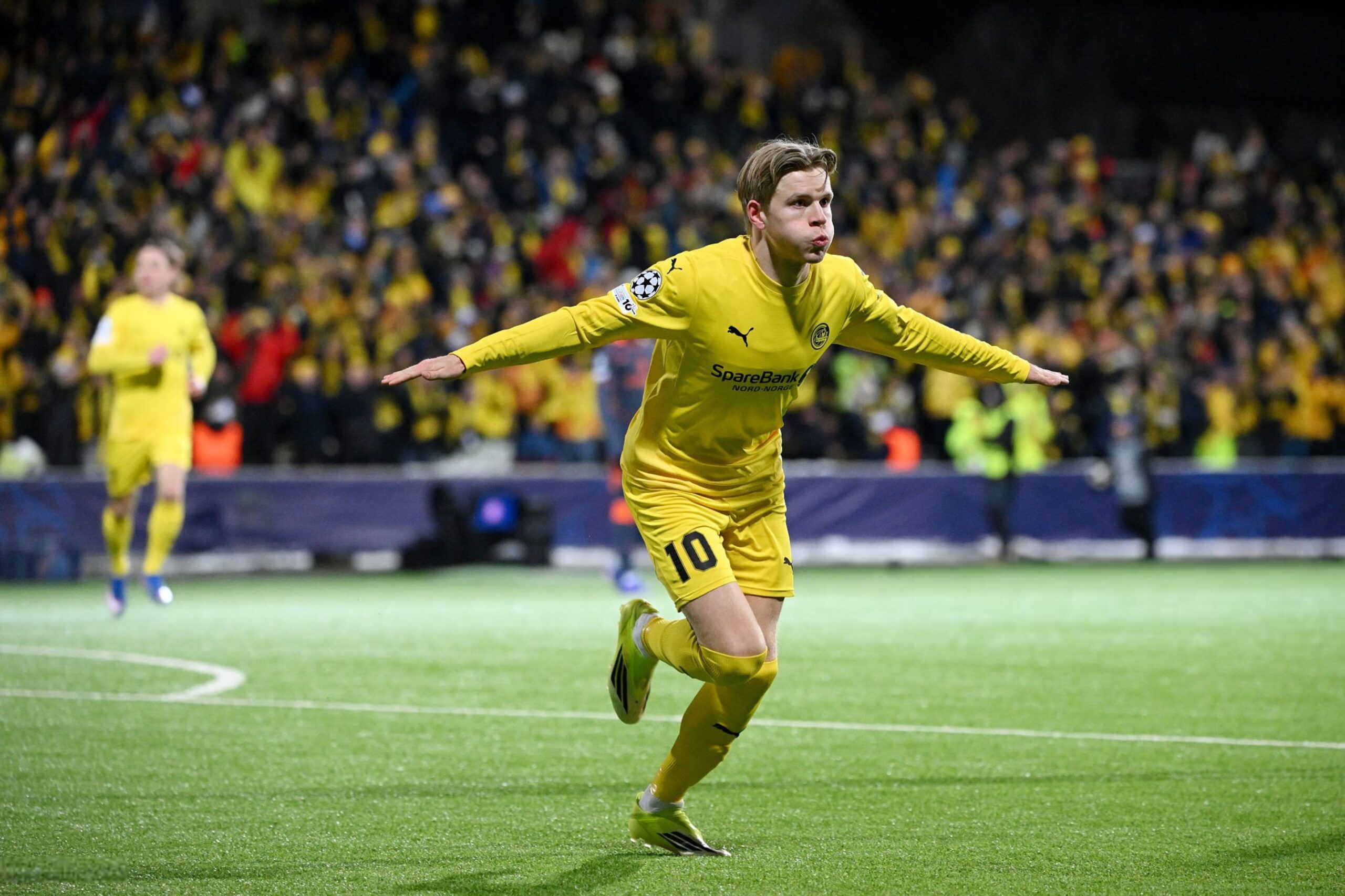
We knew well that the trip to Bodo could be tricky: the previous encounters of Roma and Lazio proved it, as did Manchester City’s recent defeat. What we witnessed last night, however, exceeded expectations. “Their quality and intensity in a low block impressed me,” Christian Chivu said after the match, surprised by a team he had studied but clearly had not gauged correctly with his players.
By the way, for readers interested in football betting, the BetXchange sign up bonus reviewed in this article offers insights on new user promotions and betting opportunities while following matches like this offers insights on new user promotions and betting opportunities while following matches like this.
Inter suffered a heavy defeat in Norway, losing 3-1, and at times seemed to struggle tremendously against their opponent. And while such a result came under particular conditions: snow, freezing temperatures, artificial turf, it still offers useful insights for the return match. Certainly, San Siro will be a completely different stage from the icy synthetic surface of Aspmyra Stadion. But the pitch alone did not determine Inter’s loss.
It was not solely the fault of Chivu’s extensive rotation, which, especially in midfield, was decisive, after all, in the Champions League knockout rounds, no one can prioritize the domestic league, and Italian teams even less, including the best side in Serie A.
Against Bodo, Inter revealed weaknesses that could carry over to other situations, partly due to structural flaws within the team and partly to a lack of familiarity with certain scenarios in everyday Serie A play.
After the match, like every coach, Chivu gave countless interviews and attended the press conference. In front of all the microphones, he reiterated that, in his view, the problem was not attitude but defensive transitions: “On some lost balls during transitions, on some second balls, we were a bit exposed and caught off guard in our preventive actions.”
And that was exactly the case. Bodo played a complete match in all phases. In positional attack, they demonstrated internal passing quality rarely seen by Inter in Italy, led by Berg’s orchestration, Evjen’s all-around elegance, Hogh’s wall-passing as the forward, and the one-on-one ability of wingers: Ex Rossonero Hauge and Blomberg, who frequently cut inside. Their dynamic use of central spaces and technical skill exploiting them led to the first goal, created by left-back Bjorkan moving into the exposed flank of Inter’s three-man midfield to initiate the combination that allowed Fet to score.
For much of the game, however, Bodo operated in a 4-4-2 mid-block, sometimes low, guarding the center in non-possession. Accustomed to Serie A’s constant man-to-man play, with defenders and midfielders roaming the pitch to track their opponents, it was striking to see a team defend with attention to space rather than just their individual mark.
One key player Bodo/Glimt is a familiar name: Jens Petter Hauge
On October 1, 2020, Milan officially announced the signing of a young Norwegian forward from Bodo/Glimt for 4 million euros: Jens Petter Hauge. A few days earlier, the '99-born player had faced the Rossoneri at San Siro in the Europa League preliminary round. The winning team would then face Rio Ave in Portugal for a spot in the group stage. Milan advanced thanks to a hard-fought 3-2 victory, with goals from Calhanoglu and a double from Colombo. Despite the disappointment, that evening changed Jens Petter’s destiny because, thanks to a surprising performance capped by a goal, Maldini was impressed, so much so that, as mentioned at the beginning, eight days later he signed a contract with Milan until June 30, 2025.
Arrival in Italy:
The arrival in Italy was not easy for the young Norwegian: new life, habits, climate, language. Making it even more difficult was the historical period in which he moved: the middle of the Coronavirus pandemic, which led to the complete closure of stadiums and high contagion even among players. Indeed, about twenty days later, the virus affected Hauge as well, forcing him into a short quarantine and causing him to miss the match against Roma. In the first ten league matchdays, he played only 173 minutes, just under two full matches, always as a substitute. In the Europa League, however, it was a different story: thanks to the rotation often implemented by Mister Pioli, Hauge became an absolute protagonist of the group stage, scoring 3 goals and providing 1 assist in five matches. To recall his first Italian goal, one must go back to the Maradona stadium in Naples, where, coming on a few minutes earlier, he scored in the final minutes the 3-1 goal that closed the match.
Great talent, but never fully unleashed:
The Norwegian’s appearances did not increase over time; often used off the bench, he never managed to carve out a leading role. There were several reasons for this, primarily that Hauge was only 21 at the time and the jump from Norway to Italy was far from easy.
The strong competition in his position, with Leao as the main star of the team, was also difficult to overcome. As a result, two years later, Hauge was sold permanently to Eintracht Frankfurt for a fee close to 12 million euros. Later loaned to Gent and returning once again to Germany, the Norwegian never managed to make a lasting impact. In 2024, therefore, like in the best romantic films, Hauge returned to his beloved Bodo as an absolute protagonist.
He became a key figure not only in Norway but also in Europe, as shown in the two-legged clash against Inter in the Champions League playoff, where, delivering two outstanding performances as a leader and scoring once in both the home and away legs, he brought a Norwegian team back among the top 16 teams in Europe for the first time in 38 years.