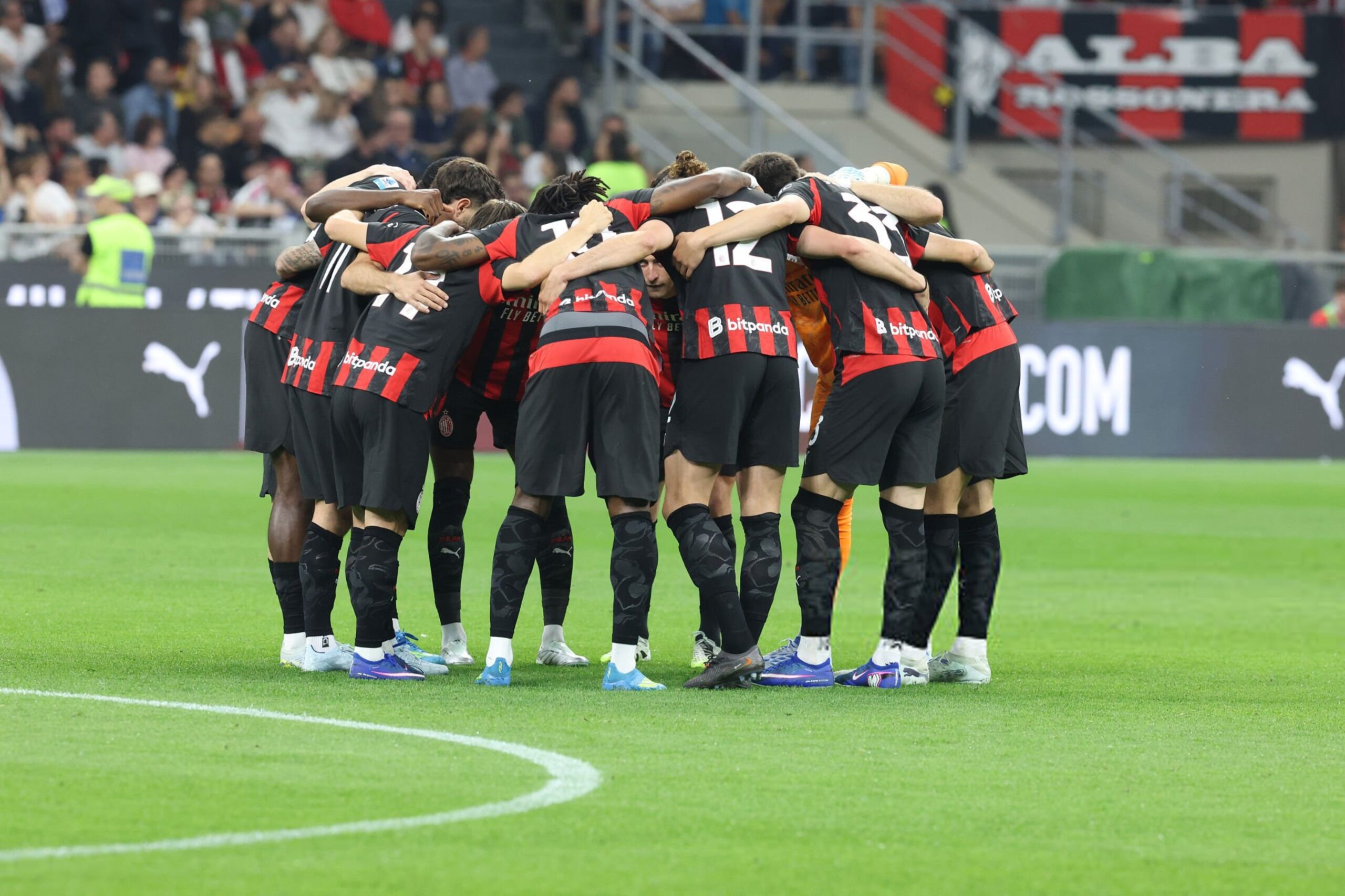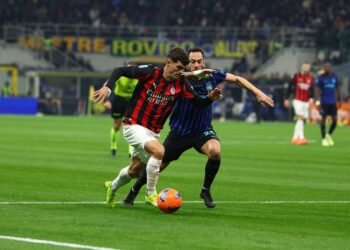

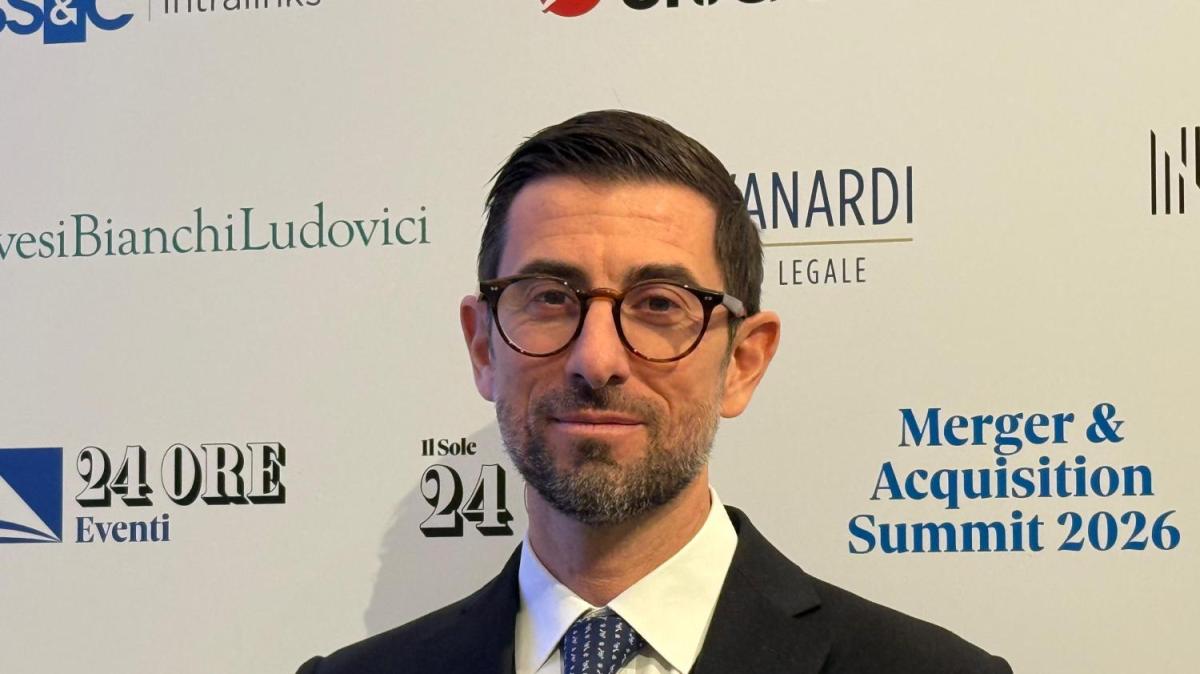
Stefano Cocirio, Chief Financial Officer of AC Milan, is present, replacing the Rossoneri CEO Giorgio Furlani, previously announced as a guest, at the event “Merger & Acquisition Summit 2026. Italians Do It Better: il sistema Italia tra imprese, istituzioni e Made in Italy nella nuova competizione globale”, organised by Il Sole 24 Ore.
Here are Cocirio's statements, as relayed via Milan News:
Question: how can a club like Milan be economically virtuous but also successful on the pitch?
“I would like to make a very brief premise. The question is absolutely valid, but perhaps in the world of football we have become somewhat accustomed to it. One can be competitive from a sporting perspective and be financially self-sufficient. I don’t think there are other sectors where people wake up in the morning and ask: ‘Can we build good infrastructure and make money?’ Football has incentives that lead to financial imbalance, namely qualification for the UEFA Champions League for those aiming to stay at the top of the table, and avoiding relegation. Every day, within football teams, there are very rational discussions that nonetheless lead management to say: ‘I’ll spend more in the hope of achieving the objective or avoiding disaster.’ It is possible to combine sporting competitiveness and financial stability in football. In my opinion it is possible, but some ingredients are needed. First of all, the two are sometimes seen as opposites; in reality, in the medium term there cannot be financial sustainability, at least for a club of Milan’s size and prestige, without success on the pitch. Success on the pitch tends to drive financial sustainability, not the other way around. Once this dynamic is established, there are fewer obstacles to maintaining financial sustainability and continuing to achieve success on the field. There are many virtuous examples in Europe: Bayern Munich, we all see how they play.”
Why has there not been uptake in Italy of fan ownership like in Germany?
“Partly historical reasons. Historically, Italian clubs have always had the city’s major industrialist buying 100% of the shares and running the club. The two Milan clubs, Lazio and Roma in the past, Juventus. This meant that when a transition period came, from family ownership to a more structured ownership, such as an investment fund, it was more natural at that point to sell control of the company rather than move towards fan ownership.”
What needs to be done for Milan to return to its former European glory?
“We compete for talent at a European level. We essentially have three revenue streams: TV rights, the stadium, and commercial activities. To return to being competitive, and therefore compete for top talent, these three revenue streams must grow. Let’s start with the stadium: we have a stadium that is glorious but no longer in line with modern times…”
At what stage is the stadium project? Cocirio replied:
“The project continues to move forward. The timeline foresees obtaining permits by 2027, with the aim of completing construction by 2031, in time for the 2032 European Championship, which Italy would not currently be able to host without transforming some existing facilities. The stadium is certainly one of the levers through which we can try to close the gap with other major European clubs. Real Madrid generates around €250 million from stadium-related activities; we and Inter Milan are around €80 million. That is certainly one lever. History tells us that clubs that have built new facilities then experienced growth in commercial rights in the following years, because it demonstrates ambition, sponsors want to be associated with success stories, transformation, new infrastructure. That would also help close the gap. The third point is TV rights: there we certainly need to work on international rights. Currently, Serie A earns roughly €250 million from international rights. The Premier League earns €2.6 billion, La Liga earns €700 million per year, and the Bundesliga earns roughly the same as us. That is where we really need to work to try to close the gap. Partly because we have a diaspora of Italians around the world interested in watching Serie A, and also because the league still retains some of its past glory, as well as its strong competitiveness. I believe there is room for growth there. It all comes down to increasing revenues to reduce the financial deficit, which then translates into a sporting deficit.”
There are virtuous examples of clubs managed by private equity funds: Atletico Madrid, for example, is in the Champions League semi-finals:
“Atletico is a great story. Fifteen years ago, perhaps only football enthusiasts knew the history of Atletico Madrid, maybe because famous players like Christian Vieri had played there. They implemented a very serious programme centred on building a new stadium, which created momentum that made them highly competitive. Compared to Italian teams, Atletico has, and will always have, an advantage: in Spain there are two enormous teams, one big team, and then the fourth is far behind the third. In Italy this is not the case. For better or worse, we have many teams competing near the top, and this means that to qualify for the Champions League in Italy you need about 70 points; in Spain, 60 might be enough. This gives Atletico the ability to plan in the medium term with a reasonable certainty of participating in the Champions League every year.”
How important is it for you to finish in the top four this year? Does that also affect transfer strategy?
“Certainly, as you know, the Champions League brings a club like Milan between €60 and €90 million in revenue. Being in the Champions League is fundamental. It allows for a different kind of planning over the summer, certainly more ambitious, and makes it possible to look further ahead rather than focusing solely on managing the individual season.”