

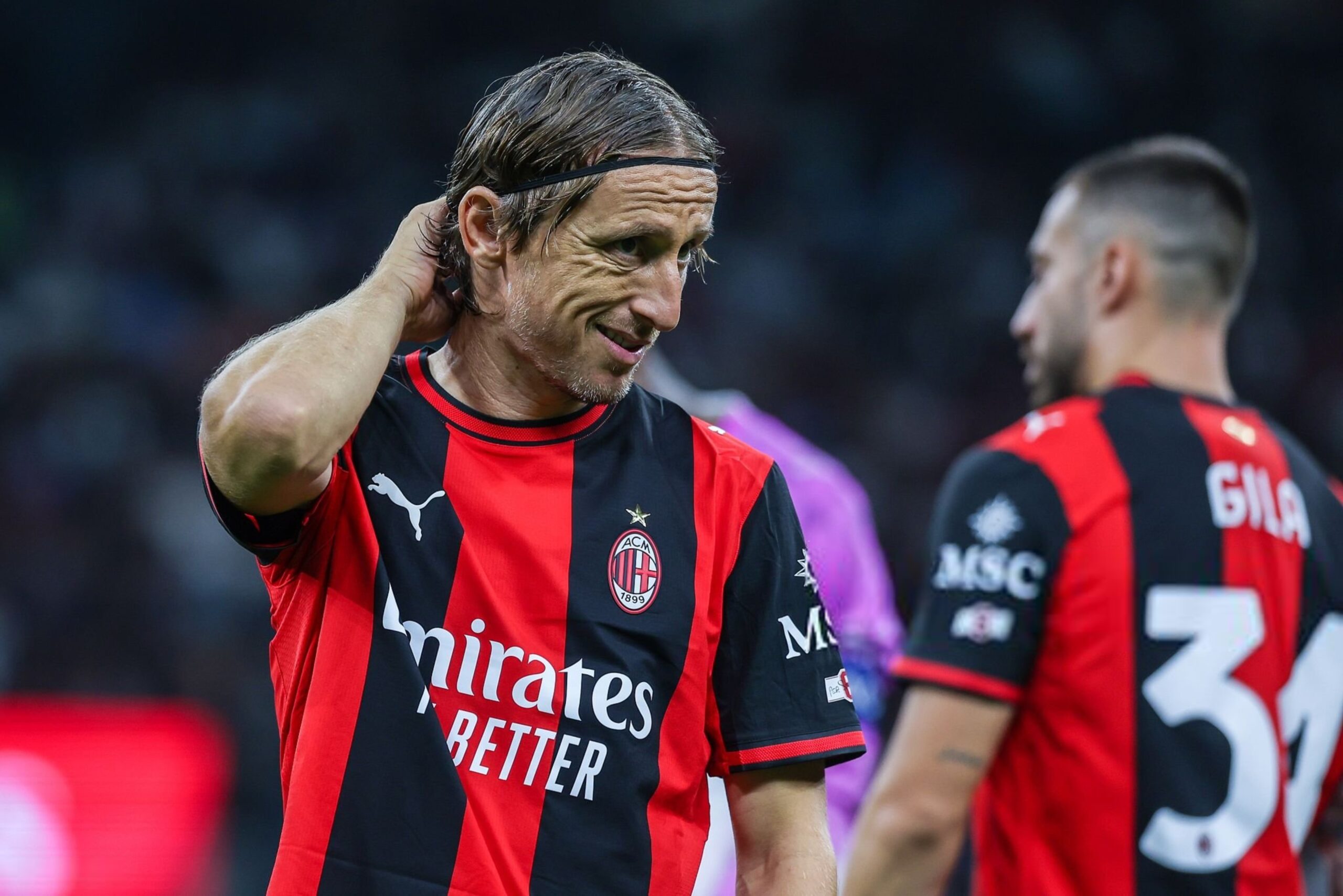
Since the Lazio-Milan game, a narrative has emerged suggesting that Luka Modric is a problem for Ruben Amorim’s team. That is madness, because a player of his calibre cannot be a problem, writes Milan News. At most, he can become a resource that is being used incorrectly. Ruben Amorim’s words during the week were not a criticism of the Croatian’s age, but a much simpler observation: to truly get the best out of a player of his level, you have to make him feel comfortable and put him in the ideal conditions to perform. And against Lecce, during the minutes he played, Modric once again showed just how much he can influence the quality of Milan’s play. At 41 years of age, that is remarkable.
The point is not to ask whether Modric still has something to offer, because if he decided to remain at Milan at 41, it is because he believes he does. The answer, therefore, is obvious: yes. The quality of his first touch, his ability to dictate possession and, above all, the speed with which he reads what is happening around him remain extraordinary.
Against Lecce, the 2018 Ballon d’Or winner handled difficult balls, brought order to the build-up and helped the team play through the press, often in complicated situations. In a more balanced Milan that is less stretched across the pitch, the Croatian can become an accelerator for the team’s play precisely because he does not need to run more than everyone else: he needs to think faster than everyone else.
The real question, then, is a different one: what will happen when the intensity and quality of the games increase, as already happened in Rome against Lazio? If Milan leaves too much space, becomes stretched between the lines and forces Modric to constantly chase opponents, his impact will inevitably be limited, as relayed via Milan News. If, on the other hand, the team can maintain compact distances, organised pressing and keep his teammates close to him, Luka can still be extremely valuable even against opponents of a higher level than Lazio.
Amorim knows this. He is the first to understand it. That is why the issue is not about protecting Modric because of his age, but building a team around him that allows him to make an impact without forcing him to change his game. The Croatian does not need to adapt to chaotic football. He needs to bring order to it. Milan, therefore, must become organised enough to fully exploit a player like Luka.