

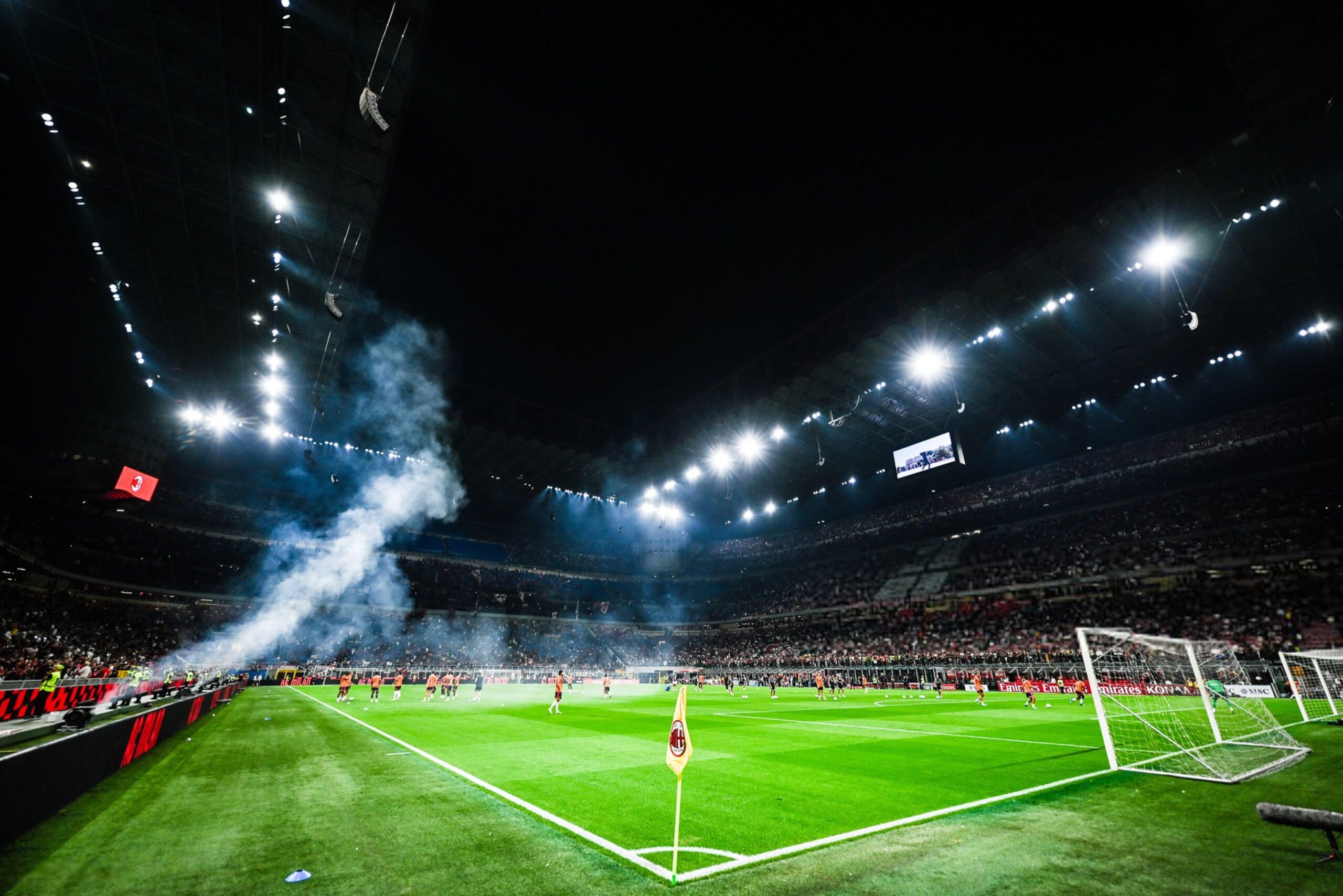
A piece of San Siro to take home. This is one of the options being considered by Milan and Inter ahead of the demolition of the old Meazza: the seats from the final season played at the historic stadium could in fact be made available to season-ticket holders, either through a sale or free distribution. The idea is still to be finalised in detail, but it has already been included in the documentation relating to the demolition project, which Calcio e Finanza has published in full.
The operation would have a dual purpose. On the one hand, there is the sentimental value, allowing fans to keep a tangible piece of the stadium that has been part of Milan and Inter's history for decades; on the other, there is the issue of material recovery. The documentation estimates that around 80% of the seats could be salvaged: out of 75,817 seats, that would amount to just over 60,600, preventing around 273 tonnes of plastic from entering the waste stream.
To take them home, the plan would involve a specific procedure before the construction site opens. Season-ticket holders would have to book their access, enter on designated days and reach their respective section via controlled routes. The seats would be removed with the assistance of staff, and their collection would be recorded, writes Milannews.it. It has yet to be decided whether fans will have to pay to take their seat home or whether the initiative will be free of charge.
The fate of the seats is just one aspect of the complex plan for the demolition of the Meazza. The works are expected to last around 18 months and will have to be organised in such a way as not to interfere with the normal activity of the new stadium, which by then will already be operational.
The first phase will involve everything that can be removed without intervening on the load-bearing structures. This is known as the strip-out phase: electrical and air-conditioning systems, data networks, fire-protection and plumbing systems, as well as refrigeration equipment, will all be dismantled. In the latter case, the refrigerant gases will first have to be recovered.
Only afterwards will work begin on the structure itself. The demolition will proceed progressively through the stadium's three tiers before focusing on the concrete and steel beams. Once brought down, these elements will be processed and reduced in size before being sent for subsequent treatment.
The project aims to make this phase as selective as possible, with the objective of recovering materials rather than simply treating them as waste to be removed from the construction site. A significant part of the work could also be carried out directly inside the San Siro stadium.
The pitch could temporarily be transformed into an area for processing the demolition materials. Once cleared and after its ability to support the necessary machinery has been verified, the area could be used to crush the material, separate the steel from the concrete structures and prepare the rubble before it is transported away.
This solution is also intended to reduce the number of heavy vehicles on the roads. Estimates contained in the documents indicate a reduction in traffic of between 20% and 25%, equivalent to around 5,600 fewer lorry journeys.
The overall amount of material to be handled will nevertheless be enormous: projections indicate around 225,000 tonnes of rubble, with a volume of approximately 93,750 cubic metres. This figure includes the structures of the three tiers, the spirals, ramps and towers. The documentation notes that these figures may be revised during subsequent stages of the design process.
The logistical challenge will not be limited to managing the materials. The demolition will have to take place while the new stadium is already being used for matches and other events. For this reason, fan routes will be separated from the construction areas by temporary modular barriers, also with the aim of containing dust, noise and vibrations.
These structures, too, are not necessarily destined to become waste once the works are completed. The project considers their subsequent reuse in public spaces, for example as shelters, pergolas, waiting areas or shaded spaces, with the possibility of also using them as supports for climbing greenery.