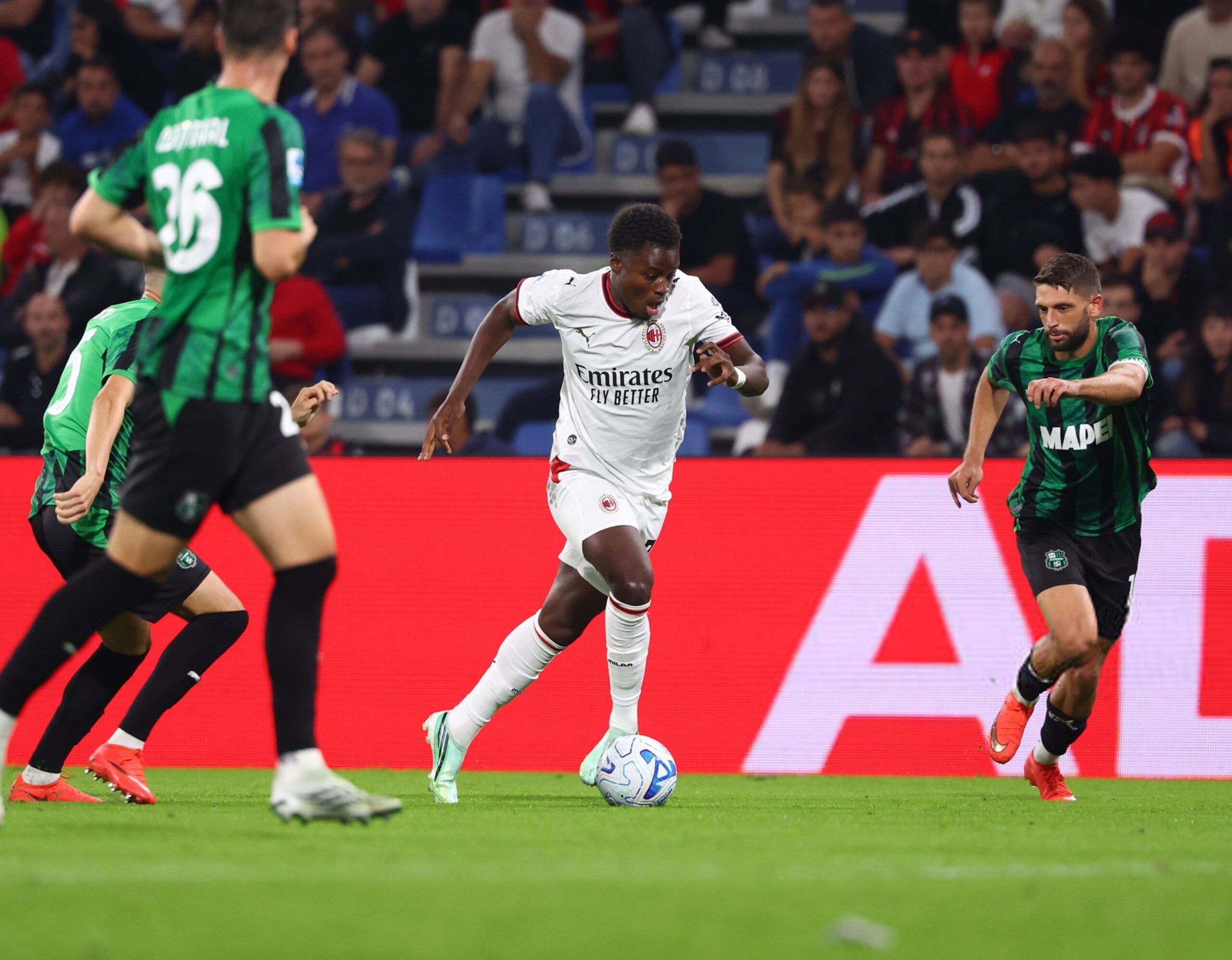

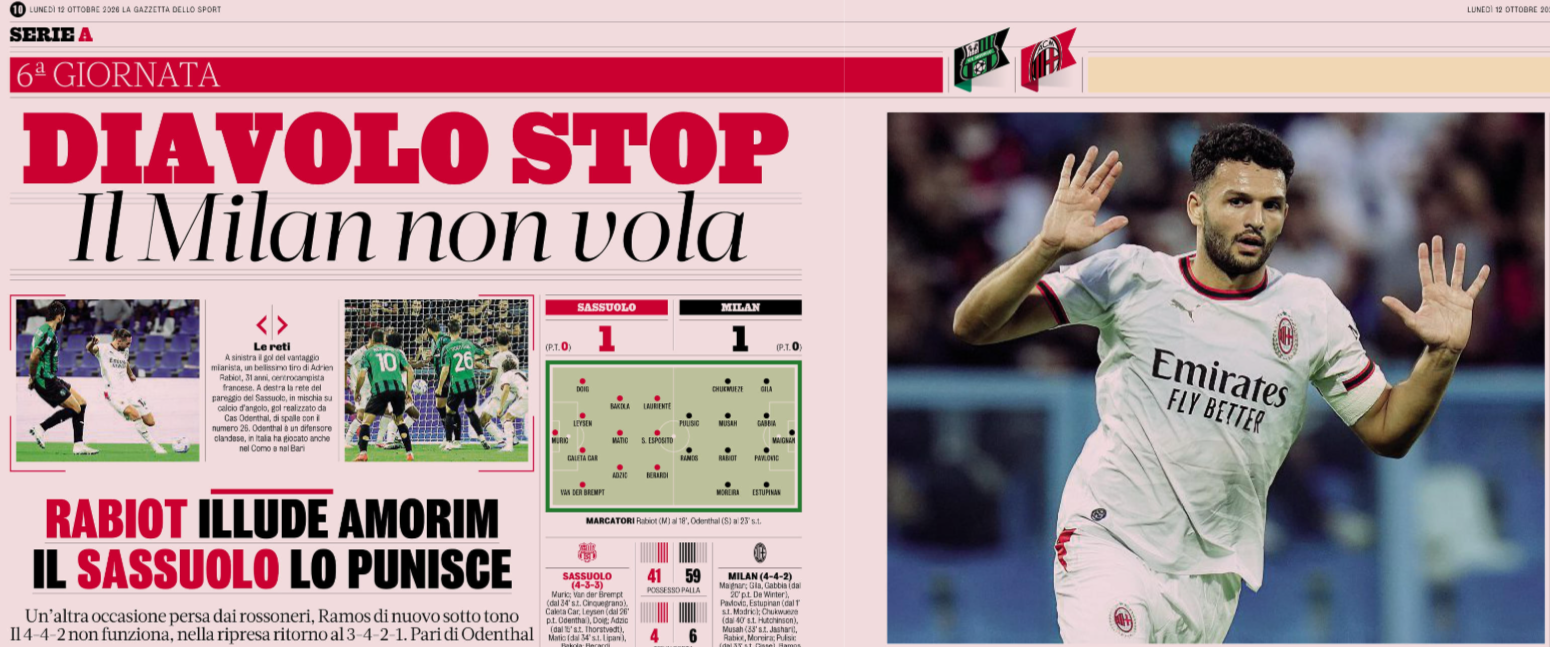
Mental fragility is the main problem with this Milan side, which rightly considers this draw another two points thrown away, with all due respect to Sassuolo, who were not at their best yesterday. But just when the Rossoneri manage to steer the match in the direction they want, after a lacklustre first half and a slightly livelier start to the second, their weakness emerges: they are unable to protect the lead given to them by Rabiot's goal, allowing Odenthal to turn the ball in from a corner in a penalty area crowded with defenders. Only five minutes had passed. These are the moments that expose the lack of a big-team mentality.
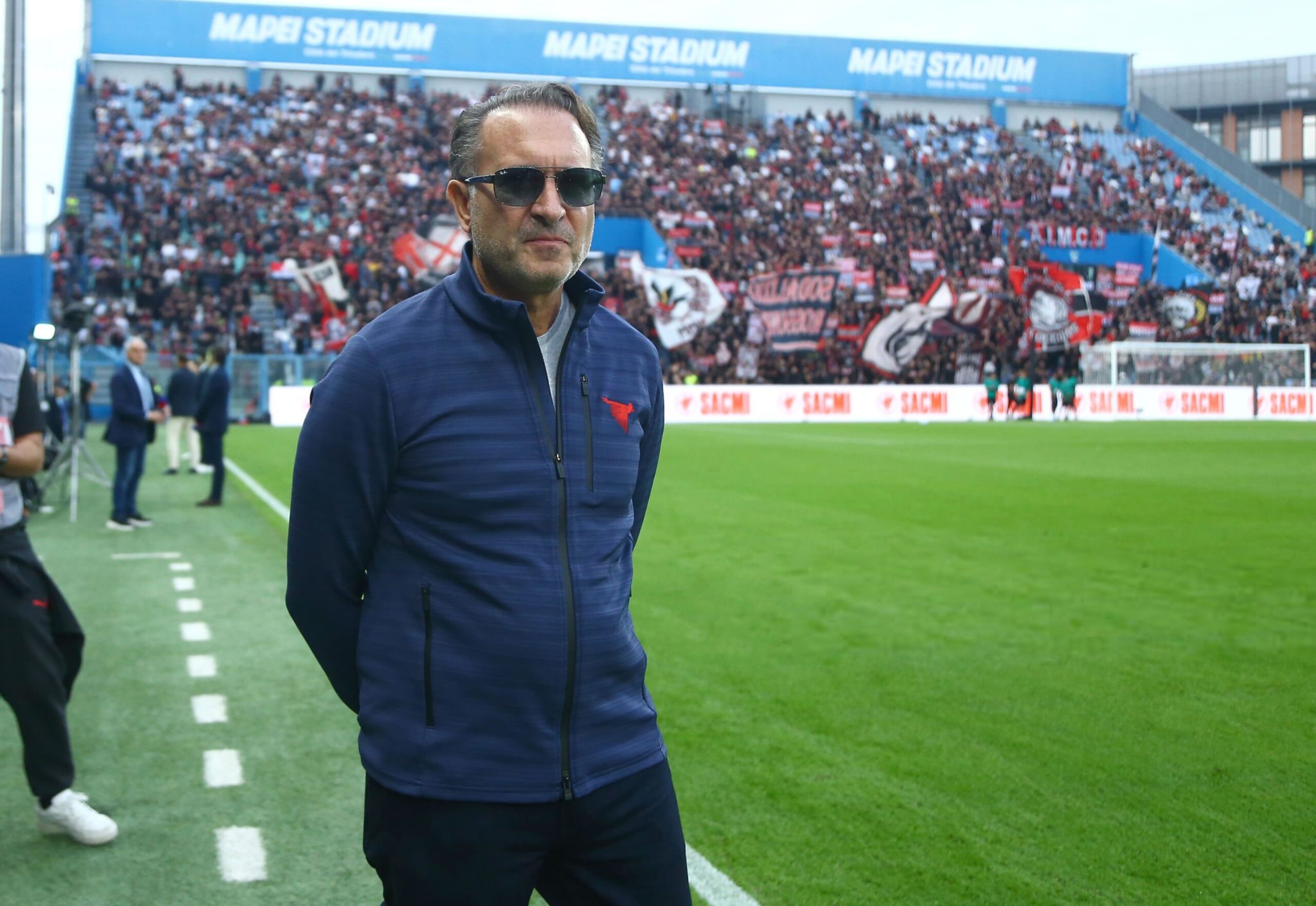
The fans could respond to Gerry Cardinale, who arrived at Milanello on Saturday wearing a cap bearing the words "Make Milan Great Again," with a question: "Yes, but when?"
Not immediately, of course. Rebuilding a team cannot be accomplished overnight. However, Milan had the opportunity to draw level with Roma and remain just two points behind the leading pair of Inter and Lazio. Instead, despite still being unbeaten in the league, the Rossoneri have made far too little progress.
The System
Milan score when they return to the system with which they began the season. They switch from a 4-4-2 to a 3-4-2-1 after the break, but the principle that attitude matters more than formation still applies. In 2026, remaining tied to a rigid tactical structure is anachronistic. The numbers you see alongside the match report merely indicate positions that change with the flow of play, while attempting to provide an initial frame of reference, much as the fixed numbering from one to eleven did in the previous century.
Every formation is flexible. Teams that defend man-to-man can end up taking their defenders into the opposition's penalty area, while those that defend zonally maintain a more structured shape both in and out of possession.
The switch between Milan's tactical setup at the start of the season and this four-man defence with two strikers, a system that had been called for and had already been seen in the previous match, should not be portrayed as an epoch-making revolution. So much so that Amorim subsequently reconsiders it.
You do not need a master's degree from Coverciano to understand that leaving attacking players isolated on the wings would satisfy the voracious appetites of the opposing wide players. As happened on several occasions before the Lecce match, as pointed out via 'La Gazzetta dello Sport'.
The different tactical approach attempted by Milan is the result of difficult deliberation, aimed at closing down passing channels and allowing greater creative freedom. But if Pulisic plays too close to the centre-forward, one flank fails to produce anything (Chukwueze's), and the midfield lacks creative players, the quality of the team's play cannot improve.
The Reasons
Because there is another dilemma: Is Ramos not scoring because he misses too many chances in front of goal (as against Venezia, before his only goal), or because he is not receiving sufficiently frequent and accurate service?
The question remains unanswered, and the Portuguese striker does nothing to dispel those doubts. When a perfect delivery finally comes his way, he fails to make proper contact with his header, allowing the goalkeeper to save. But too much of his performance is spent on the fringes of the game.
It was here that Milan celebrated their last Scudetto four years ago, and Pioli, the architect of that triumph, is now watching from the stands. Yet Milan have not won here since then.
Last May, they fell behind here, marking the beginning of a disastrous month that ended not with Champions League qualification but with a purge of the coaching staff and club offices, including the dismissals of Allegri and Tare.
There will be no such drastic decisions this time, but the bitterness remains, something Cardinale also made clear after the match.
Milan's Tactical Changes...
Moreira only manages to inject some energy into the closing stages of an otherwise dull first half, one in which injuries dominate the story.
Both central defenders, Gabbia and Leysen, suffer injuries. Gabbia, who had just returned from injury, is carried off on a stretcher with a serious problem affecting his left hamstring, while Leysen suffers a sprain to his left knee.
For long stretches, confusion stifles creativity, technical mistakes far outnumber moments of quality, and the game is repeatedly interrupted by too many refereeing whistles and minor fouls of the kind we had grown unaccustomed to seeing.
Sassuolo also attempt long balls in behind Milan's defensive line, but lack the accuracy and well-timed runs needed to make them effective.
Milan lack the necessary quality in midfield to pull their opponents out of position.
When Modric comes on after half-time, with Estupinan taken off and Moreira and Chukwueze moved back into full-width roles on the flanks, the tempo does not increase. However, Modric's first-time pass to release Rabiot deserves applause.
The French midfielder thus becomes Milan's standout performer amid so much mediocrity.
And the other Frenchman, the goalkeeper, appears to have prevented Aquilani's side from equalising. Aquilani had strengthened his attack by bringing on Bowie in place of Sebastiano Esposito.
But even if Berardi does not play his usual role as Milan's tormentor, all it takes is one poorly defended corner to restore parity.
The final balance is not the result of an entertaining spectacle, but rather of promises of exciting football that ultimately went unfulfilled.