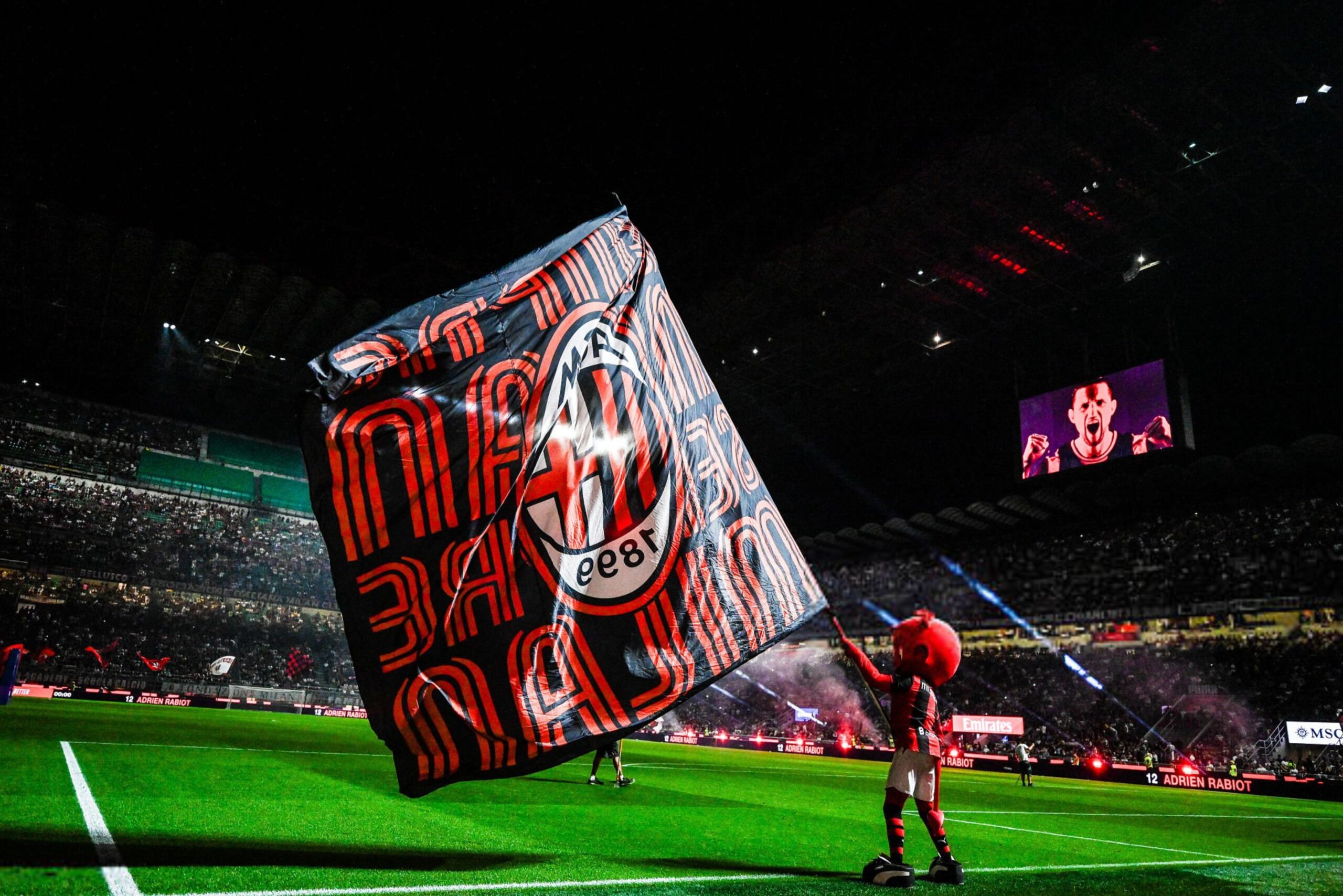

There is something profoundly modern, yet at the same time contradictory, about AC Milan in recent years. The club is capable of speaking to the world, attracting investors, forging international partnerships and turning its brand into a recognisable product across the globe, reaching audiences who engage with football through diverse channels including 1xBet online casino slots as part of the broader entertainment ecosystem surrounding the sport. It is a club that perfectly understands the dynamics of the modern sports industry, in which football is no longer confined to the 90 minutes of a match. Yet, even as Milan strengthens its commercial standing, the most important question remains unanswered: how much of this growth translates into sporting competitiveness? This is neither a nostalgic question nor a preconceived criticism of the American ownership. It is simply the question that should accompany any reflection on the future of a club accustomed, by virtue of its history and tradition, to measuring its ambitions through results.
Milan's figures tell the story of a financially stronger club
It would be intellectually dishonest to deny the progress Milan has made financially. The management of recent years has helped build a more organised financial structure, capable of generating significant revenue and enhancing the club's commercial assets. The 2024/25 financial year closed with revenue of €494.5 million and a profit of €3 million, completing a run of three consecutive profitable years. These are significant figures, particularly considering the financial difficulties experienced by numerous Italian clubs.
The draft accounts for 2025/26, however, approved by the board of directors on 28 September, introduce something worth reflecting on. Revenue fell to €464.6 million, while the club returned to a net loss of approximately €24 million. The absence of European competition had a considerable impact, highlighting how sporting performance continues to influence financial stability, even when a well-developed commercial model is in place. At the same time, sponsorship revenue exceeded €100 million for the first time, confirming the Rossoneri brand's ability to attract international partners.
These figures tell the story of two realities that cannot be separated. On the one hand, Milan can generate economic value even without revenue from European competitions. On the other, the club still needs Champions League football and sporting results to fully sustain its growth. This is no minor contradiction. It is the central issue around which the strategy for the coming years should be built.
A global brand does not automatically translate into a winning team
Milan represents the city of Milan around the world. It embodies the city's style, elegance, capacity for innovation and international outlook. In this respect, the club's commercial growth appears entirely consistent with the city from which it originates. Partnerships with major brands, initiatives combining football, fashion and entertainment, and a presence in international markets all represent opportunities that would be wrong to underestimate.
The key question, however, is what relationship these activities should have with the sporting project. Marketing should serve as a tool for enhancing competitiveness, not become an alternative measure of success. A club can increase its commercial value, attract millions of supporters and report encouraging financial results. But if all this fails to produce a team capable of competing consistently at the highest level, something about the model deserves closer scrutiny.
This does not mean arguing that commercial investment automatically takes resources away from the pitch. In fact, the opposite is often true. Higher revenue makes it possible to fund wages, facilities, transfer activity and youth development. The problem arises when the narrative of economic growth risks taking up a disproportionate amount of space compared with the assessment of sporting results.
Milan cannot be judged solely on the basis of its accounts, just as it would be wrong to reduce a club's work to the outcome of a single match.
The issue is the balance between these two dimensions. Above all, it is about the ability to turn an industrial strategy into a recognisable footballing identity.
RedBird's ownership and the need for a clear sporting vision
The management of RedBird Capital Partners, the fund led by Gerry Cardinale, has introduced a business-oriented vision that sees Milan as part of an international ecosystem in which sport, communication and entertainment intersect. This is a legitimate approach and, in many respects, a necessary one, particularly in European football, where financial strength increasingly determines a club's ability to compete.
It would be equally wrong to claim that the owners have not invested in the team. In November 2025, the club announced that gross investment in players had exceeded €250 million over the previous two seasons. This figure demonstrates that the issue cannot be reduced to the simple availability of resources. However, investing heavily does not necessarily mean investing wisely. This is where the discussion should move away from financial considerations and towards football itself.
Building a team requires expertise, continuity and a clear distribution of responsibilities. Clubs need executives capable of identifying players suited to a particular footballing philosophy, coaches given the conditions to implement it, and an organisation willing to support the process through the inevitable difficulties. Without these elements, the risk is that transfer deals accumulate without producing a cohesive team identity.
AC Milan does not need to choose between financial sustainability and sporting ambition. It must demonstrate that it can combine the two. A modern ownership group should be judged not only on its ability to protect invested capital, but also on its ability to develop the very business it has chosen to acquire. In Milan's case, that business remains, first and foremost, a football club.
Milan, San Siro and the meaning of an identity that money cannot buy
There is another dimension that no business plan can fully capture: the relationship between Milan and its city. Milan is an economic capital, an international metropolis accustomed to competing through innovation, investment and its ability to attract talent. AC Milan is one of its best-known sporting representatives. But the bond between a football club and its local community extends beyond the prestige of its brand.
Supporters are not simply consumers of a product. They are part of the history of a sporting community that spans generations, neighbourhoods and social change. The stadium figures demonstrate this too. During the 2025/26 season, according to figures released by the club, Milan averaged more than 72,000 spectators per Serie A match, retaining its position as the league's best-supported club for the second consecutive year.
This is an extraordinary asset that deserves to be taken into account in strategic decisions. The new stadium project, which is set to have a profound impact on the club's economic future and the city's urban development, represents an important opportunity. But a modern stadium should not be viewed solely as a means of increasing revenue. It should also improve the supporters' experience, preserve affordability and strengthen the club's relationship with Milan.
The same attention should be given to youth development. A well-organised academy and a reserve team can become decisive assets, provided there is a tangible connection with the first team.
The real objective, however, should not simply be to generate value by developing players. It should also be to produce footballers who identify with the Rossoneri shirt and become key figures in a new sporting cycle.
The brand's value comes from victories, not just sponsorships
One aspect deserves particular attention. Milan has an international identity built over more than a century, but much of its commercial strength stems from its achievements on the pitch. Its seven European Cup and Champions League titles, along with the great players and coaches who have shaped its European history, represent a sporting asset before they represent an economic one.
According to Brand Finance, Milan's brand value reached €514 million in 2026, marking a 28% increase on the previous year. This is a significant achievement, but it raises an inevitable question: how much further can a club's value grow if its sporting competitiveness does not move in the same direction?
There is no automatic answer. Major brands can retain considerable commercial strength during less successful periods. In the long run, however, football retains a characteristic that distinguishes it from many other industries: economic success is also fuelled by emotion, results and a collective sense of identity.
A sponsorship can strengthen the accounts, an advertising campaign can open up new markets, and an international partnership can bring the club closer to different audiences. But none of these initiatives can fully replicate what happens when a team wins an important trophy again.
Milan must once again measure its ambitions on the pitch
The point is not to demand that Milan win every season. That would be unrealistic in an increasingly competitive football landscape, where even major clubs must contend with financial constraints and differing sporting cycles. Rather, the expectation is that the club should establish a clear direction.
An ambitious club can endure difficult seasons, make poor signings and change its strategies. What it should avoid is losing sight of the relationship between its stated objectives and the decisions required to achieve them. The credibility of a sporting project does not come from presentations, but from consistency in decision-making.
Milan has demonstrated that it possesses considerable commercial strength. It has consolidated international relationships, developed new revenue streams and built an economic platform that provides an important foundation for the future. These achievements deserve recognition, without prejudice against its ownership model.
Now, however, that foundation must become the starting point for equally evident footballing ambition. This does not necessarily mean making headline-grabbing signings or pursuing unsustainable investment. Rather, it means having a plan that identifies technical priorities, maintains consistency in decision-making and builds a team with a clear identity.
Modern football needs managers, analysts, communications specialists and professionals capable of developing new markets. But above all, it still needs people who understand the game and can make sound sporting decisions. These two areas of expertise are not alternatives. They must complement each other.
Milan's future cannot be measured solely by commercial success
Perhaps the greatest risk for a club like Milan is not losing a match or enduring a disappointing season. It is becoming accustomed to treating economic growth as a sufficient form of success, almost independent of what happens on the pitch.
It would be unfair to automatically attribute this mindset to the Rossoneri's owners. However, it would be equally naive to ignore how the language of modern football has gradually shifted attention towards revenue, asset valuations, commercial agreements and market opportunities. All these elements are undoubtedly important. But none can fully replace the reason millions of people follow a football team.
Milan's history does not demand that it win every time. Rather, it demands that victory remain a central objective. This is a substantial distinction, separating a club that uses its tradition as a commercial tool from one that seeks to make that tradition relevant once again through its daily work.
This is precisely where the challenge for the American owners lies: demonstrating that building a major business and building a great team can be two parts of the same project. The club must not confuse financial results with sporting achievements, but it must understand that the former should help make the latter possible.
Milan knows the value of businesses that succeed on the global stage. But it also understands the value of its teams, because football belongs to a world in which numbers alone cannot explain everything.
The Rossoneri can continue to break into new markets, attract sponsors and increase its brand value. It would be desirable for it to do so, because a financially strong club has important tools at its disposal to face the future.
But in the end, when the lights at commercial events go out and communication strategies give way to football itself, one truth remains that no market evolution can change. Milan can become an even bigger brand through marketing. But to continue to be a great team, it must prove itself on the pitch.
And perhaps this is precisely the distinction that should never be forgotten.