
AC Milan now has several ways to move its best teenagers from academy football toward the senior squad instead of relying on a single direct jump. Primavera, Milan Futuro, external loans and first-team training can all form part of an individual development plan. That matters because an outstanding 17-year-old may still need regular matches against adults before consistent Serie A minutes become realistic. The structure gives coaches several ways to assess readiness, while young players can progress without being judged solely on youth statistics or a handful of training sessions.
Milan Futuro fills the competitive gap
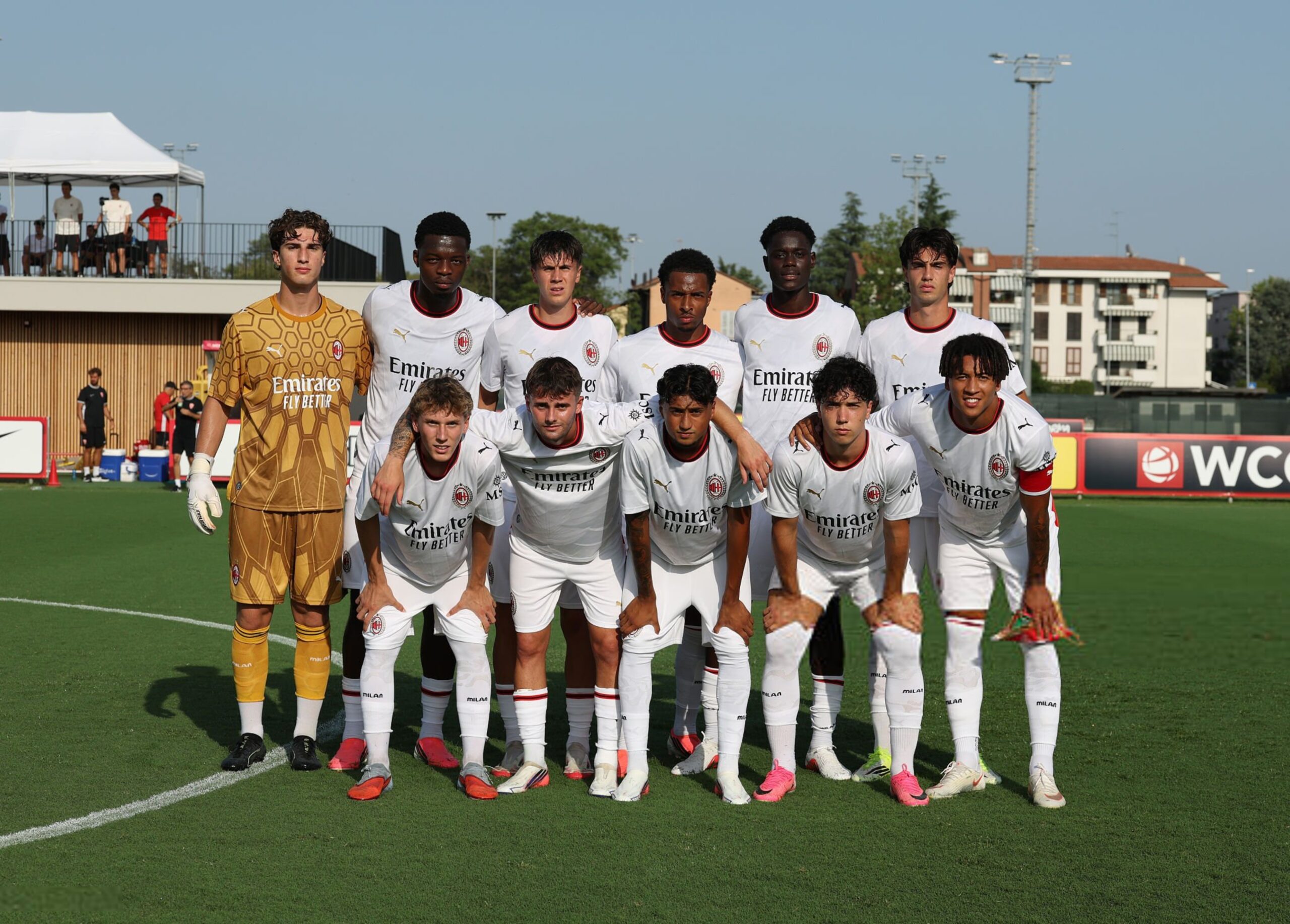
Milan Futuro was launched in 2024 and entered Serie C to give young players experience in senior football without moving them outside the club structure. The first campaign ended in relegation, but the project continued as a development platform. In 2025/26, the team finished fourth in Serie D Group B with 56 points from 34 matches, recording 16 wins, eight draws and ten defeats. Its 62 goals were the highest total in the group, while the season ended with a 2-1 extra-time defeat to ChievoVerona in the play-off semi-final.
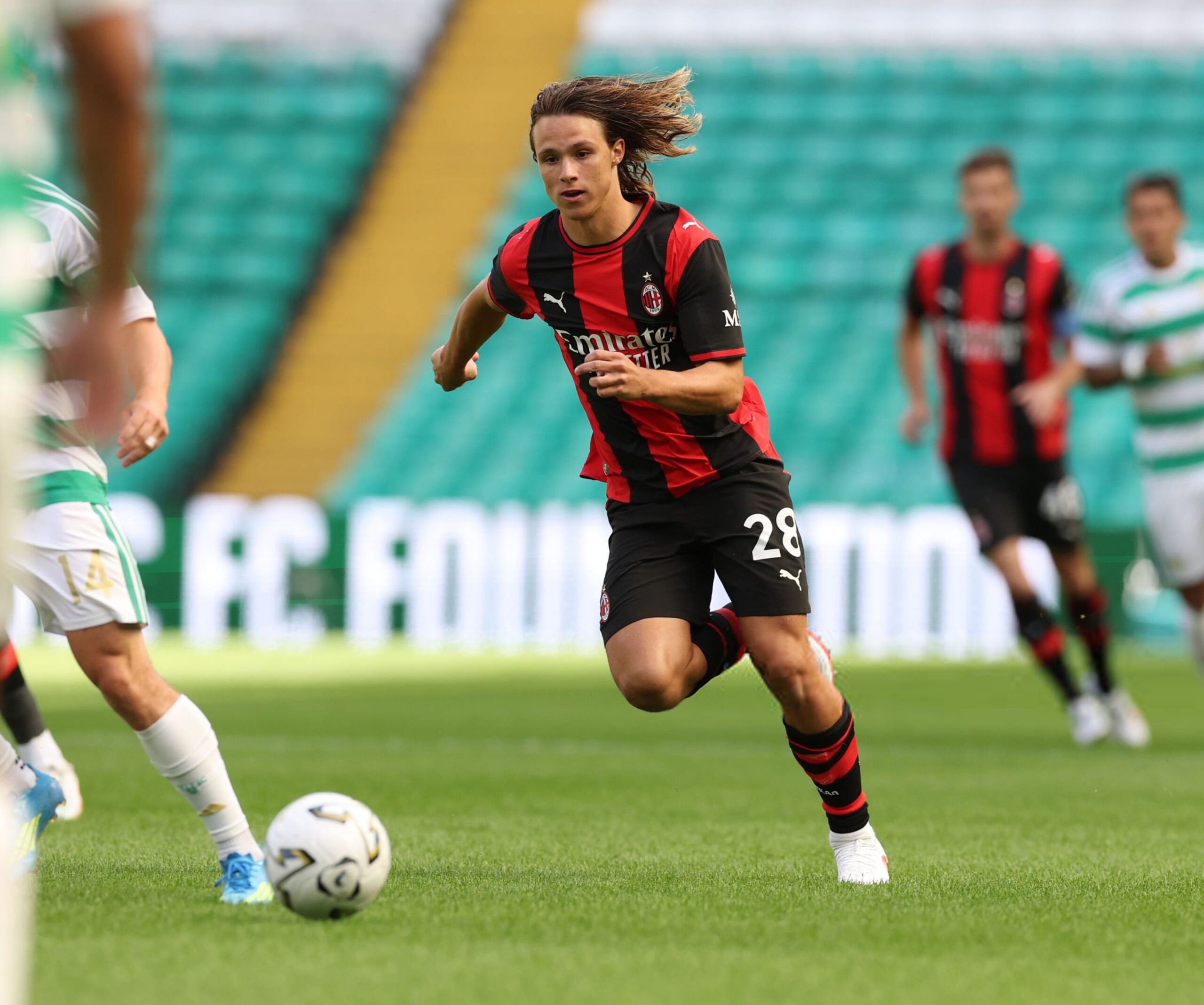
The connection between the different levels is visible in how prospects move between squads rather than remaining fixed in one team. Those changes can be followed through official squad lists, match reports, the 1xbet app and other sports-tracking services, where a first-team call-up can indicate another step in a player's development. In July 2026, AC Milan included Davide Bartesaghi, Francesco Camarda, Christian Comotto and Lorenzo Torriani in first-team pre-season training. Each had taken a different path, illustrating how the club can adapt the process to the needs of the individual player.
Camarda and Bartesaghi show two development speeds
Francesco Camarda remains the clearest example of rapid progression. He joined the academy at the age of seven and became the youngest player in Serie A history when he appeared against Fiorentina on 25 November 2023 at 15 years and 260 days. He later gained experience with Primavera and Milan Futuro before spending 2025/26 on loan at Lecce, where he made 23 league appearances, scored once and provided one assist. AC Milan brought him back in July 2026 and extended his contract until 2031, with a club option for one additional season.
Davide Bartesaghi followed a more gradual path. The 2005-born defender came through the academy, made his Serie A debut in September 2023 and later played for Milan Futuro while remaining close to the senior group. By 2025/26, he had established himself in the first-team rotation and remained with the senior squad during preparations for 2026/27. His development shows why matches against adult opponents can be valuable even for a technically advanced academy player, adding physical duels, game management and competitive pressure that youth football cannot reproduce every week.
Torriano and Comotto take different routes
Lorenzo Torriani followed another path because goalkeepers often develop under different conditions. Born in 2005, he joined the club in 2013 and progressed through the youth levels before making his first-team debut against Liverpool in the Champions League on 17 September 2024. His contract was later extended until 2030, and he remained with the senior group in summer 2026. He started the pre-season match against Celtic and was again selected from the first minute against Inter on 5 August, giving him further responsibility at senior level without requiring him to become an established league starter immediately.
Christian Comotto shows how an external loan can fit into the same structure. After joining the academy in 2020 and progressing to Primavera, the midfielder moved to Spezia for 2025/26 and made 28 appearances. He returned to AC Milan in the summer, renewed his contract until 2031 with an additional one-year club option and immediately joined first-team preparations. On 25 July, he started the friendly against Celtic, giving the coaching staff an opportunity to assess how a full season of senior football elsewhere had influenced his development.
The pathway begins before a senior debut
AC Milan is also bringing younger prospects into the structure well before they are close to Serie A selection. Pietro Avogadro, born in 2009 and already in his tenth season with the club, signed his first professional contract in March 2026 and joined the Milan Futuro project. In May, defender Mattia Mercogliano and forward Luca Menon, both born in 2009, followed with their first professional deals and the same development destination. Menon then scored his first Milan Futuro goal in the 10-1 win over Vogherese on the final matchday of the regular season.
The club also uses the project for recruits arriving from other academies. Andrej Kostić, a 2007-born forward signed from Partizan, was initially assigned to Milan Futuro for 2026/27 and joined the first-team pre-season group before moving to Sparta Rotterdam on loan in August. That sequence shows how quickly a development plan can change when another environment offers a clearer competitive role. Milan Futuro therefore operates less like a fixed reserve squad and more like a transition point where the club can assess match readiness, training level and the need for regular senior minutes.
Four routes guide promotion decisions
The structure means a prospect does not have to be labelled ready or not ready after a short trial. Coaches can compare performances at different levels and adjust the plan when physical development, tactical understanding or available playing time demand it. The process can be divided into four practical routes, each suited to a different stage of development. Together, they provide the staff with more evidence before a permanent promotion and allow young players to progress without sacrificing competitive minutes during an important stage of their careers:
- Primavera for regular competition against players of a similar age
- Milan Futuro for prospects who need repeated matches against senior opponents
- first-team training and selected call-ups for players already close to the required level
- external loans when another club can provide more minutes or a clearer tactical role
The opening match of the 2026/27 Serie A season provided a recent example of how these pathways can lead into the senior matchday squad. Against Torino, Bartesaghi came off the bench, while Camarda, Comotto and Torriani were among the substitutes. Alphadjo Cissè, a 2006-born midfielder signed by Milan in February 2026 and left on loan at Catanzaro until the end of the 2025/26 season, started and scored the opening goal in a 2-1 victory. Milan therefore began the league campaign with several young players already integrated into the first-team environment rather than developing entirely apart from it.
Senior minutes are the real measure
Milan Futuro is preparing for its third season, and the project will ultimately be judged by repeated progression into senior football rather than youth results alone. A fourth-place finish and 62 league goals in 2025/26 showed that the team could compete, but the more important measure is how many first-team opportunities emerge from the transition stage. Camarda, Bartesaghi, Torriani and Comotto already illustrate four different development paths, while players born in 2009 have begun the same process at an earlier stage. If those routes continue to produce meaningful senior minutes, Milan Futuro can become a durable sporting pipeline than a series of isolated debuts.