

The third defeat in the Champions League League Phase, and the fourth since the start of the season in a midweek fixture (in addition to Benfica, Bournemouth and Ferencvaros, the league defeat against Bologna must also be recorded) brings back the eternal debate within AC Milan about the striking difference in performance between the first-choice players and the back-up options available to Ruben Amorim, and more generally about the Rossoneri's difficulties in maintaining the same level of performance and concentration when playing every three days across multiple competitions.
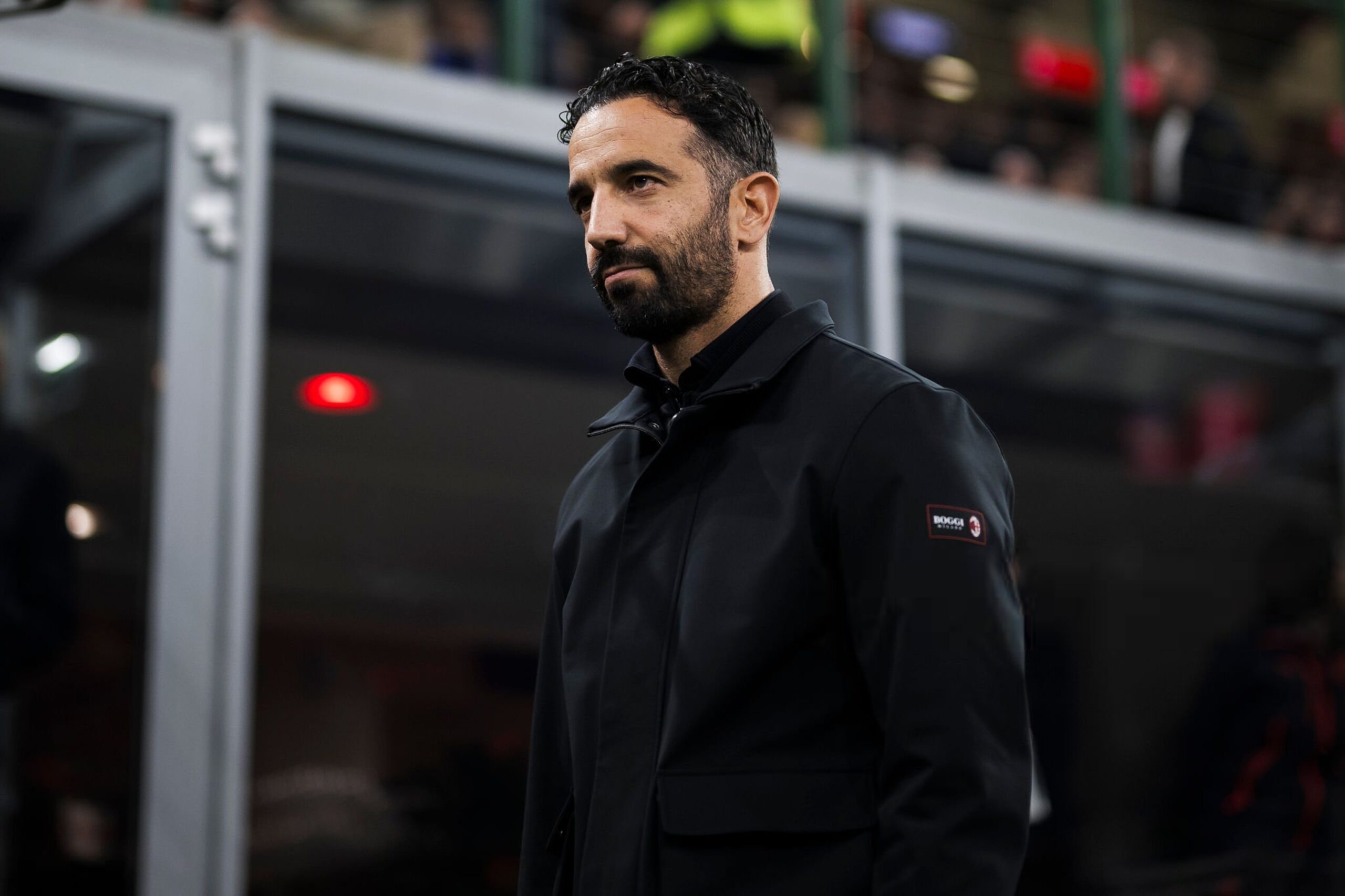
As the Portuguese coach highlighted in a post-match interview filled with harsh criticism of his players, the main weakness Milan have carried with them for several seasons now is a 'provincial' mentality, whereby a great victory such as the one in the derby is immediately followed by a lacklustre performance, lacking bite and the necessary concentration when the opponent is considered beatable. Alternatively, without necessarily having to consider situations involving big matches, it is not normal for a team aspiring to become great again to alternate a highly convincing performance such as the one against Udinese with one diametrically opposed to it against Bologna.
Amorim, rightly, has repeatedly drawn attention to the many serious injuries that have prevented him from rotating his players better and more effectively. But if even the contribution of more charismatic players such as Rabiot, Gila, Pulisic and Ramos was missing against Ferencvaros, then it means that the issue from a mental standpoint runs deeper.
Cardinale will be investing in the January transfer market
Gerry Cardinale received the outcome of the latest Europa League match with the same dismay as Amorim and will have one more reason to seriously consider making a substantial intervention in the January transfer market.
The Rossoneri owner has announced that he will continue to buy players, and he will do so to complete a structural strengthening of the squad that had already been planned last summer. This strengthening has become even more urgent after Bartesaghi, Filippo Terracciano, Jashari and, to some extent, Diawara and Hutchinson failed to make the most of another opportunity to impress and climb the pecking order.
Added to this is the fact that young players such as Torriani, Comotto and Camarda would need an environment in which to find greater opportunities for playing time, gain experience and avoid paying the price of playing in a demanding environment such as Milan.
What Milan needs...
A centre-back, a striker who can alternate with Gonçalo Ramos, who is struggling both in terms of goalscoring and overall performances, a new right winger to deal with the lengthy absences of Saelemaekers and Chukwueze, and at least one more midfielder (capable of both breaking up play and dictating it) are the profiles Amorim intends to discuss with Cardinale and, shortly, with the new Head of Football, Krösche, as relayed via Calcio Mercato.
These are players who would increase the available options, both during individual matches and in terms of rotation across multiple competitions. Above all, however, they would help create an atmosphere of competition in training sessions, something that is evidently not present among all the players currently available.
Milan and the real warning sign...
Behind the Portuguese coach's warning about the example many of his players should take from Pavlovic, described as someone willing to die even in training, lies the real message directed at the entire squad.
The mentality of a big team is missing in the small details and in the daily work, where those who are regular starters perhaps feel that their place is theirs by right and do not feel the pressure of having to watch out for the alternatives. These alternatives, both from a technical and a character standpoint, are doing nothing or probably do not possess the necessary qualities to represent more credible competition.
What are Amorim's tasks now?
From now until the end of December, Amorim will therefore have to try to make the best of a difficult situation and get as much as possible out of a dressing room that has settled into a certain 'way of doing things'.
He will have to try to remain in touch with the top positions in the league table and avoid missing the last opportunities to secure at least a place in the Europa League play-offs in mid-February, starting with the away trip to Greece to face Olympiacos.
It is a matter of prestige, pride and self-respect for a Milan side that, if it truly wants to become a top-level team again, can no longer afford these constant ups and downs.
From his perspective, the coach may have to be forced to change some of his convictions and therefore introduce less extreme rotation in the coming weeks. This is an attempt to achieve more consistent performances between the league and the cup, but also a desperate attempt to provoke a reaction from the pride of the back-up players.
A question of charisma...
As for Cardinale and what awaits the club ahead of the reopening of the transfer market in January, the worrying signs sent by the team over these past few months suggest pursuing the same policy adopted in the summer, when the American businessman had no particular reservations about investing substantial resources in players considered first choices in their respective positions.
Although the winter transfer window is often complicated in terms of timing and the ability to identify top-level players suited to an ambitious team such as Milan aspire to be, the Rossoneri will necessarily have to look only for top-quality profiles who, both technically and in terms of character, can provide a genuine leap in quality. In cases such as these, compromises are not an option.