
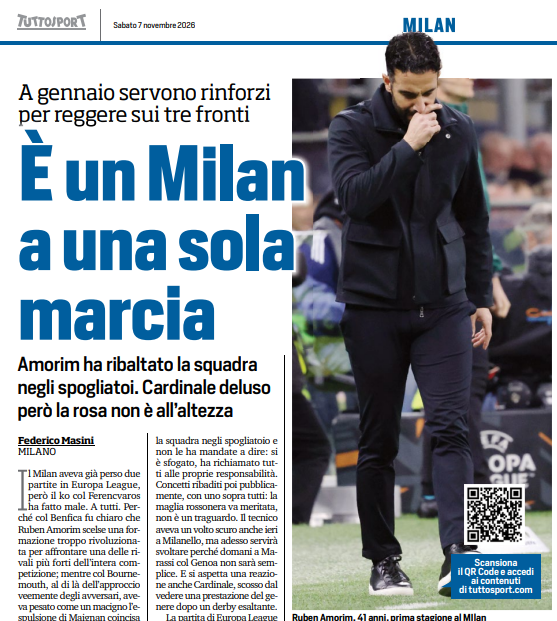
Milan had already lost two matches in the Europa League, but the defeat against Ferencvaros hurt. Everyone. Because against Benfica it was clear that Ruben Amorim had chosen a lineup that was too radically changed to face one of the strongest opponents in the entire competition; whereas against Bournemouth, beyond the opponents’ aggressive approach, Maignan’s sending-off, which also coincided with the penalty that made it 2-0 for the English side, had weighed like a boulder.
Against Ferencvaros, the worst Milan of the season was seen. Because there had already been blackouts, the first half against Lazio, the second half against Bologna, the final stages of the matches against Atalanta and Sassuolo, but the team had either always reacted or had switched off, thinking it had the match in its hands. Not this time.
The starters took the match too lightly, including several backup players who should have seized the opportunity, but so did the big names who came on in the second half, when Milan then collapsed, as relayed via Tuttosport in this morning's print edition.
Amorim was not pleased, and neither was Cardinale. At the end of the match, the coach had a long discussion with the team in the dressing room and did not mince his words: he vented his frustration and called everyone to account for their responsibilities.
He then reiterated these ideas publicly, with one standing above all the others: the Rossoneri shirt must be earned; it is not an achievement in itself.
The coach still had a dark expression yesterday at Milanello, but now a turnaround will be needed because tomorrow at Marassi against Genoa it will not be easy. Cardinale is also expecting a reaction, shaken by seeing such a performance after an exhilarating derby.
The Europa League match confirmed a feeling that had been clear since the end of August: the Rossoneri squad is not complete and, judging by how these months have gone, is not up to the task of competing in Serie A, the Europa League and the Coppa Italia.
It is a Milan side (as of today) that is competitive with its first 12–13 players and therefore limited. Either the focus is placed on the league, whether that means the dream of the Scudetto or a Champions League place, or the aim is to have a respectable Europa League campaign.
Amorim was clear in his statements: “We are not ready to be competitive on two fronts.”
Cardinale, in his latest interviews, had admitted that he had not “managed to do everything” he wanted in the summer transfer market. More transfer windows will be needed to build the Milan side he has in mind, but certainly “in January we will continue to be aggressive, opportunistic and to strengthen our bench.”
There is a key word for Amorim's Milan: bench.
Because there is one Milan side that is worth the top positions in the standings, and it demonstrated this against Inter, and another that (without offending anyone) is not up to the required level.
Or, in any case, is not showing that it is: in fact, with Gabbia injured and giving Bartesaghi the benefit of the doubt, there are no alternatives to any of the starting defenders; in midfield, Jashari is not emerging, while Musah does what he can, but he is not at the level of Modric or Rabiot.
Not to mention Loftus-Cheek (injured) and the young Comotto (evidently not ready).
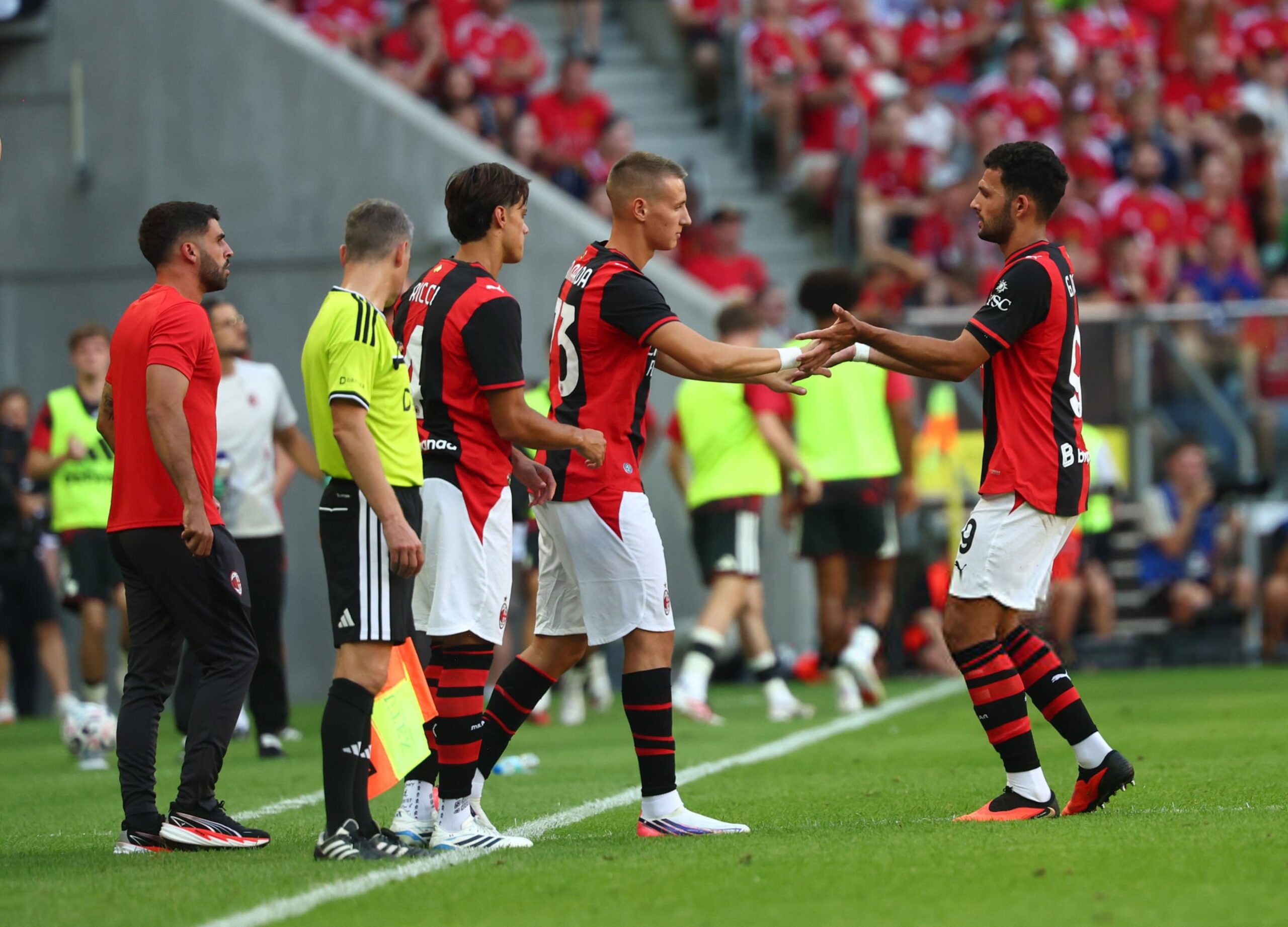
Camarda deserves a separate discussion: here, the blame lies more with the club, which has made mistakes in managing the development path of the 2008-born striker not once, but already twice.