

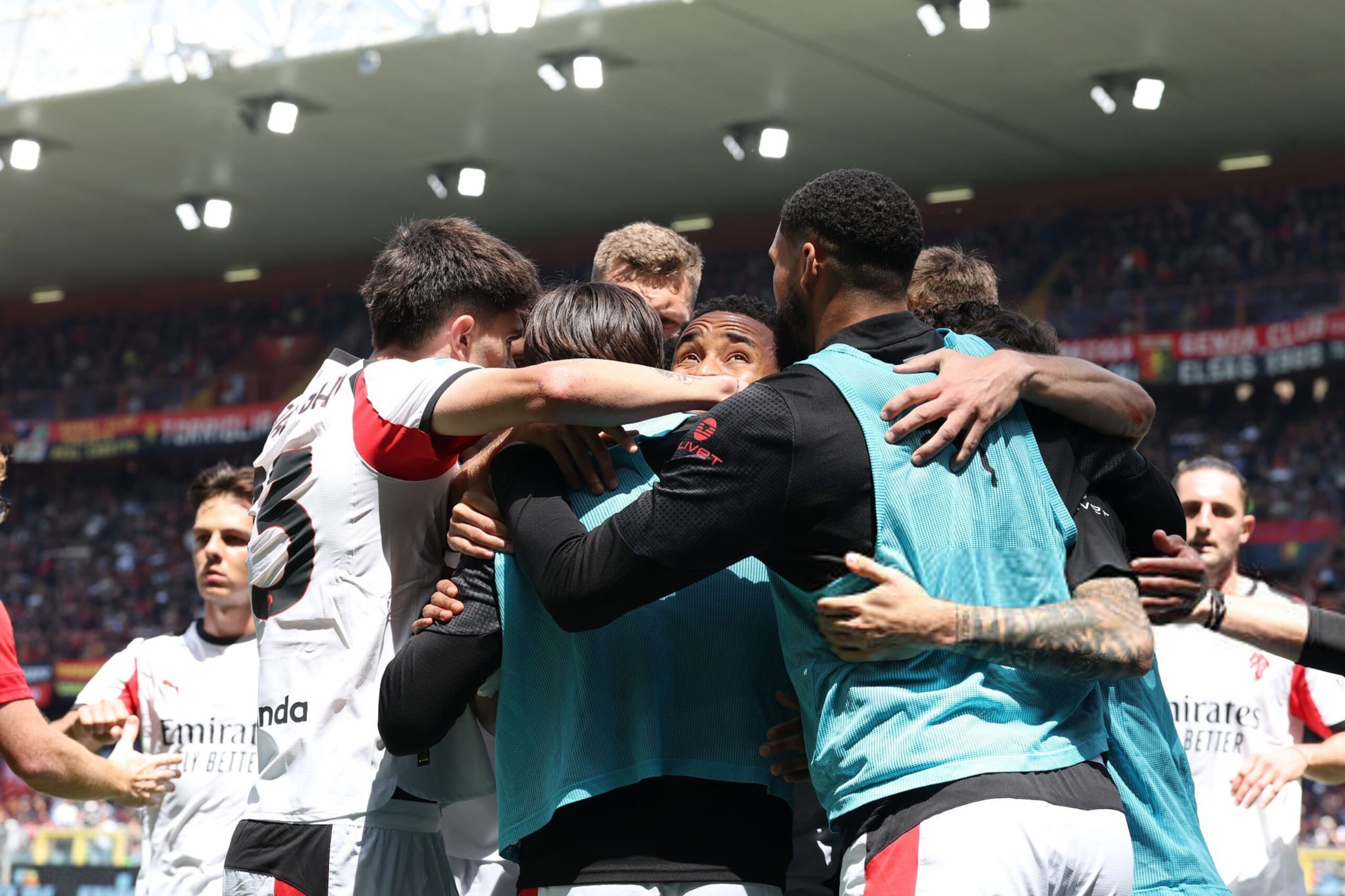
Next Sunday evening at San Siro, the Champions League will be in play, Milan is one of the clubs scrabbling for a qualifying place after the latest win against Genoa. By the time the team sheets drop an hour before kick-off, the odds on the match would have already moved twice, and the closing number is a fairly precise summary of how the rest of football has read this match. Form, injuries, Allegri's tactical adjustments, the away side's mid-table apathy or motivated push, every variable is already in the price.
That is the strange thing about following a football club seriously. The supporters and the markets are doing more or less the same exercise from different angles. One side watches every press conference and every training video. The other side reduces the same information to a single number that updates in real time. The closer that number sits to kick-off, the more honest a snapshot it offers.
What the Pre-Match Numbers Actually Tell You
Every fixture opens with a price set by traders at one of the major books. From the moment that price goes live, money flows in on both sides and the number drifts. By kick-off the consensus is visible. A tightening line indicates the market grew more confident about the favourite, a widening line indicates fresh information moved the balance the other way. Reading the trajectory of the move is more informative than reading the final price alone.
European football brings an extra wrinkle. Most international odds aggregators, including data tools that publish soccer odds drawn from major books, present prices in the American convention alongside the European format. For a supporter accustomed to decimal odds on Italian and English sites, the comparison is useful because it shows where US-facing books and European books sit on the same fixture. Gaps between the two markets are common during big Champions League nights, and they tend to close as kick-off approaches.
The practical takeaway is that no single book defines the consensus. The shape of the market across several books does.
Why Champions League Race Matches Are Priced Differently
A mid-table fixture in February prices around the obvious variables. Late-season matches with a top-four place on the line bake in something extra. Motivation. Books adjust for it explicitly. A side already safe in seventh, hosting a Champions League chaser, often opens as a more generous underdog than its form alone would suggest, because the trading desks assume the away side will lift its level by a measurable margin.
This pattern shows up clearly in the run-in of Allegri's mini-league for Champions League qualification, where the closing prices on Milan, Juventus, Como, Napoli and Atalanta against mid-table opponents tightened week by week. The market priced the favourites more aggressively as the stakes rose, partly because of expected motivation gaps and partly because the books absorbed the same lineup news the dressing rooms did. Fixtures that opened as five-goal expected-total matches sometimes closed half a goal lower as tactics shifted toward control rather than expansion.
For a Milan supporter, the same dynamic explains why a tense Milan-Juventus stalemate at the Meazza closed at totals well below the season average. Both managers had the same incentive to avoid losing, and the market understood that long before kick-off.
Where Milan Specifically Fits Right Now
A club rebuilding under a new technical project, pushing for Europe in the closing weeks, is the kind of side the market finds genuinely difficult to price. Recent form is a poor guide because the squad has been changing. Underlying numbers, things like expected goals, shot quality and final-third entries, often drift in the squad's favour even on matchdays the result does not. That is exactly the kind of inefficiency that produces wider gaps between books, because each trading desk weights the underlying data differently.
That is also why the closing-line debate during a Milan run-in is more useful than the opening-line debate. The closing line absorbs late team news, weather, and refereeing assignments. It is the snapshot a serious researcher would prefer if forced to pick one number to summarise the match.
Reading the Numbers Without Betting
A meaningful share of supporters who follow odds movement never place a wager. The market is a free, real-time poll of how the rest of football is reading a given match, and the granularity is better than any press round-up. A line that drifts from Milan minus 0.5 to Milan minus 0.75 over three days is telling you that the broader football world has grown more confident in the home side, often before reasons appear in print. Treating that movement as an early signal, rather than a betting trigger, is how a careful reader uses it.
Comparing several books rather than one is what makes the exercise honest. If every book sits on the same number, the market has reached consensus. If the prices fan out by twenty or thirty cents in decimal terms, the match is genuinely up for grabs and the public conversation has not yet caught up with the disagreement among the traders.
The Closing Picture
For a supporter watching every match in May, the odds market is one more research feed sitting alongside the post-match podcast, the Gazzetta dello Sport column and the matchday programme. It does not predict results. It summarises how the rest of the football world is pricing tonight's outcome, and the summary updates faster than any other source. That makes it useful even on the matchdays a wager never enters the picture, because the question it answers, what does the rest of football think will happen here, is exactly the question supporters ask their friends an hour before kick-off anyway.
The numbers do not replace watching the match. They sit beside it, a quiet second opinion from a few thousand traders who are reading the same Milan that the supporters are, asking the same question from a slightly different angle and arriving at a single price.