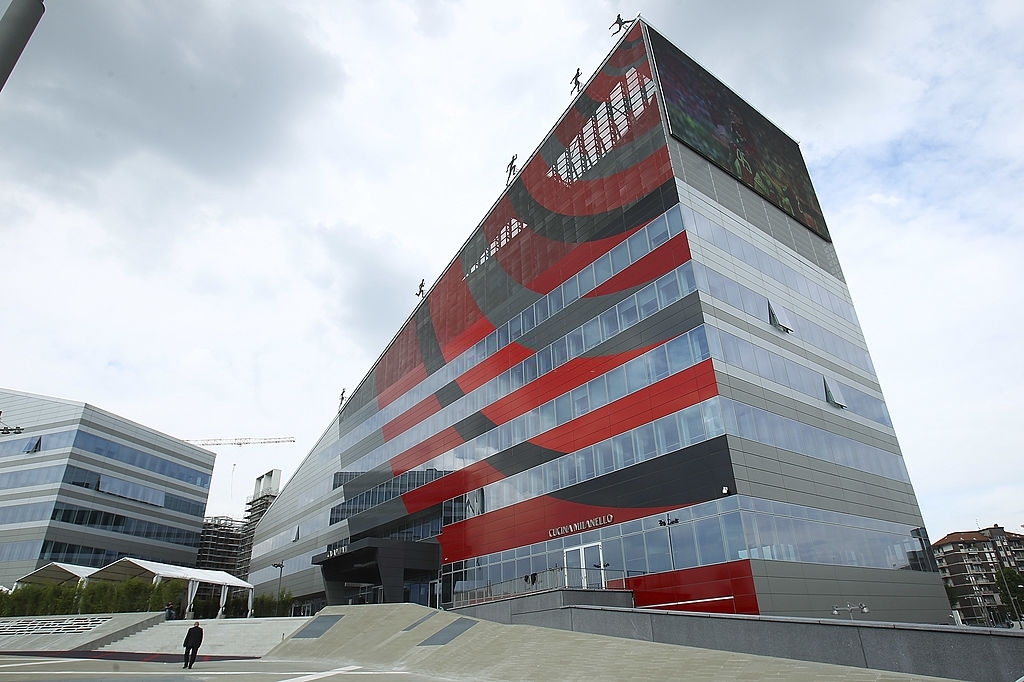

Let’s start with the facts, because in this case the facts have the harshness of a medical report. On 25 May 2026, within the space of twenty-four hours, Milan under RedBird announced the dismissal of Massimiliano Allegri, the separation from chief executive Giorgio Furlani and sporting director Igli Tare. Three senior figures removed simultaneously, like pieces taken off a chessboard when the game has gone wrong.
The sporting outcome that preceded this quiet revolution: fifth place in Serie A, no qualification for European competition, the second failure to reach the Champions League in three years.
All this after a summer transfer window that had brought Luka Modrić, Adrien Rabiot, Christopher Nkunku and Samuele Ricci to Milan, for a total outlay that calling it considerable would be an understatement. Such promising signings, last season, had the fans eager to watch Allegri’s team deliver victories while taking advantage of a variety of options offered by the melbet app.
Anyone with even minimal business management competence (football or otherwise) will recognise in this pattern a precise pathology: not bad luck, not adverse circumstances, not injuries or fixture congestion. The pathology is called lack of a project. And in Milan’s case, that absence of a project has a precise address: 45 Rockefeller Plaza, New York, headquarters of RedBird Capital Partners.
The model that does not work
RedBird Capital Partners acquired Milan in August 2022 for €1.2 billion. Its founder, Gerry Cardinale, presented himself with strong credentials: experience in American sport, a network of relationships with major European clubs, and a promise to bring modern methods into a structure that needed them. At the time, no one had reason to doubt him. Foreign ownership in European football had produced excellent results in some cases, the Chelsea of Abramovich before sanctions, Manchester City under Emirati ownership, Liverpool under Fenway Sports Group, so the model was not wrong in principle, writes Milan Press.
What was wrong was the execution. Or rather, the understanding of what, exactly, was being bought. RedBird acquired Milan as one buys a global brand with commercial development potential in emerging markets, Asia, North America, the Middle East. It thought in terms of revenue from broadcasting rights, sponsorships, merchandising, and long-term asset value growth. All correct, all rational, entirely consistent with the logic of a private equity fund accountable to its investors.
The problem is that Milan is not just a brand. Or rather: it is also a brand, but before being a brand it is a community. It is a system of expectations built up over decades of history, a set of implicit values that do not appear in any pitch deck but govern every decision (technical, commercial, communicative) with the force of a contract. And these expectations, this community, this system of implicit values: RedBird has never truly understood them. Every decision of the past four years demonstrates this.
Four years of systematic errors:
The list is not pleasant to compile, but it is necessary to do so without omissions.
Season 2022–23: Milan under Pioli finishes second in the league, exits the Champions League in the round of 16 against Napoli. An acceptable result, a project in progress.
Season 2023–24: eighth place, no European football, Pioli dismissed after nine years.
Season 2024–25: Fonseca arrives, then is sacked in December; Conceição arrives; survival in extremis in sixth place; Italian Super Cup won in January as the only trophy.
Season 2025–26: Allegri appointed with fanfare, high-profile signings, fifth place, no Europe, collective dismissal of the management.
Four seasons. Three coaches sacked. Two sporting director changes. One chief executive change. Zero Champions League qualifications. One Super Cup. This is not an unlucky cycle. This is a system that does not work, structurally, methodologically, culturally. And responsibility for a dysfunctional system does not lie with the last coach appointed. It lies with those who built the system, or rather, those who prevented a system from being built.
Because this is the real issue: over the past four years Milan has not had a recognisable technical project. It has had a succession of tactical decisions, often contradictory, made with a firefighter’s logic, putting out the nearest blaze without asking why new ones keep breaking out. Fonseca chosen and dismissed after five months. Conceição hired in emergency conditions in December. Allegri brought back as a guarantee of stability and then removed at the end of the season. In which of these moves can a coherent vision be identified?
The problem of distance
Cardinale runs Milan from New York. This is not a geographical detail: it is a matter of cultural proximity. A club like Milan, its history, its relationship with the city, the weight of every decision in the collective imagination of its supporters, cannot be governed through quarterly reports and video calls. It must be governed from within that culture, by living its daily pressure, understanding viscerally why certain decisions are possible and others are not, regardless of financial logic.
Liverpool works under Fenway Sports Group because FSG has learned, over time and with difficulty, to delegate sporting decisions to people who inhabit that culture, Michael Edwards first, and others now. It has understood that its role is financial and strategic, not technical. It has built a structure of local expertise that mediates between fund logic and club reality. RedBird has not done this. It has brought in Italian executives (Furlani, Tare) but without granting them real decision-making autonomy, without building a coherent culture around them, without a sporting project to guide them. And when results failed, it removed them as if they were an underperforming cost line.
Braida, who experienced Milan from the inside for decades, said something simple and devastating: “It almost makes me want to cry to see Milan in this situation.” This is not nostalgia from an old executive. It is the clear diagnosis of someone who knows how to distinguish between a temporary crisis and a structural decline.
The courage to say it
There is a taboo in Italian football discourse worth naming explicitly: anyone who criticises foreign ownership is immediately labelled reactionary, nostalgic, incapable of accepting the modernisation of football. It is an ideological defence mechanism designed to protect a model (the private equity acquisition of European clubs) from its own failures. If you criticise RedBird, you are against progress. If you defend the need for a locally rooted ownership, you are a provincial thinker who does not understand global markets.
This is intellectual dishonesty, and it should be called what it is. Criticising RedBird does not mean wanting to return to the Berlusconi era, a period that had its own well-documented structural problems. It means applying to football the same standards used for any complex organisation: an ownership is competent if it produces results consistent with the resources available and the history of the club it manages. RedBird has not done so. Four seasons are a statistically sufficient sample to say this.
The model of foreign ownership works when the buyer understands what is being purchased. It works when there is respect for the cultural specificity of the club, when a governance structure is built that integrates financial logic with local sporting expertise, when it is accepted that certain values are non-negotiable because they are the very substance of what has been acquired. When instead a historic club treated as a portfolio asset to be optimised, the result is what is now visible: San Siro without Europe, a wiped-out hierarchy, and a fanbase that no longer knows what to expect.