

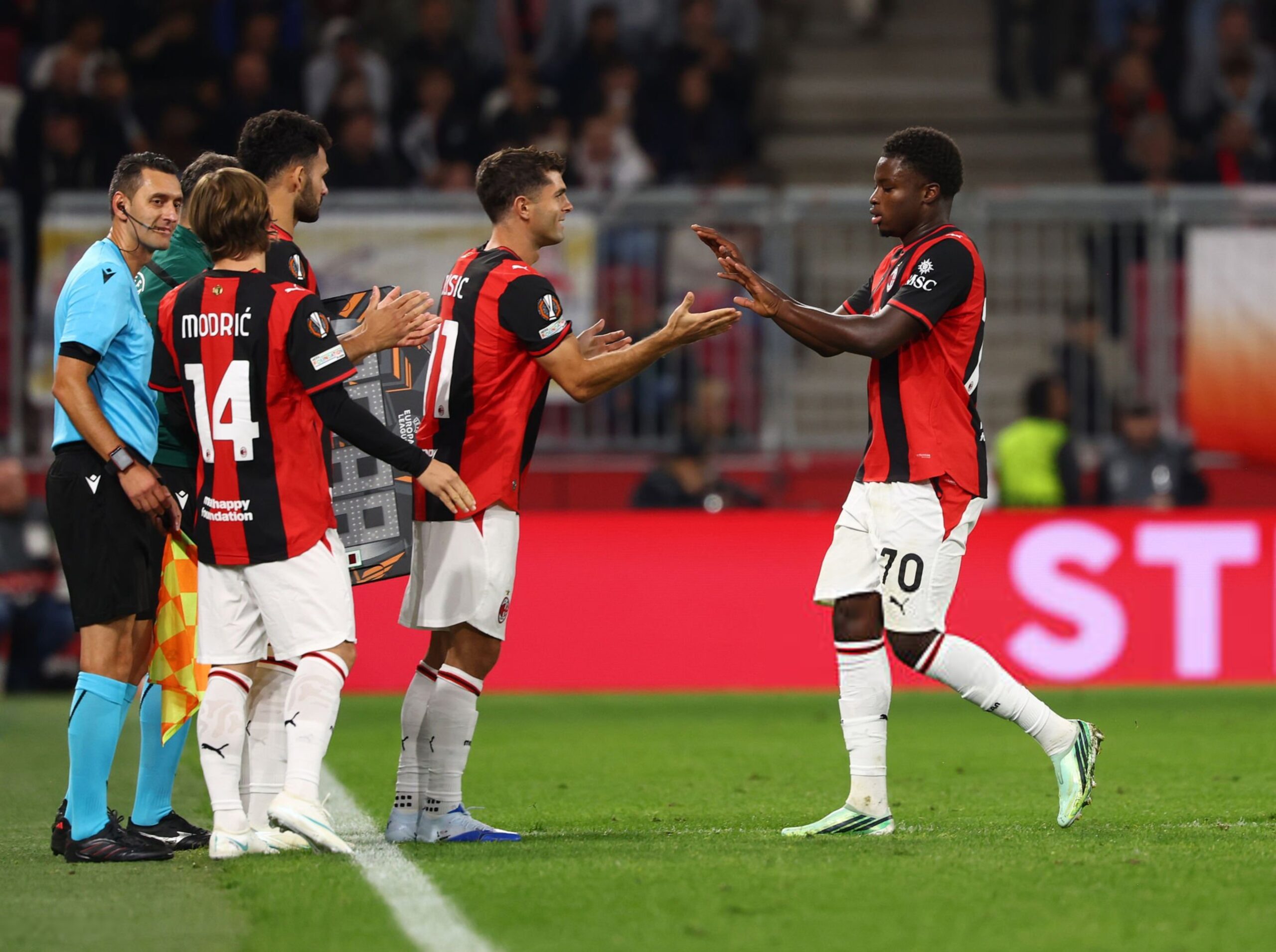
The 4-0 victory in Salzburg, taken as a whole, is a match that must be treated with caution, given the many obvious limitations displayed by the Austrian side against a Milan team in which, despite the extensive rotation employed by Rubén Amorim, numerous players delivered very convincing performances. Considering the extremely packed schedule awaiting the Rossoneri between now and November 8 (the date after which the second international break will begin), many of them will have further opportunities to confirm their form, keeping supporters engaged across different platforms, including those making use of the Easybet registration code to follow the action more closely. However, starting from the Portuguese coach's post-match analysis, it is above all the attacking department that could undergo significant changes in the coming weeks.
The best defence is attack
Amorim has repeatedly emphasised during his first few months that much of the work he and his staff are focusing on is dedicated to the attacking phase. In his footballing philosophy, Milan must become a team capable of being more effective in the final thirty metres of the pitch, committing more players forward and involving the main focal point (Gonçalo Ramos) more frequently, while at the same time beginning to defend primarily through the work of the attackers and the more technically gifted midfielders.
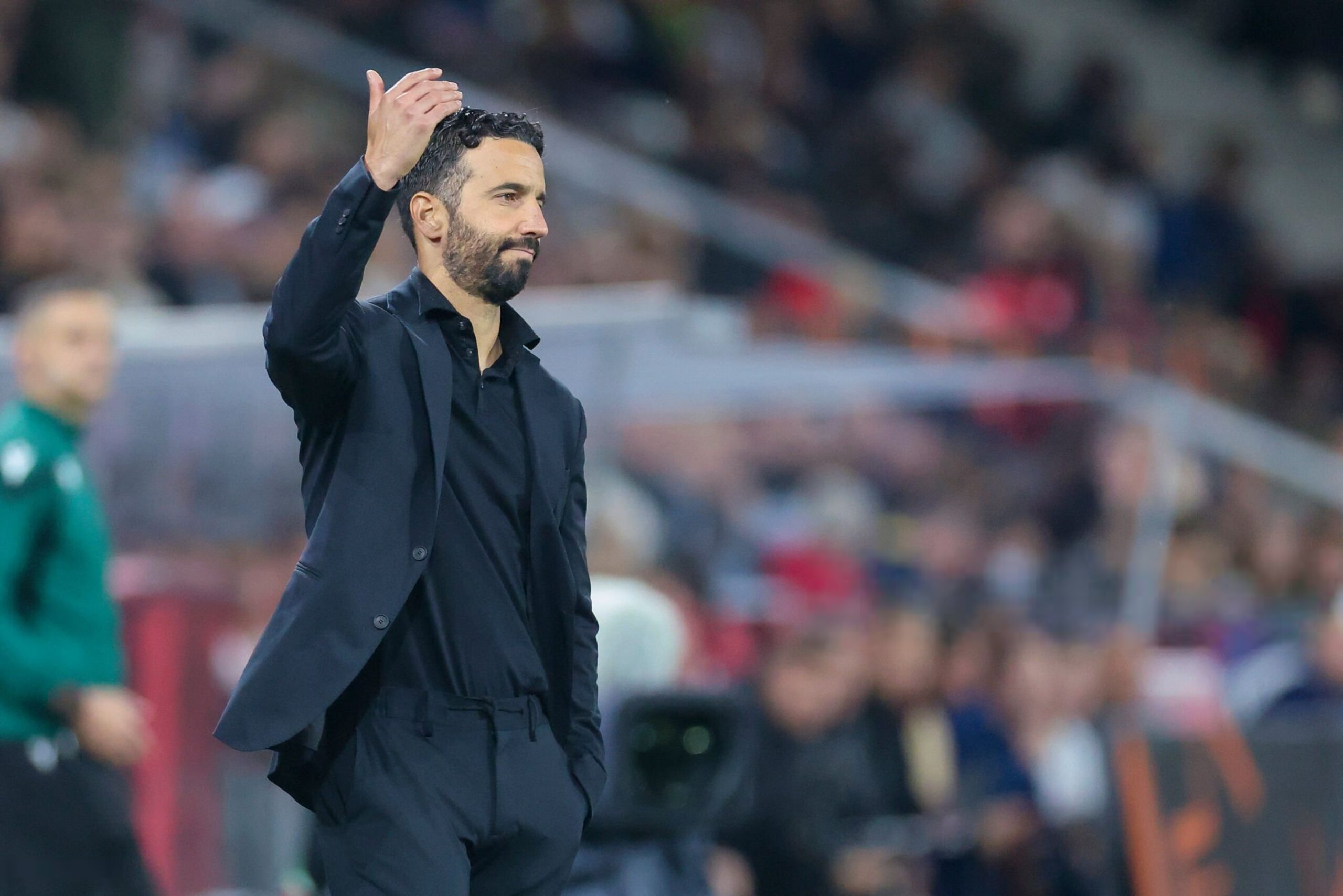
How? Through better management of the ball and space than what is currently being demonstrated. The former Sporting Lisbon and Manchester United coach wants to transform a team that, under different tactical principles, has struggled in recent years to function as a single, compact unit into an organisation capable of operating with a collective understanding.
Too many attacking midfielders
For these reasons as well, Amorim has been changing the personnel in his attacking line frequently and extensively. Several players have alternated alongside Ramos, all with different characteristics, as he searches for the right formula and the one capable of providing the greatest balance.
In fact, Pulisic, Cisse, Moreira and Saelemaekers have all been used as left-sided attacking midfielders, while Loftus-Cheek, Rabiot, Moreira himself and Hutchinson have alternated on the right. Each brings different qualities both in and out of possession, and all can be paired in constantly changing combinations, depending on the characteristics of the opponents and the teams Milan face from one match to the next.
As previously written, Amorim is still in a phase of considerable experimentation, during which he is trying to fully understand what the players at his disposal can offer him. The emphatic victory in Salzburg, while it should not give rise to overly easy enthusiasm, may have been revealing in many respects.
Alphadjo Cisse as a centre-forward
For example, it revealed once again that Alphadjo Cisse is a genuine anomaly within the long list mentioned above.
Amorim is not wrong to point out that, in terms of intensity and technical cleanliness, the 2006-born player still has considerable room for improvement and must necessarily become a more complete footballer. He is not yet a Pulisic, to put it clearly and briefly.
But what we are seeing on the pitch today tells us that there is no other attacking midfielder/second striker with the same inclination to attack the opposition's goal and the same instinct for scoring.
This is good news for a team that, in addition to not yet knowing how to supply him, has had considerable problems in its opening matches when it comes to sharing space inside the penalty area with Gonçalo Ramos, the Portuguese striker who was signed for over 70 million euros from Paris Saint-Germain.
Being able to rely, even during a match, on another striker with the instinct to attack the near or far post with the same naturalness could, in the long run, bring significant benefits in terms of goalscoring.
What about Francesco Camarda?
Attention should be paid to how this "intuition" could, at least in the short term, rewrite some of the hierarchies in Amorim's mind.
In Salzburg, the coach left out the former Paris Saint-Germain number nine from the starting lineup for the first time and will have to prepare for very careful management of his energy levels in the future, considering that his standing with Portugal has also changed considerably in recent times, partly because of the still-unresolved Cristiano Ronaldo situation involving national team coach Jorge Jesus.
If Cisse managed to take advantage of his Europa League opportunity to reinforce certain beliefs about his value, and could also represent an interesting experiment as a false centre-forward in the future, the player who returned from Austria with an important "lesson" to learn and put into practice is Francesco Camarda.
Ruben Amorim's vision
Acclaimed overwhelmingly by the fans well before the cup trip, the 2008-born player returns home with the awareness that, if used to their fullest potential, the coming months will be very important for his development in the longer term.
This starts with the honest assessment Amorim made of him when evaluating his performance in Salzburg:
"He reads games well, but he needs to improve his explosiveness, pace and rhythm. We are working on it. He has the ability to run for the full 90 minutes. That is something he also lacked against Salzburg, partly because he knows how to move inside the penalty area, he knows many things."
This is by no means a rejection, but rather a factual observation that Camarda is not yet ready to play certain types of matches and that, at least as a starter, his opportunities in the immediate future may not be very numerous.
This reopens the debate about what might be the best choice for managing a very important asset for the club, particularly from January onwards.
How to use Omari Hutchinson?
Another player who made the most of his opportunity against Salzburg was Omari Hutchinson, who, for many, had been something of an unknown quantity until very recently. The player, after making an appearance at San Siro during the 3-2 victory over Atalanta a few days ago, could start once again in the next Europa League match against Bournemouth.
He was clearly struggling in his Europa League debut against Benfica and during his brief appearance against Sassuolo last Sunday, but more generally has found it difficult against physically strong opponents capable of occupying the pitch and the central spaces effectively.
Having arrived in Milan as a low-cost alternative in the delicate and strategically important position of a left-footed right attacking midfielder (particularly in the context of his coach's footballing philosophy) the Englishman is not currently ready, because of his athletic build and other factors, to move into central areas of the pitch.
In congested areas, Hutchinson loses his way and also loses his understanding with his teammates. He himself has said that he feels much more comfortable playing out wide, because it is by drifting towards the flank that he finds the space to receive the ball and then repeatedly seek one-on-one duels with opposition defenders.
He is the classic "context-dependent" player, a tactical weapon more useful when introduced as a substitute and against certain opponents.
In some respects, he is similar to Chukwueze, but less accustomed than the Nigerian to combining with his teammates. Perhaps this could provide an indication of how to use the former Villarreal player in certain matches when Amorim needs to find a different solution for the right wing-back position.
Milan, there's also Diego Moreira...
Having lost Saelemaekers for several months, a player who, moreover, was never considered suitable for that role, and perhaps having allowed Athekame to leave too casually, Milan currently have only Diego Moreira as a credible alternative to Chukwueze.
Returning to the description Amorim gave of the Belgian and what we have seen him do in his first two appearances for the Rossoneri, the impression is that we are dealing with a player who needs more space in front of him to build up speed and unleash his potential.
These are qualities that are poorly suited to being deployed in the final thirty metres, as a supporting striker, potentially forced to operate with his back to goal.
Ruben Loftus-Cheek and Adrien Rabiot's importance
This is therefore a position that, when necessary, will continue to be tailored to Loftus-Cheek, who showed some improvement in Salzburg compared to his previous performances, and to Adrien Rabiot.
The "problem" cannot be resolved except through work (something Amorim also discussed in his post-match analysis) and another targeted intervention in the transfer market.
Like several of his teammates, Rabiot is more effective when he can drive forward from midfield and join the attack. Thanks to his tactical intelligence and physical presence, however, he can also act as a "disruptor" in certain situations: he can upset the opposition's plans and give Milan greater solidity against specific types of opponents.