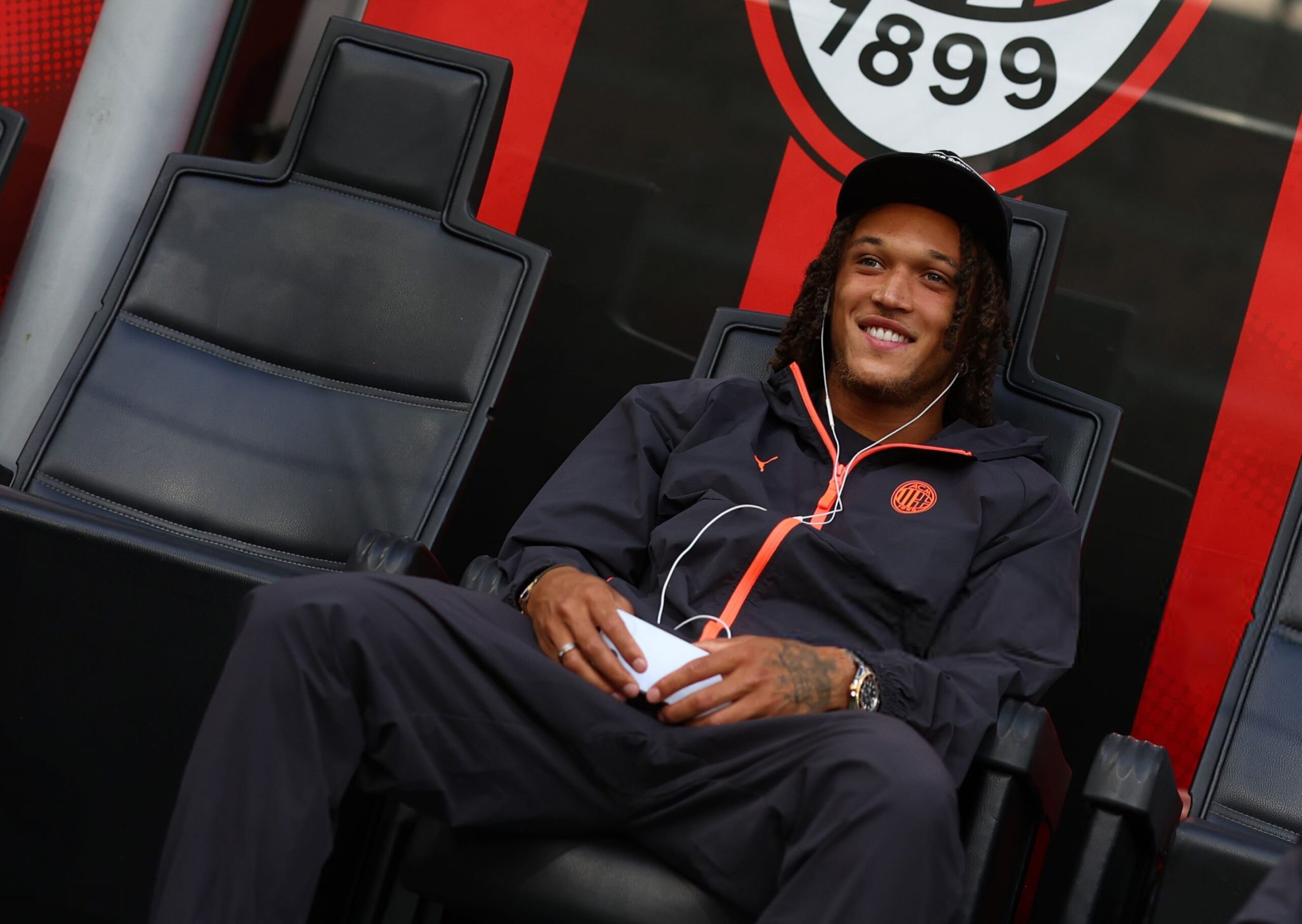

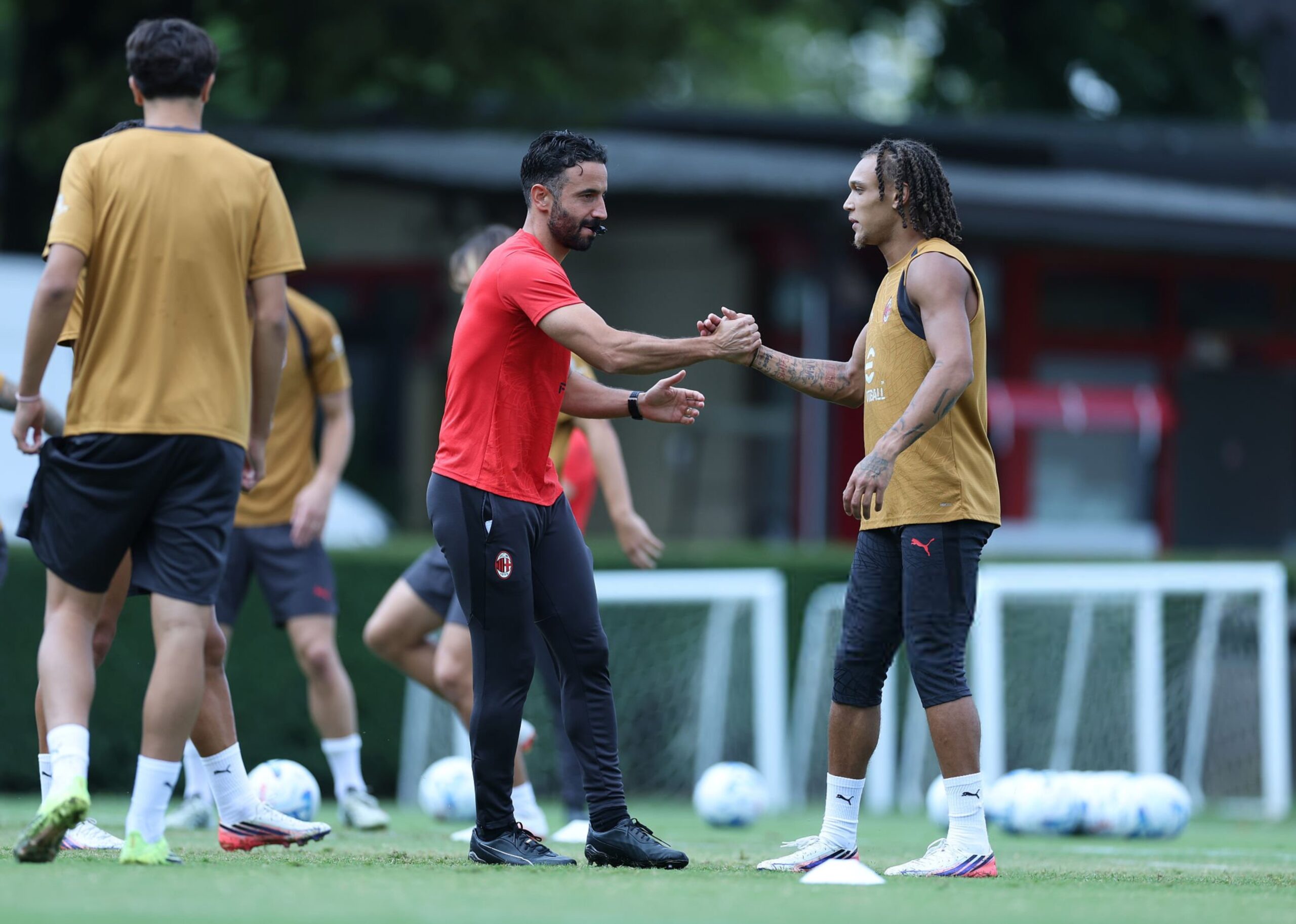
Since the beginning of the summer, Milan have spent roughly €154 million: not bad for a team that, just a few months ago, was surrounded by a thick cloud of pessimism. After the arrivals of Mario Gila and Gonçalo Ramos, the Rossoneri made another major investment in Diego Moreira. At the beginning of the transfer window, he had been linked with Roma, who made an offer considerably lower than the one Milan eventually put forward. The Rossoneri are therefore showing a refreshing level of ambition, especially when you consider how depressing the end of last season had been.
In 2010, Helmut Graf, a former Standard Liège player, was interviewed and revealed that his son-in-law was playing for Partizan at the time, while his son (and therefore his grandson) was already registered with Standard. His name was Diego, and Graf was asked whether he had inherited his grandfather's magical left foot. "He plays with both feet," Helmut replied. Sixteen years later, Diego Moreira may not be completely ambidextrous, but he has certainly inherited his grandfather's preference for the left foot. At 22, however, he can already be considered the most successful footballer in the family, and at the very least, the most expensive. Diego Moreira is joining Milan for a €50 million fixed fee, plus another €15–16 million in bonuses, some of which should be relatively easy to reach. It is a significant figure, but not entirely unreasonable when you consider even just the numbers he has accumulated over the past two seasons in Ligue 1 with Strasbourg: 19 goal contributions, including 13 assists and six goals. Only Désiré Doué, among players born after 2004, has done better.
Perhaps from a distance, watching those braids flying down the flank, some Milan fans will notice an uncanny resemblance to Diego Laxalt (triggering a few traumatic Vietnam-style flashbacks). Moreira, however, is a high-level player and certainly one of the best possible solutions for Amorim's tactical ideas.
The Portuguese coach demands a great deal from his wing-backs, both physically and technically. They must be aggressive when winning the ball back, ready to recover their positions during transitions, composed in their decisions on the ball and proactive when pushing forward. Diego Moreira can do all of these things at a high level, and the hope is that he can once again make Milan's right (and even left) flank a major threat, something they have not had since Theo Hernández.
Moreira does not possess Theo's power or pace, but he is an extremely creative player, capable of creating danger largely on his own. He started out as a winger/attacking midfielder and was moved deeper onto the midfield line in France, even playing as a full-back when required. It was Liam Rosenior (Strasbourg's rather eccentric former coach) who changed his position. Moreira had arrived to play as a right-sided attacking midfielder, cutting inside onto his stronger left foot, but ended up becoming a wing-back. He explained the change to 'Instant Foot':
"Rosenior called me into his office and told me he wanted to play me as a winger. But he still asked me where I preferred to play. I told him right wing or left wing, and said I could also play in midfield and, if necessary, explained that I had already played as a left-back. I shot myself in the foot."
He told the story with a laugh. When the starting left-back, Wiley, was injured, Moreira ended up playing as a deeper wide player.
It proved to be the turning point in his career. The previous season, on loan at Lyon, he had done very little as an attacking winger. After a promising start (with four goals and five assists in the 2021/22 UEFA Youth League with Benfica) his career seemed to have stalled. His move to Chelsea looked like a deal that had gone badly wrong for him. The loan move to Strasbourg, a club affiliated with the Blues, saved him.
During his time at Strasbourg, he played almost every possible role on the flank, at virtually every height of the pitch. From the outside, he looks like a player who works hard and throws himself into everything, although he admits in interviews that he does not particularly enjoy running: "If you see me running, it's because my heart has taken over.”
His social media presence reveals an extroverted personality, with a strong interest in fashion, style and his hair. On TikTok, he goes by 'Diegzyy' and often dances alone in the bathroom as though he were 15 years old. So Foot published a fairly in-depth piece about his social media presence.
Behind that superficial image, Moreira is a perfectionist. He has his own nutritionist and mental coach, and cites Cristiano Ronaldo as his role model. It is clear that he has already navigated what could have been a decisive crossroads in his career: perhaps he did not have enough talent to perform at the very highest level as an attacking winger, but he has already shown that he can reinvent himself. His versatility and intelligence should not be underestimated.
He remains an attacking player. Arno Van den Abbeel, his coach with Belgium's Under-15s, described him as a dribble specialist who is “always looking to take players on, always looking for the one-on-one”. Moreira is reasonably quick, but he is not one of those wingers who can rely entirely on athleticism to win one-on-ones. He uses his body and timing to disorient defenders, with changes of pace, stops and starts, feints, changes of direction with his heel in the style of CR7, and a surprisingly strong ability to cut inside. He can appear to be trapped, only to find the timing and angle to escape with the ball at his feet. Watching him in these situations can feel almost like facing a player with Rainbow Six Siege ESP and aimbot hacks: he seems to know where the defender is going before the defender has even made the decision. He completes 2.74 dribbles per 90 minutes, with a 52% success rate.
His ability to carry the ball and win duels is certainly the most interesting aspect of Moreira's game, so it will be worth seeing who partners him on the flank. Both Leão and Pulisic like receiving the ball to feet, but it may benefit them to have a teammate who attracts defenders and creates space. Alphadjo Cissé and Saelemaekers are also options in that role, having both featured extensively during pre-season.
It is also not certain that Moreira will be used exclusively as a right-sided wing-back at Milan, although his debut against Juventus was indeed on the right flank as he took Samuel Chukwueze's spot. His ability on the ball can also be exploited in a more advanced position, and certainly on the right as well. Below you can see highlights from his Ligue 1 performance against Lyon, when he played on the right. It was an excellent performance.
Using him as a wing-back, however, appears to be the most likely option, and perhaps the one that could improve Milan the most. This is particularly true because of Moreira's creative qualities, having registered 13 assists over the past two seasons. His ability to find an unmarked teammate at virtually any point along the flanks is remarkable; Moreira has an excellent diagonal and horizontal passing vision, which is perhaps the main reason for his success in the role. Last season, he averaged 1.6 key passes per match.
The wing-backs are fundamental to Amorim's style of play, and Milan are somewhat lacking in that area. Alexis Saelemaekers is coming off an inconsistent season and perhaps lacks the dynamism and intensity required without the ball; indeed, the coach has already announced that he will no longer play as a wing-back but further forward, behind the striker. The wing-backs are the players expected to provide bursts of acceleration and dynamism in transition, in a team that will raise the tempo compared with last season and sacrifice some control in the process.
It is fair to have some questions about the amount Milan have spent, but financial analysis of the transfer market has by now become almost pointless. Money seems to have simply stopped existing. Focusing purely on the sporting side, Moreira's arrival significantly improves Milan, setting aside all the potential difficulties involved in adapting a player coming from Ligue 1.
Moreira brings dribbling to a league where there is not enough of it, a willingness to take risks in an often-paranoid environment, and technical quality to a position that in Italy is frequently interpreted in purely physical terms. In short, Diego Moreira is one of the most intriguing signings in the league.